Feedough Logo

Blog

  • Competitive Advantage – Definition, Types, & Examples

    Competitive Advantage – Definition, Types, & Examples

    The smart pricing, differentiation, branding, marketing, asset, and targeting strategies make some brands, products, and services to be perceived as superior to others. These strategies lead to a state of competitive advantage which makes the business cater to more-than-average customers and earn more-than-average profits.

    Suppose there are 3 fruit sellers selling the exact same quality of apples near your house, but one of them attracts over 50% of the customers while the other two just sit and see the customers buying from him. What could be the secret to his success?

    Price?

    Now suppose these 3 fruit sellers started selling apples at the exact same rate, yet the previous market leader is leading this time too. What could be the secret to his success this time?

    Better quality of apples? Or probably the established brand?

    What Is Competitive Advantage?

    Competitive advantage is a favourable position a business holds in the market which results in more customers and profits. It is what makes the brand, product, or service to be perceived as superior to the other competitors.

    A brand can create a competitive advantage if it is clear about these three determinants:

    • Target Market: The perfect knowledge of who buys from the brand, what they desire from the brand, and who could start buying from the brand if certain strategies are executed is essential for the business to create a competitive advantage over the competitors.
    • Competition: The business should have an answer to these two questions: Who is the present competition and who could be a prospective competition in the coming years? What are the production, pricing, marketing and branding strategies they’re using to develop and market their products?
    • USP: The unique selling proposition is usually the chief trigger of the competitive advantage and separates the business from the competition. It is the reason why the customers choose the concerned brand over others. The USP should be clear to both the business and the customers in order for a brand to create a competitive advantage.

    Types Of Competitive Advantages

    Even though the definition of competitive advantage remains the same, different marketers have stated different types of competitive advantages.

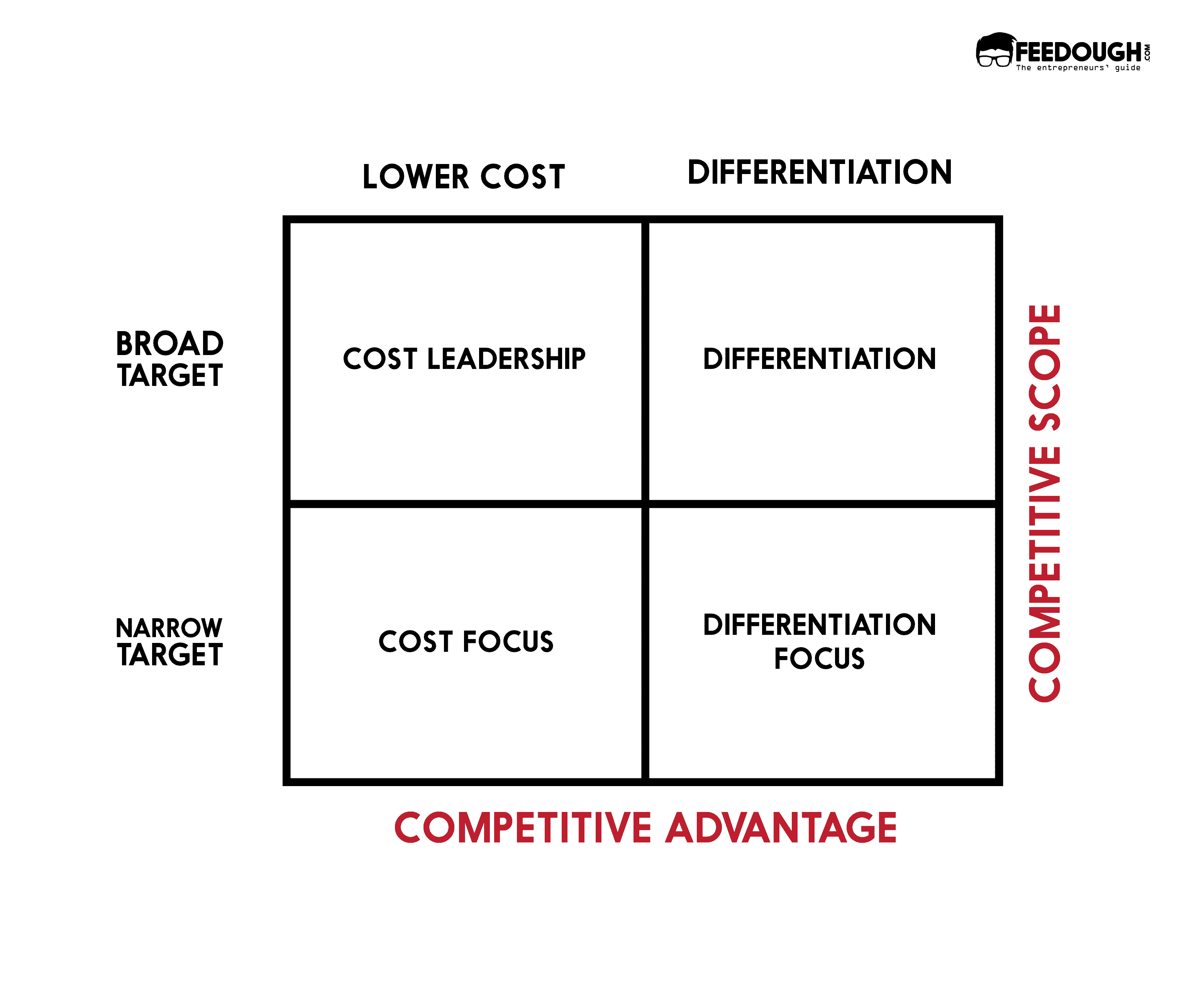
    Michael Porter, a Harvard University graduate, wrote a book in 1985 named – Competitive Advantage: Creating and Sustaining Superior Performance, which identified three strategies which businesses can use to tackle competition and create a sustainable competitive advantage. According to him, these three generic strategies are:

    • Cost Leadership: It is a strategy where a business produces the same quality of the product as of the competitors’ but sells it at a lower price. Cost leadership is achieved by continuously improving the operational efficiency (using less but more efficient workers or outsourcing to places where the costs are less), and getting the advantage of economies of scale (in the case of bigger businesses like Aldi, Walmart, etc.).
    • Differentiation: A differential advantage is when the product or service offered by the business deliver different benefits than the products offered by the competitors. It involves defining the offering’s unique position in the market by explaining the unique benefit it provides to the target group. This unique position can refer to the high quality, better delivery, more features, or any other specific attribute of the product or service. Differentiation is usually achieved by innovation and big innovation usually result in disruption of the industry and creating a sustainable competitive advantage for the business. An example of the creation of differential advantage through disruption is Uber. It differentiated the service it was offering by providing it on demand.
    • Focus: Also called the segmentation strategy, the focus strategy involves targeting a pre-defined segment rather than everyone. It involves understanding the target market better than everyone else and use the data for better offering crafted according to the target market’s needs. This strategy was initially used by small businesses to compete with the big companies, but with the advent of the internet and the introduction of microtargeting, even big businesses like Amazon, Facebook, & Google use the focus strategy to differentiate themselves from others.
    competitive advantage

    However, modern competitive advantages aren’t limited to these three. A strong brand, big pockets, network effect, patents, and trademarks are few other competitive advantage strategies businesses use to outdo their competitors.

    • Brand: Brand loyalty is one of the biggest competitive advantages any business can capitalize on. An effective brand image and positioning strategy leads to customers becoming loyal to the brand and even paying more than usual to own the brand’s product. Apple is a perfect example when it comes to brand-related competitive advantage.
    • Big Pockets: Some companies enter the market with huge funding and disrupt the ecosystem by providing some really enticing offers or providing the products at really low prices. This acts as a competitive advantage as other companies often fail to respond to such tactics.
    • Network Effect: The network effect makes the good or service more valuable when more people use it. For example, Whatsapp enjoys a competitive advantage over other players because its users are reluctant to try other applications as most of their contacts use Whatsapp.
    • Barriers to Entry & Competition: Businesses often make use of natural and artificial barriers to entry like Government policies, access to suppliers, patents, trademarks, etc. to stop others from becoming a close competition.

    Competitive Advantage Examples

    Google

    Google enjoys the competitive advantage of being the only effective search engine over the internet. The company was able to reach this height because of its size, innovation, market position, and the network effect.

    Facebook

    With its biggest competitor, Google plus, not even being close to it, Facebook surely enjoys a competitive advantage over its competitors. One of the biggest reason is the network effect, but other reasons which led to this success are constant innovation, the advertisement (free) business model, and the personalized content.

    LinkedIn

    LinkedIn is not a conventional social media network. It is focused on the business professionals and enjoys a competitive advantage for being a niche social media network.

    Go On, Tell Us What You Think!

    Did we miss something? Come on! Tell us what you think about our article on competitive advantage in the comments section.
  • What Is A Company? – Features & Types

    What Is A Company? – Features & Types

    A company has different definitions based on the country it is situated in.

    In the UK:

    A company is a body corporate or an incorporated business organisation registered under the companies act. It can be a limited or an unlimited company, private or a public company, company limited by guarantee or a company having a share capital, or a community interest company.

    According to the law in the USA:

    A company can be a “corporation, partnership, association, joint-stock company, trust, fund, or organised group of persons, whether incorporated or not, and (in an official capacity) any receiver, trustee in bankruptcy, or similar official, or liquidating agent, for any of the foregoing”

    The Companies Act 2013 of India defines a company as-

    A registered association which is an artificial legal person, having an independent legal, entity with a perpetual succession, a common seal for its signatures, a common capital comprised of transferable shares and carrying limited liability.

    A more precise, global and modern definition of a company could be:

    A business entity which acts as an artificial legal person, formed by a legal person or a group of legal persons to engage in or carry on a business or industrial enterprise.

    Few points that should be noted in this definition:

    • Legal Person: A legal person could be human or a non-human entity which is recognised by law as having legal rights and is subject to obligations.
    • A person or a group of persons: It is no more required to be an association of persons to form a company. A company can also be started as a single person company (one-person company).

    Since the definition, features, characteristics, and types of companies differ in different countries (especially in the United States), all the following sections will be focused on an Indian and UK perspective of a company. Visit this article for the US perspective of the types of companies.

    Features & Characteristics Of A Company

    • Incorporated association: A company comes into existence when it is registered under the Companies Act (or other equivalent act under the law). A company has to fulfil requirements in terms of documents (MOA, AOA), shareholders, directors, and share capital to be deemed as a legal association.
    • Artificial Legal Person: In the eyes of the law, A company is an artificial legal person which has the rights to acquire or dispose of any property, to enter into contracts in its own name, and to sue and be sued by others.
    • Separate Legal Entity: A company has a distinct entity and is independent of its members or people controlling it. A separate legal entity means that only the company is responsible to repay creditors and to get sued for its deeds. The individual members cannot be sued for actions performed by the company. Similarly, the company is not liable to pay personal debts of the members.
    • Perpetual Existence: Unlike other non-registered business entities, a company is a stable business organisation. Its life doesn’t depend on the life of its shareholders, directors, or employees. Members may come and go but the company goes on forever.
    • Common Seal: A company being an artificial legal person, uses its common seal (with the name of the company engraved on it) as a substitute for its signature. Any document bearing the common seal of the company will be legally binding on the company.
    • Limited Liability: A company may be limited by guarantee or limited by shares. In a company limited by shares, the liability of the shareholders is limited to the unpaid value of their shares. In a company limited by guarantee, the liability of the members is limited to the amount they had agreed upon to contribute to the assets of the company in the event of it being wound up.

    Types of companies

    A company can be classified into various types depending upon the following requirements:

    Classification of Companies by Mode of Incorporation

    Royal Chartered Companies

    These companies are formed under a special charter by the monarch or by a special order of a king or a queen. Few examples of royal chartered companies are BBC, East India Company, Bank Of England, etc.

    Statutory Companies

    These companies are incorporated by a special act passed by the central or state legislature. These companies are intended to carry out some business of national importance. For example, The Reserve Bank of India was formed under RBI act 1934.

    Registered or Incorporated Companies

    These companies are formed/incorporated under the companies act passed by the government.  These companies come into existence only after these are registered under the act and the certificate of incorporation is passed by the Registrar of companies.

    Classification of Companies based on the liability of the members

    The registered companies can be classified into the following categories based on the liabilities of members:

    Companies Limited By Shares

    These companies have a defined share capital and the liability of each member is limited by the memorandum to the extent of the face value of shares subscribed by him.

    Companies Limited By Guarantee

    These companies may or may not have a share capital and the liability of each member is limited by the memorandum to the extent of the sum of money s/he had promised to pay in the event of liquidation of the company for payments of debts and liabilities of the company.

    Unlimited Companies

    There is no formal restriction to the amount of money that the shareholder/member of the company has to pay in the event of the liquidation of an unlimited company.

    Classification of Companies based on The Number of Members

    Public Company (or Public Limited Company)

    A public company is a corporation whose ownership is open to the public. In other words, anyone can buy the shares of a public company. There are no restrictions to the number of members of a public company or to the transferability of shares. However, there are some other restrictions:

    • (In UK) A public limited company should have at least 2 shareholders and 2 directors, have allotted shares to the total value of at least £50,000, be registered with company house, and have a qualified company secretary.
    • (In India) A public company should have at least 7 members and 3 directors, and issue a prospectus or file a statement in lieu of prospectus with the Registrar before allotting shares.

    Private Company (or Private Limited Company)

    A private company cannot be owned by the public; it restricts the number of members, the right to transfer its shares and prohibits any invitation to the public to subscribe for any shares or debentures of the company.

    (In UK) A private company is a separate legal entity with a suitable company name, an address, at least one director, at least one shareholder, and memorandum of association and article of association.

    (In India) A private company is a separate legal entity with a suitable company name, an address, at least 2 members and at most 200 members, and at least two directors with one being an Indian resident.

    One Person Company

    A one-person company is an Indian private limited company which has only one founder/promoter. The founder should be a natural person who is a country resident. There is also a threshold of paid-up capital (₹ 50 lakh) and average turnover (₹ 2 crores in 3 immediate preceding financial years) for a one-person

    The Startup Process

    We know how important your dream business is to you. Therefore, we’ve come up with an all in one guide: The Startup Process to help you turn your vision into reality.

  • What Is A Beta Version?

    What Is A Beta Version?

    With pre-releases being a common norm in the booming online market, beta versions and beta testers are terms that most of the majority are familiar with. But as an entrepreneur what does beta release really mean to you?

    What Is Beta version?

    Beta version is an early release of the offering that’s almost ready but might have bugs that can only be found when a wide user base tries it out.

    Beta is the second letter of the Greek alphabet, suggesting that it is the second development phase that usually comes after the MVP or the alpha testing.

    Thus, in simple terms, beta version is the crash test for your startup’ offering before it is finally released.

    Generally, this crash test is often released only to a select group of people but it can also be released to the general public to test and provide feedback.

    Why Is Beta Phase Important?

    Generally, products tend to have much more bugs or system flaws when released in the beta phase. They are then worked on, rectified and a much cleaner result is launched as the actual product. Releasing a product without having a beta phase could result in catastrophic market responses as users expect a finished product on the release and having a direct launch might give a product with possible performance issues.

    When in beta state, beta testers are more considerate and help to report bugs and faults back to the developer. In exchange, the developer fixes the bug and gives the beta testers benefits like early hands on the product, special offers, etc. This sets the base of your product and through your beta testers’ review, it is easier to understand what users really expect off your product and so how you should market your product.

    The 3 Types Of Beta Testing

    Perpetual Beta

    Often used by developers when they keep on releasing new features till the offering is finalised. Perpetual beta stage extends for a long indefinite term and is a developer’s way of saying that the product is not completely ready and the support team is not to be blamed for the bugs you might face.

    Closed Beta

    Closed Beta is launched for users that are limited and known to give professional reviews and feedback for the product. A closed beta is launched by inviting beta testers and asking them to review the current state of the product. Generally, games or applications that are making major changes create a closed beta platform for their known users to give feedback.

    Open Beta

    Open Beta is open for all. You need to sign up stating that you are aware of the possible bugs in the system and you cannot claim damages because the product is in a development stage. This gives you a much larger and open audience that helps you test your product for free.

    How To Build A Beta Version

    Let us suppose you have built an e-commerce website that deals with baby products and you have taken similar assumptions as that in “What is an MVP

    • Target audience: 25-40 years old mothers
    • Best-selling product: Diapers
    • USP: You deliver products within 6 hours
    • Most opted shipping method: 6-hour delivery

    Now you have already tested this by creating a Minimum viable product. What next? You open it up for a beta.

    After starting with the beta phase, you realize that about 70% of users get an issue when choosing a particular Bank’s debit card option. This probably would’ve been passed off in the MVP as mass traffic is required to test these things. Therefore, you resolve the issue with the payment gateway and update your backend for the website.

    This is an example for open beta. You do this on your website before rolling it out on all platforms so that you make sure customer dissatisfaction is minimal because after all, it is the first impression that your product/service makes on the users.

    Go On, Tell Us What You Think!

    Did we miss something?  Come on! Tell us what you think about our article on beta version in the comments section.

  • Who Are Early Adopters & Why Do They Matter?

    Who Are Early Adopters & Why Do They Matter?

    Personally, while discovering new music on any music streaming platform I tend to listen to music that has been upvoted by more people than the music that has received a cold welcome. Do you relate to any of this? Well, now you know the influence early adopters have.

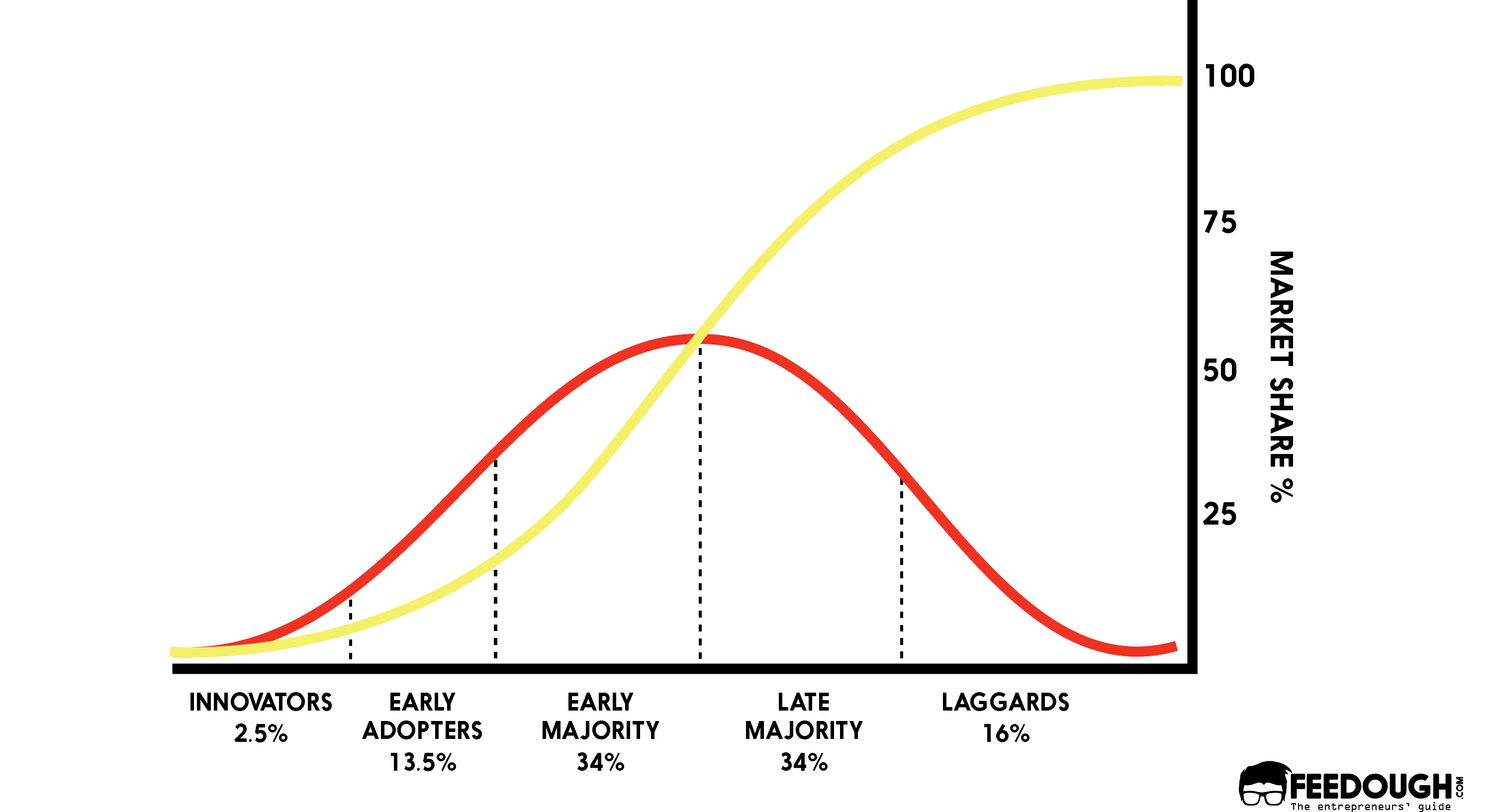
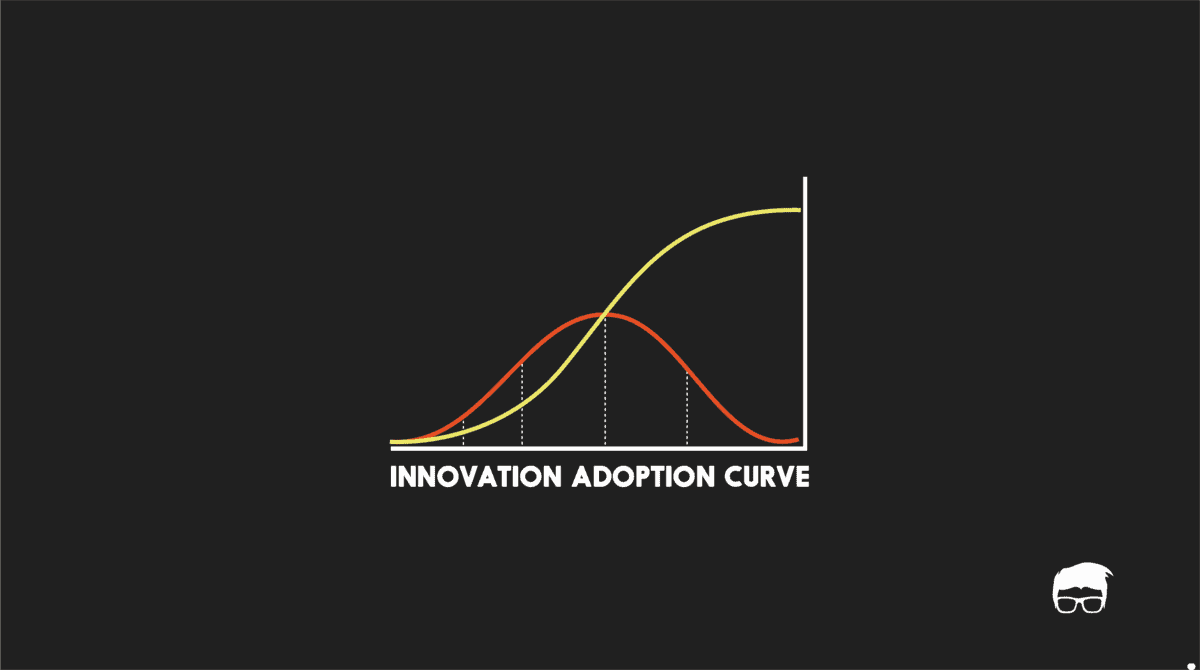
    In the book Diffusion of Innovations, Everett M Rogers classifies adopters into five categories: Innovators, Early adopters, Early majority, Late majority and Laggards.

    INNOVATION ADOPTION LIFECYCLE CURVE

    Innovators are your customers since the Beta phase. They are natural risk takers and tend to try out new products. They are prepared and are comfortable with the fact that some of the products they try may fail miserably. The basic strategy to follow when the product life cycle is in the introduction phase is to make sure that the product is made such that it gets used to the customer, rather than customer getting used to the product.

    What happens when we move past innovators? We reach the early adopters stage.

    It is known that a slow start for any startup could mean that it never reaches the growth phase. An amazing start is needed for a safe lifespan of your startup and early adopters give you that start.

    Who Exactly Are Early Adopters?

    Early adopters are users that use a product/service way before the most of the market try their hand on it. These are the group of people that write reviews on websites, post comments and share their experiences.

    The reason why early adopters try new products can be anything, social status or just curiosity but the common fact that binds them is their risk-taking abilities. Although their risk-taking abilities are not as high as innovators they still seem to leave their mark on the market.

    Why Should You Be Worried About Early Adopters?

    Early adopters are basically your first impression on the market. These are loud people who would recommend your product or service if they find it delivering value to them. Therefore, it is the most essential phase where your branding is in its nascent phase.

    Your brand is heavily damaged if early adopters reject your product. This will result in a very negative market impact and would generally result in a downfall of sales.

    On the other hand, early adopters are exceptionally good at influencing people. This is probably because of the fact that they are usually financially stable, have a public figure and are loud about their stance. A positive review by early adopters can shoot your brand value higher than most of your standard marketing strategies.

    Strategies that you need to implement for early adopters:

    Treat The Early Adopters As Royalties

    Early adopters usually take the risk of trying your product keeping in mind that the product might get cheaper along the line or the fact that the product may fail to deliver value and yet they try your product, that requires some rewarding.

    Take out time to answer their queries, solve their issues and give them the core idea of your company. This would work wonders as they would soon be influencing people for you.

    Pre-Releases

    Now, pre-release is an amazing marketing strategy. Pre-release usually gives additional services/features when booked. This means that early adopters are promised rewards for taking risks. With pre-releases, creators usually reward early adopters for getting their product without completely knowing how it is going to turn out.

    Knowing Your Early Adopters

    When products are customized for the user base, they usually receive an overwhelming response. Early adopters do not expect a perfect flawless product in the first run. However, with time and their feedback, if the products are modified as per their needs, early adopters make sure your product has an increased market reach.

    Referral Programs

    Referral programs are generally rewards provided for referring a user. This promotes an active indirect marketing system where individuals personally increase the user base for a small incentive. For early adopters, referrals are highly useful as they’re the pioneers and referrals would reward them the most.

    The Startup Process

    We know how important your dream business is to you. Therefore, we’ve come up with an all in one guide: The Startup Process to help you turn your vision into reality.

  • Understanding The Innovation Adoption Lifecycle

    Understanding The Innovation Adoption Lifecycle

    Do you ever wonder about how the market adopts a new product? Is there a process? A hierarchy? Should you market your product differently to the early adopters and late adopters? More importantly, who are your early and late adopters? Do these terms even matter?

    Knowledge of how an idea is adopted in the market and how it spreads among the communication channels is important to develop targeted marketing strategies for a new product. Innovation spreads in a systematic way, and those who understand it knows which route to take at every stage of the innovation adoption life cycle.

    Innovation Adoption Lifecycle

    Originated from a study on farmers behaviour, innovation adoption lifecycle states how an idea diffuses/spreads from the earliest adopters (innovators) to the laggards. It is a sociological model that describes the adoption of innovation according to the demographic and psychological characteristics of the target audience.

    The concept was coined by Everett M Rogers in his book Diffusion of Innovations, where he classified adopters into five categories: Innovators, Early adopters, Early majority, Late majority and Laggards.

    INNOVATION ADOPTION LIFECYCLE CURVE

    Innovators

    Innovators are your first customers (2.5%). They are the risk-takers who have big pockets and high status among their social network. These people love the possibilities of new ideas and new ways of doing things and often adopt the innovation/new product during its beta stage.

    The product is usually expensive and not perfect when presented to the innovators. But their risk tolerance and financial resources allow them to adopt the new technology that might ultimately fail and let them absorb the losses.

    Innovators are the influencers for both the manufacturers and the other users following them in the technology adoption lifecycle. They love testing new products, sharing reviews and feedbacks, and influencing the demand for that product.

    A business should focus on one-to-one marketing when reaching out to innovators. Personalized emails, product listing, and meetings are a few techniques used by marketers to market their new innovation to the innovators.

    Current day innovators include people who test and review your product on websites like Product Hunt, and niche influencers (bloggers, vloggers, and journalists) who test and review your product on their websites and Youtube, etc.

    Early Adopters

    Early adopters is the segment (13.5%) that tries/uses/experiences the offering way before most of the market try their hand on it. These users have the highest degree of opinion leadership and are the first ones to write reviews on websites, post comments and share their experiences with others. Besides this, they are usually financially stable, have a public figure and are loud about their stance.

    The motivation behind why early adopters try new products can be anything from the recommendation from innovators, building social status, or just curiosity.

    Although their risk-taking abilities are not as high as innovators they still seem to leave their mark on the market. They are the first impression on the market. The future of innovation depends on the early adopters as these users have good influencing skills. Take QR codes for example, which was considered the biggest failure by the early adopters and had to wait for almost 20 years to be adopted by the market.

    Marketing to early adopters isn’t easy. There isn’t any rule of thumb strategy and the marketers need to get into their shoes to develop an effective marketing funnel. They need to understand early adopters’ expectations and reward them accordingly. For example: Paytm researched and found out that the early adopters would acknowledge cashback and would love to share the application with others when given cashback.

    Current day early adopters include niche enthusiasts, status seekers and loyal customers who believe in buying the product during flash sales or during the initial days of the launch.

    Early Majority

    The early majority is the first sizeable segment (34%) of the target market to adopt the innovation. The people belonging to the early majority are not the risk-takers but have an above-average social status. They are often less educated less affluent and always look for cues from early adopters and innovators. They only adopt the innovation after being influenced by innovators and early adopters whom they follow or know personally.

    People belonging to the early majority are not the opinion leaders. However, a variety of things and emotions motivate them to try innovation. These include social status, early adopters influence, love for new (but trustable) experience, etc.

    Marketing to the early majority is fairly easy as compared to early adopters. The early majority usually believe in facts and stats as they are less educated than innovators and early adopters. They like to try new things and be a part of the social herd. They are attracted by the idea of a new experience that has been validated by the experts.

    Current day early majority include people who follow the influencers on Youtube and review websites. These are the people who wait for 2 months for the reviews to come in and try the product.

    Late Majority

    Late majority is the last sizeable segment (34%) of the target market to adopt the innovation. This segment is made up of risk-averse adopters who only adopt the innovation when it is validated and assimilated as a part of daily life by a majority. People belonging to this segment are usually old, less educated and less affluent than the early majority.

    People belonging to the late majority are very sceptical about new experiences, have below-average social status, and almost no opinion leadership.

    The late majority believe early majority more than they believe in the marketing message. One has to appeal to the early majority first in order to reach to the late majority.

    Current day early majority include people who wait for the next version to release before buying the previous version.

    Laggards

    Laggards is the final segment (16%) of the target market to adopt the innovation. This segment is made up of seniors and those with very low socio-economic status who doesn’t like change and only accept new things and experiences when forced to.

    People belonging to this segment don’t accept the innovation until all traditional alternatives are no longer available.  They are concerned with reliability, low costs, and ease of use. They belong to the very low-income group, are less educated, have low status and low social mobility.

    Unlike the other groups, laggards are not reliant on the status quo. By the time they adopt the innovation, it has already become outdated and been replaced by newer versions.

    Many marketers ignore laggards because of their disinterest in trying the products but since these people form 16% of the total customer base, they are a segment which could prove very useful when the product reaches its maturity.

    The Startup Process

    We know how important your dream business is to you. Therefore, we’ve come up with an all in one guide: The Startup Process to help you turn your vision into reality.

  • Product Differentiation – Definition, Types, Importance & Examples

    Product Differentiation – Definition, Types, Importance & Examples

    The markets are noisier and more crowded than ever, and customers are overwhelmed with too many choices. That is why standing out from the competition has become imperative for businesses with a long-term vision.

    There are two ways a business can set themselves apart from the other players in the market: through cost leadership or through product differentiation. While cost leadership attracts more price-conscious customers, product differentiation is a great technique to enforce brand positioning and word of mouth marketing strategies and get more loyal customers.

    What Is Product Differentiation?

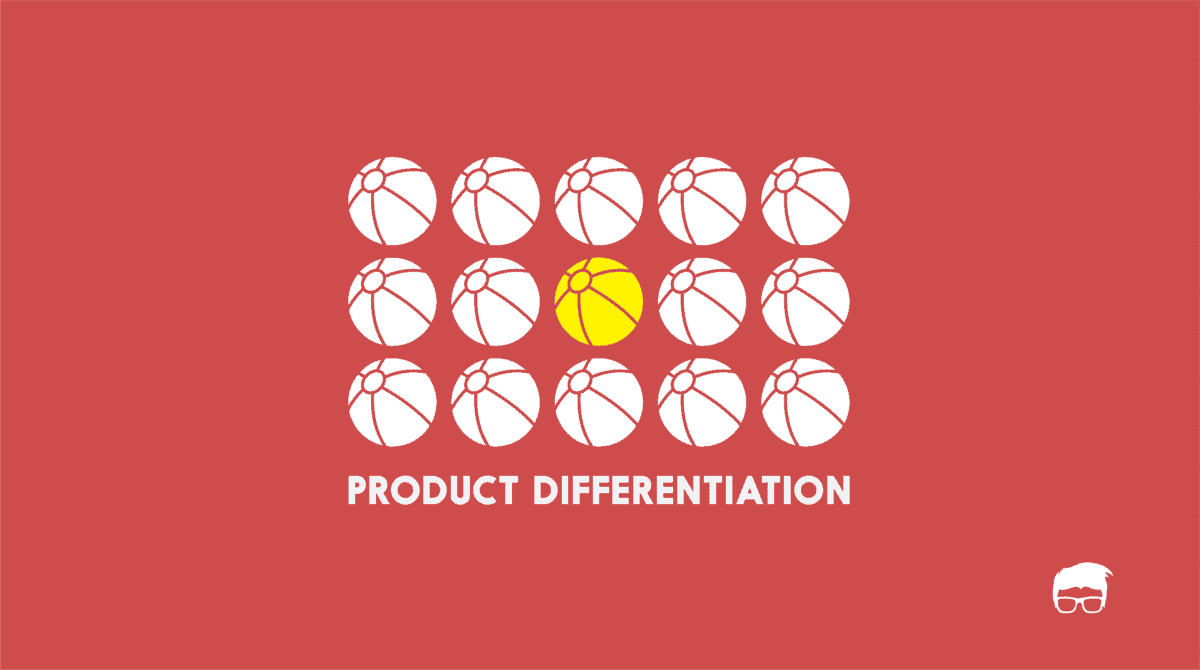
    Product differentiation (or just differentiation) is a marketing process of differentiating an offering (product or service) from others in the market to make it more appealing to the target audience.

    It involves defining the offering’s unique position in the market by explaining the unique benefit it provides to the target group. This may also be referred to pinpointing a unique selling proposition of the product to make it stand out from the crowd.

    Why Is Product Differentiation Important?

    The increased competition has divided the demand among different players in the market. This has made it very important for businesses to make their customers understand what different they have to offer.

    Besides making the product survive in the market, product differentiation is important for the following reasons:

    • Product differentiation translates the product attributes into benefits.
    • It answers the biggest question of the customers – ‘What’s in for me?’.
    • It gives the customers a reason to purchase the brand’s product and repeat the purchase.
    • It increases the recall value of the product.
    • It increases brand loyalty and builds brand equity.
    • Attribute-based differentiation is important for the brand to defend their price from levelling down to the bottom part of the price spectrum.

    Product Differentiation Types & Factors

    Differentiation depends on customer perception. It’s not how the brand sees its product, it is how the customer recognises the product. There are three types of product differentiation:

    1. Horizontal differentiation: Distinctions in products that cannot be evaluated in terms of quality. E.g.: Mineral water brands.
    2. Vertical differentiation: Distinctions in products that can be evaluated in terms of quality. It’s a case where it is possible to say that one good is better than the other.
    3. Simple (or Mixed) differentiation: Differentiation based on numerous characteristics.

    A product can be differentiated based on:

    • Price: The price is the most common determinant of which target group will be attracted to a brand’s product. It separates a premium product from economical products. Example: Zara’s products are considered premium products.
    • Features: Features like size, shape, ingredients, origin, etc. differentiate products in the same price spectrum. They also help the brand to back their high pricing decisions.
    • Performance & Quality: A good quality product always stands out from standard quality products. Example: Duracell lasts 10 times longer than ordinary batteries.
    • Reliability: Some products are known to be more reliable than others. That is, there is a less probability of them malfunctioning or failing within the given time period.
    • Looks: Looks play a very important role in differentiating the product especially in the case of apparels and other luxury products.
    • Channels of Distribution: Channels of distribution also plays a vital role in differentiating a product from the competition. For example, Amway uses a selective distribution strategy to position itself as a quality brand.
    • Complexity: The level of complexity of usage of a product plays a very important factor in differentiating products, especially in the technology industry.
    • Location: Manufacturer’s location, brand’s home country, and retailers’ location play an important role in differentiating a product from its competitors.
    • Marketing efforts: Marketing efforts give rise to the brand image which is a decent product differentiator. Other marketing efforts like sales promotion act as an add-on to differentiation strategy.
    • After-sale services: Good after sale services make the customers have faith in the brand and make them differentiate it from others.

    Services as offering add many more factors of differentiation. These are ease of ordering, delivery (on time or before time), experience, company-customer relationship, personalization, etc.

    Product Differentiation Examples

    A person doesn’t need to travel to places to witness examples of product differentiation. Product differentiation can be witnessed in grocery stores, TV advertisements, and even when you choose Facebook over Google+.

    Examples of Simple Product Differentiation

    • Choosing an iPhone over an Android as the customer considers iPhone to be a status symbol and believes that it has an easier interface as compared to Android.
    • Choosing a Tag Heuer watch over Titan as the customer prefers a Swiss watchmaker. Plus, he believes that Tag Heuer is a better brand than Titan.
    • Choosing to order a product on Amazon than to visit Walmart as the customer doesn’t want to leave his house.

    Examples of Horizontal Product Differentiation

    • Choosing between different mineral water brands. The customer doesn’t know the real difference but chooses one anyway.
    • Two ice-cream stalls selling similar ice-creams, but the customer chooses the one closer to them because s/he is indifferent between them.

    Examples of Vertical Product Differentiation

    • Intel i3 and Intel i5. The customer clearly knows the difference between the two and chooses one according to his preference.
    • Choosing Duracell over other batteries because the customer believes that it lasts longer.

    Advantages Of Product Differentiation

    Besides being an imperative for survival in the competitive market, product differentiation has the following advantages:

    • Creates Value: Product differentiation gives a reason to the customers to choose the brand over others.
    • Helps in defending high prices: It helps the companies to give a reason why they charge a high price for their product.
    • Helps in non-price competition: It allows the companies to compete in areas other than price.
    • Creates brand loyalty: A successful differentiation strategy creates brand loyalty among the customers.
    • Creates a perception of no close substitutes: A successful product differentiation strategy may create a perception among the customers that there isn’t any substitute available in the market.

    Disadvantages Of Product Differentiation

    • Added pressure on the manufacturers: Product differentiation adds a substantial amount of pressure on the manufacturers to decide which attribute could turn out to be the USP for that product.
    • Can increase prices: Sometimes, differentiating a product adds to the production and marketing costs which can be transferred to the end-users.
    • Increased Revenue Not Guaranteed: Product differentiation doesn’t guarantee more sales and more revenue as a business can even fail in predicting whether the customer would appreciate the USP or not.

    Go On, Tell Us What You Think!

    Did we miss something? Come on! Tell us what you think about our article on product differentiation in the comments section.

  • The Startup Life Cycle

    The Startup Life Cycle

    Every startup goes through a roller coaster of hits and misses. While riding this incredible roller coaster, most entrepreneurs get confused where their ride is heading. This article could work as a roadmap for you if you are already on this ride.

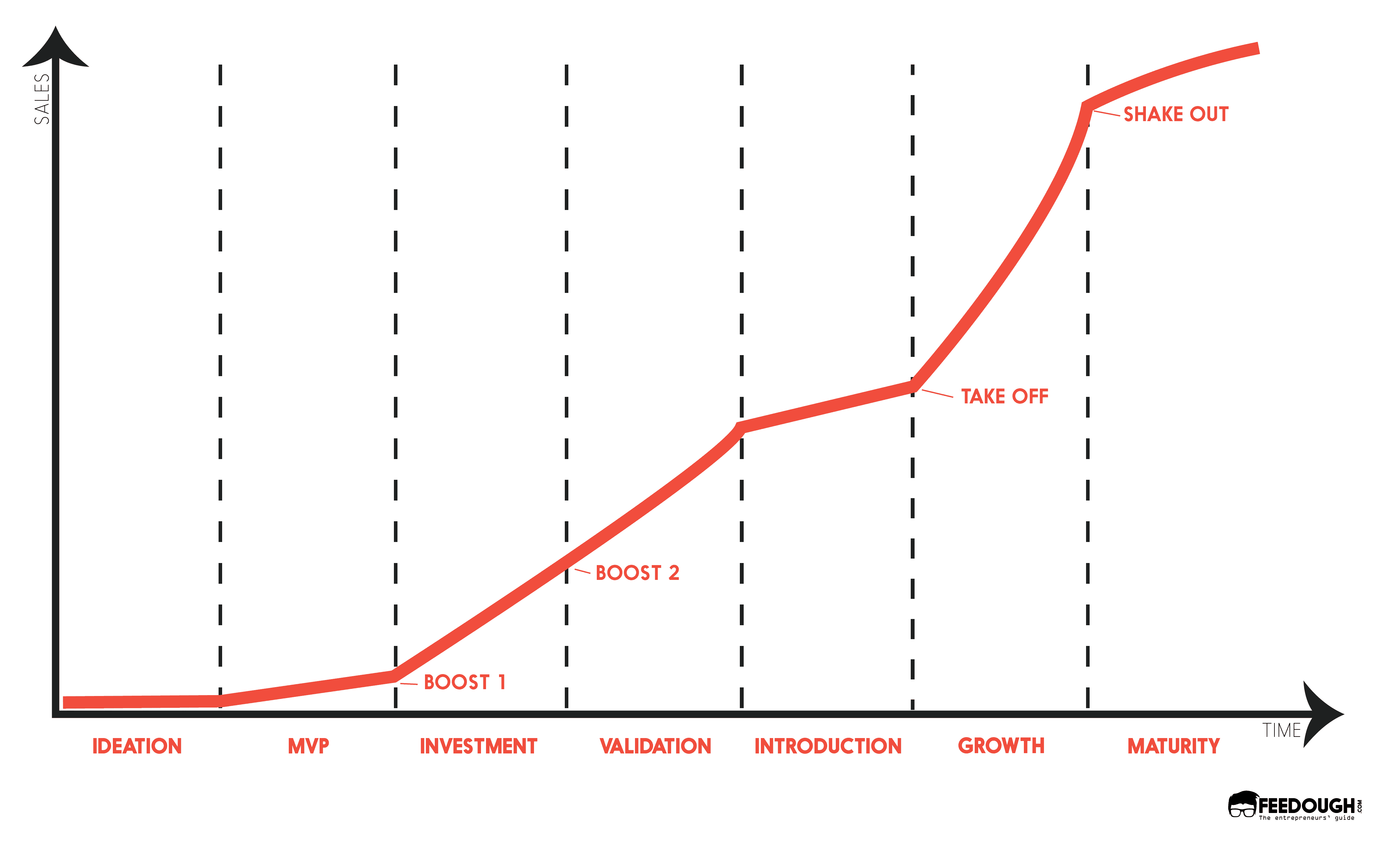
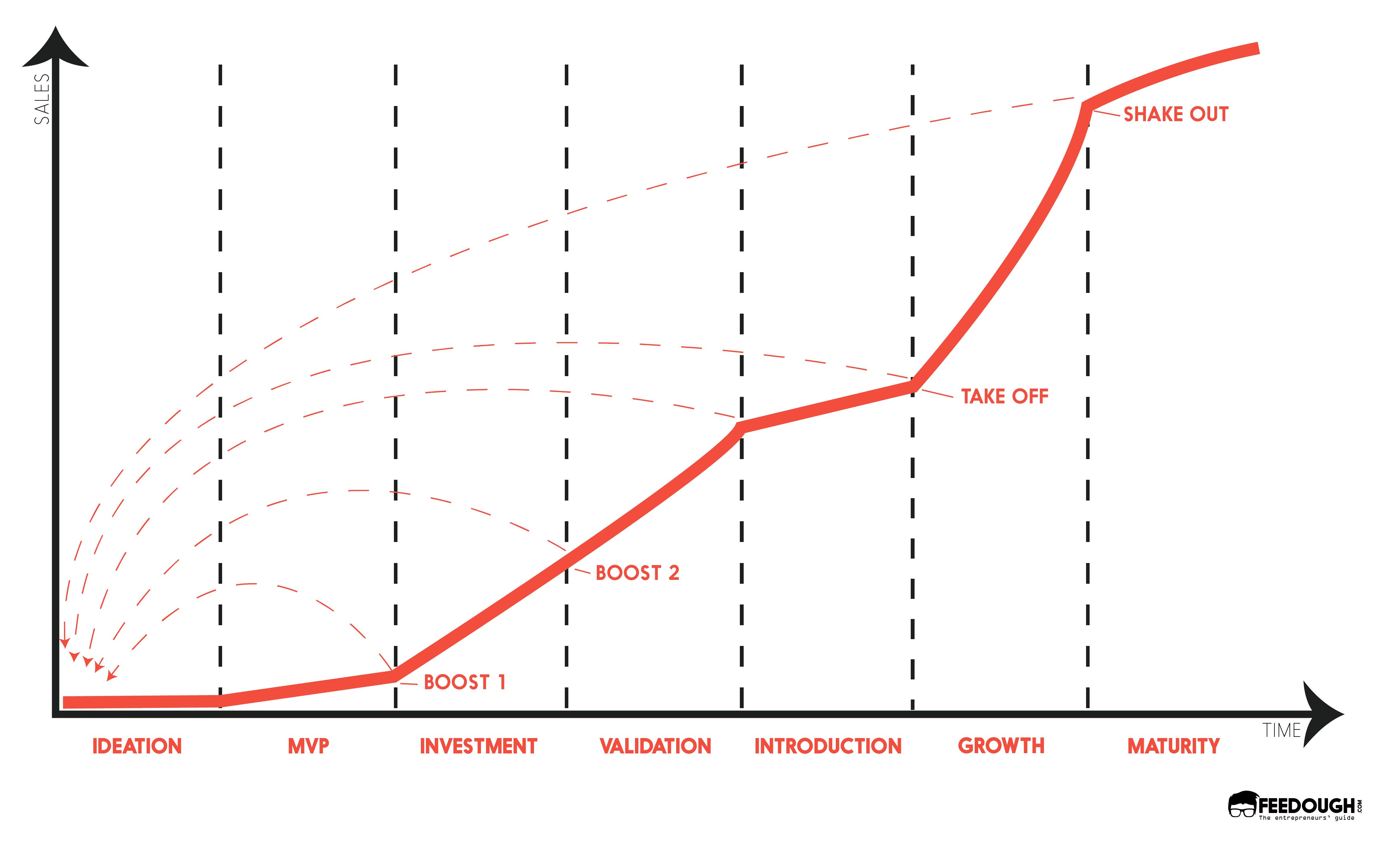
    How does a typical startup life cycle go about?

    startup life cycle

    Ideation

    The ideation phase is where the nascent idea of your startup is generated. The core idea of your startup is decided during this phase. You/your team decide on the principle of your prospective startup and the core question ‘Why are you doing this?’

    The ideation phase further develops into conceptualization phase where the execution of your idea is decided. The concept defines how your idea will be carried forward, and revolves around the question ‘How are you doing this?’

    To give a clearer picture, let’s take Facebook as our model.

    The idea behind Facebook was to create a platform where people could connect with each other in the virtual world.

    The concept behind Facebook was to create a website that allows individuals to put their pictures and basic information and add friends to their Facebook profile.

    MVP

    MVP stands for Minimum Viable Product. As the name suggests this is the phase where a startup essentially creates the zeroth model of its core idea. It is the first saleable version of your product designed with minimum yet sufficient features to satisfy early adopters and to validate the assumptions of usability and demand basis on which the final product (or the beta) is developed.

    An MVP isn’t supposed to be a detailed working model of your startup. MVP concentrates on execution and is a rough model that performs the basic idea of your startup.

    Investment

    Once you are satisfied with your MVP, you pitch your MVP to investors. This phase can get tedious as only 2 out of 100 startups get funded. But if you have researched well on the 4Ps of marketing: Product, Price, Promotion, Place it is highly likely that investors will favour your startup since investors usually want a product with an easy market. Deciding on the basic sellable aspect of your product/service is key to entice your investors into investing in your project.

    Validation

    Startup validation is key before moving into the final phase of Introducing your business model and the product into the market. In this phase, you, your investors, and your co-founders work on finding the possible reasons your startup might fail in the actual market.

    It is advised to have internal validation team (your co-founders, investors and everyone working in your team) as well as an external validation team (a trial network of people you create to test out possible flaws in the system) to find out possible fatal flaws in your startup or to find out where you can improve on your business model, your revenue model and the products to speed past existing competitors.

    The external validation process of the startup life cycle includes releasing of a beta version of the product.

    Beta

    The Beta version of your product/service is the pre-release version you give your target audience to test out the look and feel of your service. This is the testing water for major/minor changes, and the final chance to improve your final product before actually releasing into the market. Beta testing is usually done for services provided typically online.

    Beta is where branding plays a major role. The brand value is defined here and since this phase, the brand image is to be maintained.

    Introduction

    During this phase, the product is actually introduced in the market. This phase is majorly dominated by pioneers and early majority. These are the testers who try out your product and the major marketing that works here is word of mouth. Early testers provide great insights for hits and misses of your product in the early phase.

    Introduction phase should be planned such that the impact factor of your product is maximum. Aggressive marketing is essential to get your product out in the market for maximum reach.

    Growth

    During the growth phase, your product has set a firm foot in the market. With the brand generating a loyal customer base, this is the phase where a brand essentially moves out of the breakeven phase and generates revenue. During the growth phase, expansion of the company is a must as quantity will bring revenue and reach is increased by moving out from your tested zone.

    The growth phase is to be planned such that, the existing customer base is hooked to your product and enough incentive is provided to new users to try your product over existing market competition.

    Maturity

    Maturity is an indication that your startup life has reached a saturation point. Your idea is no more unique, many more competitors have evolved and you no more have a big competitive advantage in the market. This is the phase where you need to decide on the future of your organization.

    During maturity, it is essential to hold your loyal customer base by providing them quality services and improvements in your existing product. It is to be noted that new competition would woo your customer base from this point and countermeasures to stop this must be taken.

    Maturity is the phase where you need to realize that your company is no more a startup. Beyond this point, an entrepreneur has three major options:

    1. To plan new marketing strategies and work vigorously to maintain its position in the market,
    2. To create new products to set up a business ecosystem around your existing product, and
    3. To execute the exit strategy and start his entrepreneurial life again with a new product.

    Each option has its own consequences and if you choose the third option, you have to go through the startup life cycle all over again.

    What’s The Catch?

    90% of the startups fail. Most of them fail primarily due to self-destruction; probably because they don’t know the importance of pre-releases, the right time to introduce the product in the market, when to scale the startup, or when to go away with the word ‘startup’.

    A knowledge of the startup life cycle is important for every entrepreneur as it is different from any other product life cycle. If you’re it right, there are no downfalls in a startup life cycle. But one wrong assumption/decision and you’ll have to start it all over again.

    startup life cycle

    Go On, Tell Us What You Think!

    Are you an entrepreneur? Come on! Tell us what you think about our article on The Startup Life Cycle in the comments section.

  • What is Word Of Mouth Marketing? [Ultimate Guide]

    What is Word Of Mouth Marketing? [Ultimate Guide]

    Before you start planning out your next major ad campaign, here’s something for you to think about.

    75% of today’s buyers don’t believe advertisements.

    But don’t panic. Here’s another compelling stat.

    92% of them believe brand recommendations from friends.

    Is that a cue for you to rope in the best friends of your target audience as brand ambassadors? Well, no. But it is definitely a reason for you to consider the age-old, often-neglected, yet consistently successful strategy known as word-of-mouth marketing.

    What Is Word-Of-Mouth Marketing?

    Word-of-mouth marketing (or WOM marketing) is the act of a consumer talking about a product or service as part of his or her daily conversations rather than as a paid endorsement.

    In the pre-advertisement days, this was essentially how people came to know about products and services – when their neighbour talked about the delicious new meat-pie at the tavern, or their aunt told them about the fashionable new milliner in town.

    In today’s context, word-of-mouth marketing describes both these naturally occurring instances where a consumer talks about a product verbally or on online platforms (termed organic WOM), as well as targeted efforts by companies to drive positive online conversations about their products by happy customers (termed amplified WOM). The two are inherently linked – if there’s already a good amount of organic WOM about your product, your WOM marketing strategy will have a much greater impact; likewise, a well-executed WOM marketing campaign will generate more organic WOM.

    Given that 74% of consumers have identified word-of-mouth as a key influencer in their buying decisions, it’s clear that WOM is fast becoming a must-have constituent of any dynamic brand’s marketing strategy.

    How Does WOM Work?

    word of mouth marketing infographic

    At any given point, only a certain percentage of your target audience will be consuming what you sell. You’ll likely be advertising to a much bigger group – however, given the huge proliferation of online advertising and the seconds-long attention span of the modern-day consumer, a large portion of that group will either miss your ads or ignore them.

    However, think about this –

    Let’s say ten people consumed your product and had a great experience. Each of them posts a great review of your product on your company website as well as on one of their personal social media pages. That’s two reviews per person. Now let’s say a hundred people read each of those 2×10=20 reviews. That’s 2000 people reading great reviews of your product. Of those 2000 people, let’s say 100 now go and consume your product themselves. They, in turn, have a great experience and post positive reviews on your website and on a personal social media page. So that’s 2×100=200 more reviews. Let’s say ten new people read each of those reviews. That’s 2000 people reading great things about you. Of those, let’s say 1000 go and review your product in turn, thus adding 2×1000=2000 reviews.

    See what’s happening?

    For every positive review posted about your product, you’re getting a bigger audience and also more customers. It’s like a snowball rolling down a mountain – the further it travels, the more snow (or product reviews) it gathers. And while it may not necessarily happen in mathematical progression, a 10% increase in word-of-mouth (offline and online) has been found to translate into a sales lift of 0.2%-1.5% – so a few initial five-star reviews can go a long, long way.

    How To Integrate Word-Of-Mouth Marketing Strategies Into Your Marketing Campaign?

    Stripped down to its essentials, word-of-mouth marketing basically translates into growing sales for you without the ad spend. Your customers bring new customers to your site without you spending a dime – and since they came through a trusted connection, they’re likelier to trust you more and thus make a purchase. Combine this with how increasingly expensive Google Ads and Facebook Ads are becoming, and you have a major reason to rethink your marketing strategy – especially if you’re on a budget.

    But it doesn’t happen overnight. Customers are bombarded with new products every day, and they certainly won’t buy or review all of them. You need to attract and retain their interest in you – and you can do that by focusing on two major things:

    Give Them Reasons To Talk About You

    Customers are not going to praise you unless they like you. And they won’t like you unless you exert all your efforts into providing them with a top-notch experience. Take a step back from strategy and examine your brand first – what you sell, and how well you sell it.

    • Offer quality products – At the end of the day, it’s all about what you are selling to your customers. Look carefully into your production process – and your existing customer reviews – to see how you can improve your products and services. Sourcing quality raw materials, improving process efficiently, providing more options and improving customer service can all help ensure that you have a product worthy of notice in the first place.
    • Provide a seamless user experience – A justuno report reveals that 93% of consumers consider visual appearance as the key deciding factor in a buying decision, while Forrester claims that better UX designs could boost conversion rates by up to 400%. See how you can make your ecommerce site and ordering process simple and consistent across all devices. Carolina Panthers did this to perfection – after their site redesign on BigCommerce, reviews went sky-high, as did their numbers; with an 83% increase in mobile conversions and a 37% increase in overall conversions.
    • Deliver on and before time – 57% of consumers would hesitate to use a retailer again if delivery is late. It’s unlikely you’ll get too many positive referrals if you have a reputation for delayed or incorrect orders, so having a well-controlled inventory and a seamless order fulfilment system is crucial.

    Make It Easier For Them To Talk About You

    You can’t afford to stop at providing a great experience and then hoping that customers write nice reviews – you need to help them do so! Actively work towards making referring and reviewing a fun experience for your customers.

    • Ask for ratings and reviews – According to BrightLocal’s 2017 Customer Review Survey, 85% of customers trust online reviews as much as personal recommendations, and 49% of them need at least a 4-star rating before choosing to use a business. So collecting reviews from your current customers is crucial. Ask them honestly to review, straight after a purchase – and then display them on your website, social media pages, in-store and anywhere else you can. Be sure to tag your reviewer and thank them for their time!
    • Start an official referral programme – TexasTech research indicates that 83% of happy customers are willing to refer a product or service, but only 29% actually do so. You can gently push them towards actively referring – some rewards you could offer are a discount off the next order, a gift card or a bonus gift.
    • Encourage user-generated content (UGC) – According to Adweek, 85% of users find visual UGC more influential than brand content. Engage your followers in a two-way conversation and encourage them to post about you, perhaps through discounts for posts meeting certain criteria or a social media competition using your hashtag.

    Take It Up A Notch – Go Viral!

    Jonah Berger’s 2014 bestseller “Contagious: How Things Catch On” is essentially your WOM Marketing 101. In it, he makes use of extensive research on consumer behaviour to highlight the six main reasons people talk about something. He summarises these reasons as, cleverly, STEPPS.

    • Social currency – People love to look good. And by giving people shareable information that makes them look smart or in the know, we’re giving them added street cred (or social currency). When rolling out a new product, make your existing customers feel like they are getting exclusive access to it – that way, they’ll be eager to talk about it to their contacts.
    • Triggers – A trigger helps a product stay top of mind by instantly recalling that product whenever the trigger is seen, heard or read about. Think “peanut butter and jelly” – one is a trigger for the other. Or red-soled high heels – the fashionista will instantly think of Christian Louboutin.
    • Emotions – A message with a powerful emotional component is likelier to be shared. This, however, needs to be supplemented by a clear call to action. Think of how you can promote your product or service in a way that arouses your audience strongly to emotion – and thus share it with others.
    • Public – If the product or service concerns the public at large, they’ll be likelier to share it. This is particularly true in the case of medical information, food or lifestyle related research or social causes.
    • Practical Value – If you have information that’s useful and easily applicable, people will be eager to spread it far and wide! This boils down to providing knowledge that’s clearly superior to what else is out there and which your audience can easily apply in their own lives.
    • Stories – Anecdotes about your product make it come to life for your customers. Subway did this brilliantly with their story about Jared Fogle, the overweight college student who lost almost 250 pounds just by eating Subway sandwiches every day. Stories should have a clear outcome, be easy to retell and incorporate what you’re trying to sell – that way, customers will be motivated to share the story both online and offline, which means that your product also gets talked about.

    The main takeaway from his book is not that you should aim for viral status – because that’s honestly hard to achieve – but that there’s science behind why some things get talked about and some don’t, and that you can harness this science to get positive word of mouth for your products or services.

    What’s The Catch?

    In the world of business, there is definitely bad publicity, and with the ubiquity of social media, it’s easier than ever to be affected by it. And given that 65% of customers would stop doing business with a brand after just one bad experience, the snowball effect we talked about earlier could become an avalanche of online hate. While it’s impossible to never make mistakes, what is vital is to resolve customer issues as swiftly and satisfactorily as possible, thus transforming a potentially bad review into an example of great customer service.

    Additionally, it’s important to understand the distinction between collecting and engaging. Rolling out a shiny new referral programme or offering freebies in exchange for sign-ups might get you an initial wave of followers – but what next? Are they actually engaging with your brand? Are they talking about you on social media? Do they even know what your brand is all about? More importantly – what are you doing to keep them engaged? It’s important to keep the conversation going with your customers and give them a consistent scope for engaging with you. Having 100 followers who are truly passionate about your brand and talk about it often is much more beneficial for your brand than having 10000 followers who only hit the Like button to win a free iPhone.

    Bottom Line?

    Ad campaigns will come and go. Even viral phenomena have an expiry date. And in an age where multi-device and multi-window browsing are the norms and an increasing number of people are enabling ad blockers on their digital platforms, word-of-mouth marketing will fast become a necessity for a brand’s strategy rather than an option.

    Ultimately, it all starts with getting your fundamentals right – improving your products, optimizing website usability and delivering what’s expected when it’s expected – and then providing your customers with enough opportunities to talk about how you got them right. Do this with care and forethought, and you’ll develop a loyal customer base who will consistently promote you and bring new business to you – and not just for a discount, but because they truly care about what you do.

    Go On, Tell Us What You Think!

    Do you want to be a viral marketer? Come on! Tell us what you think about our article on word of mouth marketingin the comments section.

  • How To Choose The Right Business Model For Your Game?

    How To Choose The Right Business Model For Your Game?

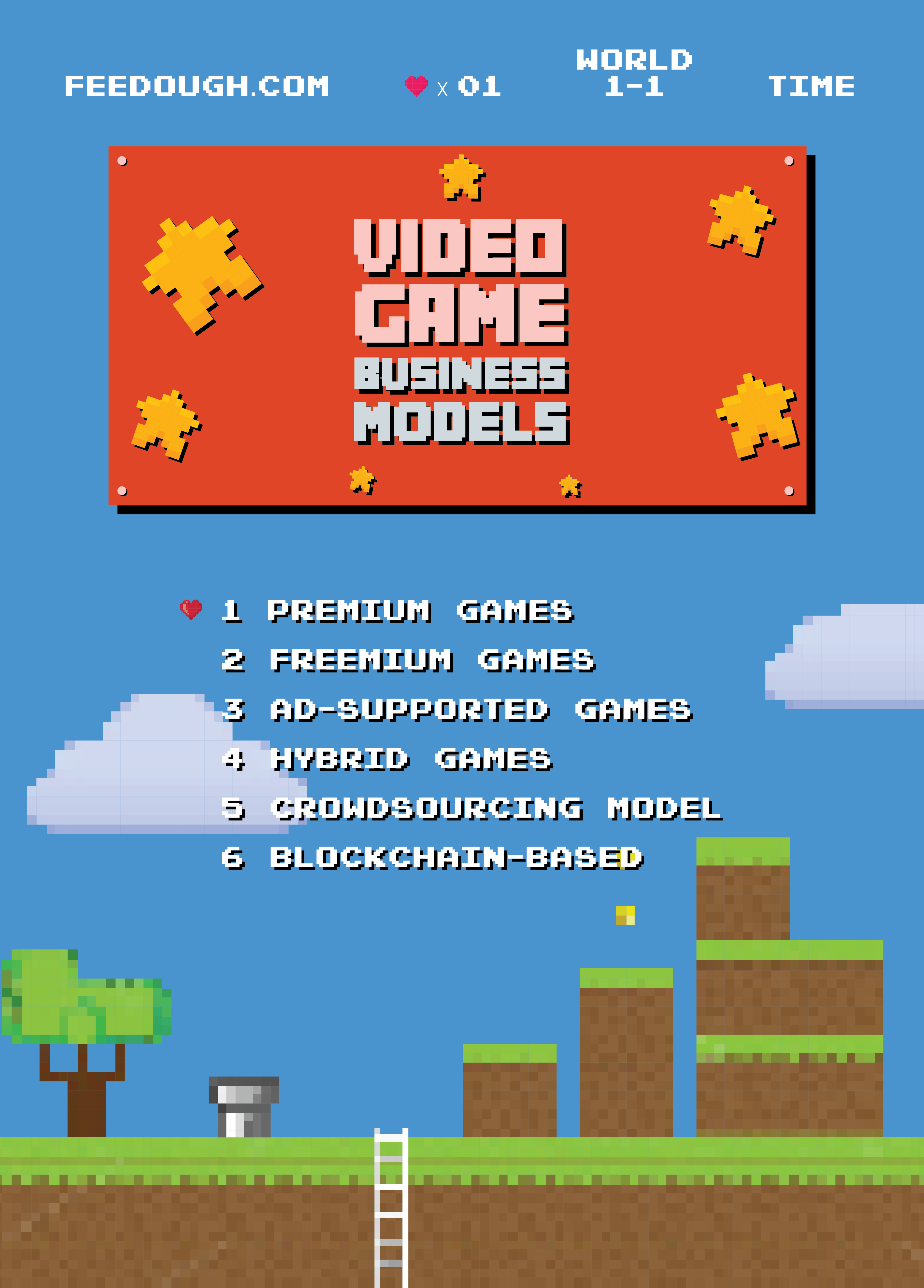
    If you are a game developer, choosing among the different game business models can be a bit of a fix. You probably are aware of premium and freemium games. But is that it? What if I told you there are 6 different ways you can build and monetize your game?

    The six types of game business models that exist in the present market are:

    1. Premium games: The ones which show their price tags before you get your hands on them.
    2. Freemium games: You get the boat for free, but you gotta pay for the oars.
    3. Ad-Supported games: Practically the same model as TV, you can watch the shows for free as long as you don’t mind the ads.
    4. Hybrid model games: A mix between In-app purchases and Ad-display which lets you pay to get rid of the advertisements.
    5. Crowdsourcing  model: You crowdsource the data/information from users and sell it to someone who needs the information. The game is designed in such a way that the users don’t even mind doing the work for you.
    6. Blockchain-based games: A decentralized system that generates more information from a particular user and keeps the chain flowing.

    Each business model is equally rewarding when executed perfectly and the right choice of the revenue model for your game can shoot your game into the big leagues.

    Seems unreal? Keep reading.

    game business models infographic

    Premium Games

    We know premium games have been in the market for a long time and it is the most traditional way to earn revenue from games. The basic model of the premium games is obvious: you have to pay to download/play the game. The only thing that has changed is that now you can sell your premium games online too. Google Play and Apple App Store and other game marketplaces like Valve take 30% of the sales of these premium games.

    With the rise of free games, you might think that premium games have no market anymore.

    But the reality is different.

    Premium games generate enough revenue to beat tough freemium competitors. And how is that? There are a few smart marketing techniques premium models use.

    Having a lite mode for the full game

    Premium games sometimes release a lite mode which has certain initial levels free to play. This gives potential users a gist of what the game is and such trial modes are usually the best marketing strategies for premium games.

    Having a free day/week

    Premium games usually have a free day/week where users can download the paid game for free and experience the gameplay. The reason to give away paid goods is really interesting, they do this increase the number of players. This essentially helps with two factors

    1) For multiplayer games, it increases the number of players to play the game with. Thus, it attracts more players to pay and play the game.

    2) It significantly improves the game’s ranking on grossing charts, thus getting in the eye of people who are casually browsing games. This works as an indirect advertisement for the game.

    Premium model is the oldest and can have a variable pricing depending upon the brand name, quality of content, etc.

    Points to keep in mind while releasing a premium game

    • Premium games would not market well if your idea isn’t original or groundbreaking.
    • The day of release is very important as the charts during initial release define the future of the game.
    • Releasing a premium game is not enough, you have to keep adding content and bring changes to cater to the existing user base and keep them interested.

    The Freemium model

    Freemium basically means that the user can play the game along with its basic mechanics for free without any hindrance. But there are certain additional features/add-ons/content the user can get by paying money. It may include micro-payments to play additional side missions, cosmetic customization for characters, extra lives or weapon upgrades for a particular mission.

    In-App purchases also allow purchasing premium in-game currency that is hard to get while playing free.

    Freemium games need to keep an eye on Average Revenue per user and thus the game is designed such that a user spends a particular amount of money while playing the game. Of course, it is not a compulsion and a user can complete the game by playing it for free. But these premium features/currency gives an edge over the game to users who pay for them and thus many faithful users to the game tend to make micro-payments.

    Points to keep in mind while releasing a freemium game

    • Freemium games tend to make the premium parts of the game overpowered in order to draw maximum target audience to buy it. This discourages players who are starting out in the game. Such games are termed ‘Pay to win games’ by the users resulting in negative marketing for the game.
    • There is no assurance that a user will make in-app purchases, thus the revenue generation from a particular user can never be given a particular number.
    • A strong analytics team is required to keep an eye on the game dynamics and what should be incorporated to sustain the game in this highly competitive market.

    Ad-Supported Games

    It is obvious that if a game isn’t asking for microtransactions in the game itself, it is selling you as a prospective customer to other applications/products. Most free games incorporate advertisements to earn revenue. There are multiple ways to earn revenue and basically revolve around three major parameters. Cost per impression, cost per click and cost per install.

    Now the placement of advertisements is key to generate revenue from ad-based models. Some games add a tiny bar at the bottom of the screen to display advertisements; some display advertisements between levels and some games provide incentives to watch advertisements like giving an extra life or a speed boost for watching an advertisement. Most applications have software libraries that shuffle and play advertisements automatically within the game.

    Points to keep in mind while releasing an Ad-supported game:

    • Although advertisements are a legitimate means of generating revenue, over intrusive advertisement usually damage the brand reputation. Thus, a balance between gameplay and advertisements is to be maintained.
    • Advertisements when not interactive are seen as irritating aspects of the game and thus an effort is to be made to make advertisements interactive.

    Hybrid Model

    As the name suggests, hybrid models incorporate in-app purchases as well as ad-displays and you can pay to get rid of advertisements in these models. A very basic incorporation of the two models resulting in an overall sound revenue generation makes this a viable option.

    Points to keep in mind while releasing a freemium hybrid game:

    • As this model allows users to pay to get rid of advertisements, game developers tend to use intrusive advertisement engines that take away a user’s game time so that users are forced to pay. Although this seems like the most profitable solution, it brings down the brand name.
    • Also, a balance between in-app purchases and advertisements is very essential because any excess in either of the two can prove fatal to the game’s market.

    Although these models are the most common choices for setting up a revenue system, there are a couple of business models you should be aware of to make a well-informed decision for your firm.

    Crowdsourcing Model

    Crowdsourcing model is designed in a way that the game users perform certain tasks for the developer’s clients while playing the game. The gamification of tasks create a win-win situation for both the parties get what they want: users get an ad-free premium game experience and the developer makes money.

    One of the most famous examples of crowdsourcing game business models is Duolingo’s business model. DuoLingo has successfully incorporated this model where it crowdsources translations of scripts from users and gives the translated script to organizations that require translation of content.

    Points to keep in mind while releasing Crowdsourcing information game model

    • Since this model is only applicable to games that are able to crowdsource information/data/tasks, the applications are limited and it is hard to implement this model. But if your idea is big on crowdsourcing, you might make it into this hardly used business model.
    • The outsourced task shouldn’t be monotonous or boring as it’ll reduce the retention rate of the users.

    Blockchain-Based Games

    With the obvious boom of DAPPs (Decentralized apps), it was about time that blockchain expanded its domain and moved on to other applications and not be limited to cryptoassets. To get a clear idea of how a blockchain model will work in a gaming market, you need to get a basic idea of how blockchain works.

    The two basic games that work on this principle are Huntercoin and Cryptokitties.

    While Huntercoin works on the basic principle of Human mining, where players fight against other players over resources on a common, this game is capable of creating an AI level competition where miners mine for HUC (Hunter coins) while fighting off other competitors. This game spawns a General and two soldiers that are under the user’s command as they fight off other players to gain resources and mine the HUC.

    CryptoKitties work on the basics of buying a virtual kitty, raising it and selling it. The game is governed by Genetic algorithm processing of new kitties where genetic algorithm a system that works similar to our genes picks traits from the parent code and mixes them in a random order resulting in a totally different offspring. This way users own and create their own virtual kitties in this blockchain model. This is a blockchain model since there is no central control over the kitties and the generation of new kitties is purely dependent upon the users. Both these models have a detailed decentralized model i.e there is no central control and the chain moves on from one user to another. The only difference is how the chain is seen in each case.

    Points to keep while releasing a blockchain based game

    • Blockchain-based games are heavy on decentralization thus this model will work only if your game is able to generate new information for each user. This means, there is no central control over the data produced and the ability to carry forward the data is limitless.
    • Blockchain games have a very streamlined approach to their game. If your game wasn’t developed with blockchain being its core idea, it will be hard to implement this model into the system. A clear and strategic plan is a pre-requisite to implementing this system into your game model.

    Go On, Tell Us What You Think!

    Are you developing a game? Do you like the new business models for games or would you stick with the traditional ways? Let us know in the comments below.

  • Steemit Business model | How Does Steemit Make Money?

    Steemit Business model | How Does Steemit Make Money?

    Developed in 2016 by Dan Larimer and Ned Scott, Steemit is a renowned blogging and social media platform built on the blockchain. Dan Larimer is a big name in the Blockchain community who has also founded Bitshares, the decentralized asset exchange, and EOS, the cryptoasset whose ICO raised $4 Billion.

    Yes, that’s billion with a B!

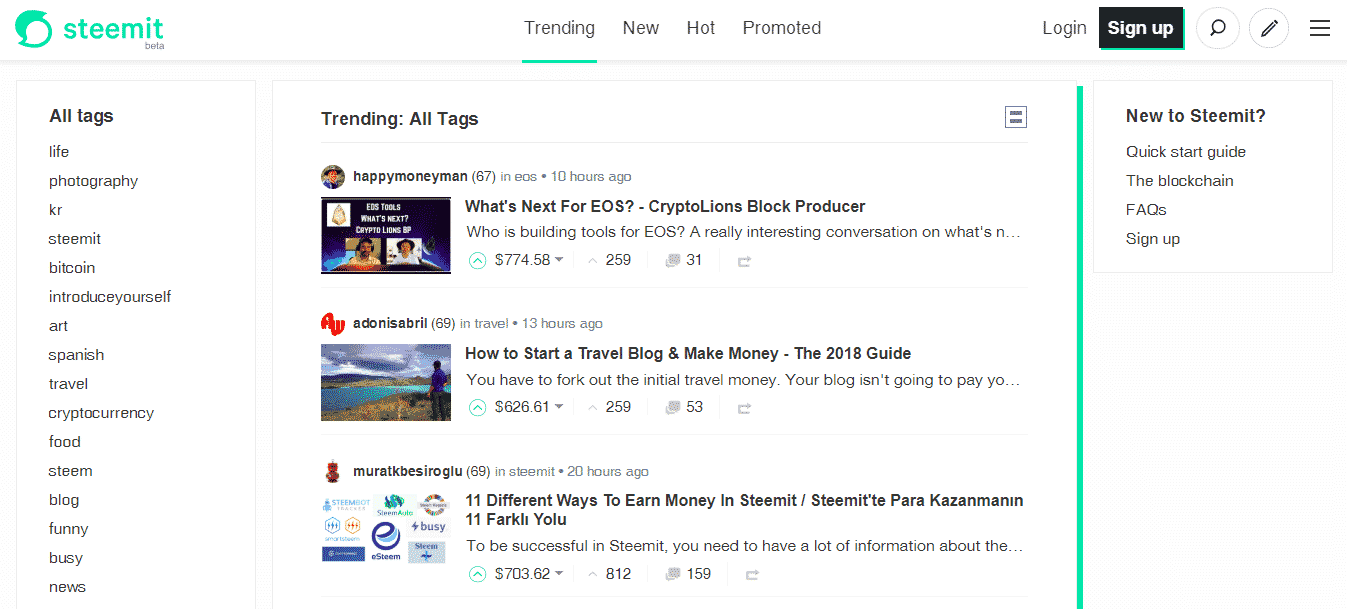
    Steemit has an interface similar to Reddit but with a tinge of Medium to it. Just like other famous social networks, it has a newsfeed that incorporates trending posts as well as the posts of the users you follow. Anyone can create an account for free and write a blog post with embedded images and videos, as well as comment on others’ posts. But that’s about where the similarities end.

    steemit business model

    How Steemit Works?

    The blockchain based social media network looks like any other social network but its business model has disrupted the industry. Steemit is based on the Steem blockchain which not only stores the cryptoassets but the content too. That is, all the content posted on Steemit is stored in the Steem blockchain and cannot be removed by any central authority like in the case of Facebook. Its regulated/moderated by the users to prevent plagiarism, illicit content, and other unnecessary-unwanted-useless-content.

    The platform works on the Proof of Brain concept. There’s a reward system where content creators and curators are paid out which, in theory, should be based on the value they add to the platform. The platform uses the 3 different decentralized cryptocurrencies to reward both content creators as well as curators who can upvote, downvote, comment, and flag posts.

    1. Steem – Their tradable cryptocurrency (utility token) that you can buy and sell on exchanges. Steem can also be used on the Steemit platform and can be powered up into Steem Power, traded for Steem Dollars, and transferred to other accounts.
    2. Steem Power – Steem Power is often referred to as the frozen Steem. It is held by content creators and is used to increase their influence on the Steem Network. The more Steem Power they hold, the more value their posts and upvotes have. The more value their posts and upvotes have, the more is the reward potential.
    3. Steem Dollars – The stable cryptocurrency, designed to be pegged to US$1, that serves as a way for content contributors to know exactly how much they are getting paid. It can be traded with Steem and can be transferred to other accounts.

    How Are The Users Paid On Steemit?

    The way Steem comes up with these tokens to reward users is simply by creating them. Unlike bitcoin, the tokens are already pre minded, and each year they inflate the supply to have more tokens to distribute.

    Everyday Steem rewards 90% of the new Steem units to the people who hold Steem Power Units and 10% of the new Steem units are paid to content creators, curators, and commenters.

    The payout reward for each post is as follows:

    • At least 75% of the amount goes to the author.
    • At most 25% is distributed among the curators.

    The contributor’s job is to write content that they think will add value.

    The curator’s job is to then vote on the content based on how good they think it is. To try to keep it somewhat of a meritocracy, Steemit has some clever ways of incentivizing curators to vote only on quality content.

    According to Coindesk,

    To incentivize this sort of voting, there is also the curation reward paid out in the form of Steem Power. If a post does well, you earn more Steem Power than if a post doesn’t do well, thus incentivizing you to only vote for content that you believe is high quality.

    Not every vote from the same account is equal in value. Voting on multiple pieces of content reduces the strength of each of your votes depending on how much time passes between each vote.

    steemit payment

    Contributions are paid out half in Steem Dollars and half in Steem Power, with the option to boost that up to 100% Steem Power.

    Curators are paid out only in Steem Power.

    How Does Steemit Make Money?

    Steemit doesn’t monetize its platform with advertisements. Rather, it uses the following ways to earn money.

    Steemit makes money when its users invest into Steem Power so their posts can be seen by a larger audience, thus getting more votes which translates into more money. Steem Power is locked for two years, so theoretically Steemit could use that money as an investment in the platform by which they can make a larger return than what they’re giving back with rewards.

    Additionally, as we mentioned in the blockchain business model, their tradable Steem token can appreciate in value, which will bring in a source of cash for the company.

    The developers have also held a portion of the tokens, which they can cash out or reinvest back in the business.

    Steemit also allows its users to promote their posts to reach a larger audience. Steemit has its own built-in way to promote each post. This is not unlike other decentralized platforms such as Minds, which also allows users to boost posts this way as well. Think of it like a Facebook Ad, your essentially paying for people to see your content, hoping that will convert to sales for your business, or in this case, upvotes and earning potential for your post.

    The best way to think about posts in Steemit can be summarized by the following statement from this article,

    “Steemit has no explicit ads, but you can imagine each post as a single advertisement. In order to attract attention or “sell the contents”, one should invest his money. If people like your post you will get your money back and even earn something. Other content creators will lose.”

    Can You Make Money Blogging On Steemit?

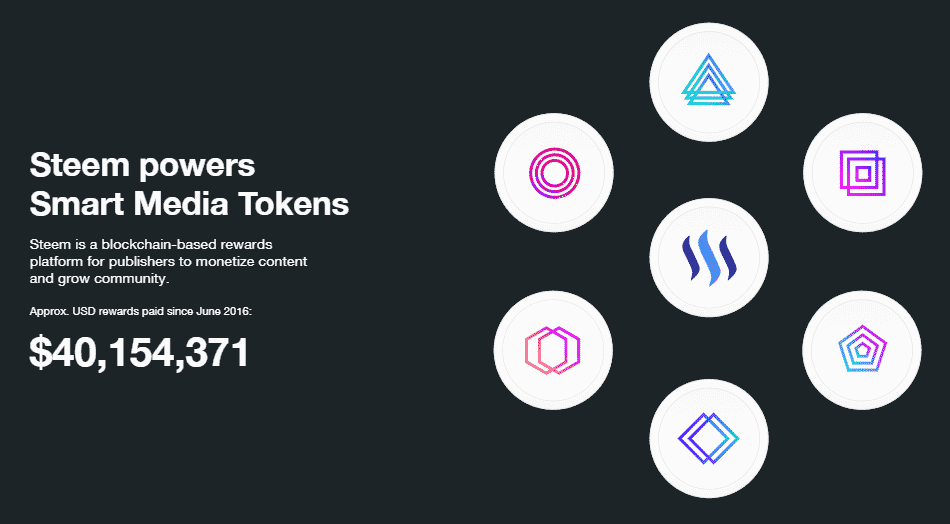
    According to their website, they have distributed a little over $40 Million dollars! So someone’s making money.

    steem money

    Here is a great article that takes an objective look at if you can really make money blogging on the Steemit platform

    The verdict from the article is:

    Yes, you can.

    But it takes two things.

    1. An initial investment – While creating an account and blogging is free, if you want your posts to have any kind of reach you’re going to need Steem Power. In which case, you’d have to buy Steem then ‘power up’ to Steem Power.
    2. Hard work and consistency – Like any business, making money on Steemit takes persistence and a time commitment. It’s not as simple as signing up and getting paid to put in minimal effort.

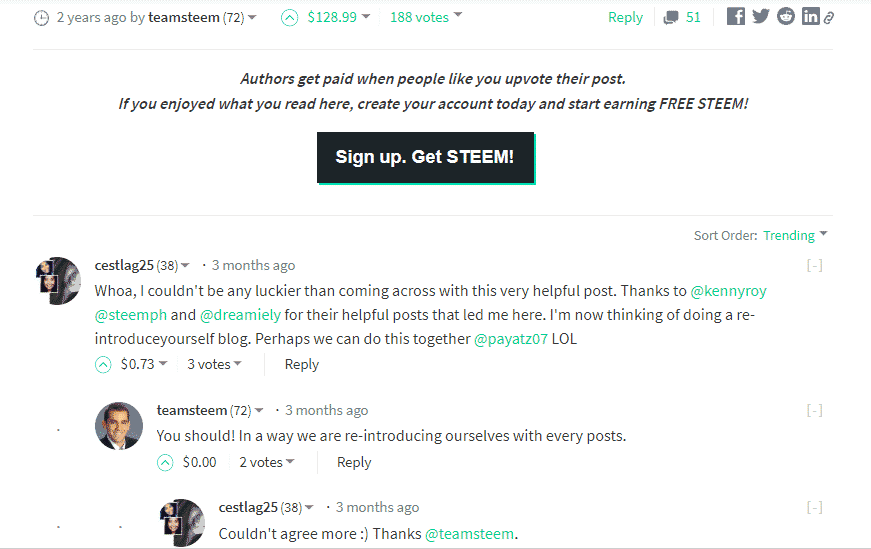
    steemit free

    Also note that, while the payouts are still very real, there are a lot of hoops you have to jump through in order to actually exchange your Steem Dollars or Steem Power for U.S Dollars

    And the way the incentives are structured, it’s in your best interest to keep your money in the platform, which does create a risk if it doesn’t end up succeeding.

    Bottom Line

    Steemit is a new and interesting platform in the blockchain/crypto-space that has gotten many excited about the future of blogging and content creation. However, some have been sceptical about whether or not Steemit’s business model will actually work or it’s just a house of cards.

    The platform has also received criticism as there are a number of third-party service providers that use bots to automatically upvote the posts to boost it and increase its earning potential. This reward system has created a whole market of ‘whales’ that take advantage of the system by buying large amounts of Steem Power and using the bots to promote their posts.

    Go On, Tell Us What You Think!

    Does Steemit business model seem sustainable? Come on! Tell us what you think about our article on how Steemit makes money in the comments section.