Feedough Logo

Blog

  • 9 Most Used Startup Valuation Methods

    9 Most Used Startup Valuation Methods

    Raising funds is an inevitable part of a startup’s journey. Entrepreneurs must go through several funding rounds to raise the necessary funds for expanding their operations.

    A startup needs to raise funds at the right time; before it’s too late to join because of competition or too early to hamper the product-market fit.

    The main issue arises when a startup can no longer run on a bootstrap model, meaning that the founder can no longer use their existing resources in the business. They have to look for investors, venture capitalists or incubators to invest in their businesses.

    But before all that, the founder needs to determine how much funds they need. This is where the process of startup valuation comes in.

    However, you have to ensure that your startup doesn’t end up getting overvalued or undervalued, as it will negatively impact the investors.

    To avoid this, here are some startup valuation methods to help you in this process.

    Startup Valuation Terminologies

    Before moving on, here are some key terms you need to understand:

    • Startup valuation: The value of a startup simply means what the startup will be worth if it’s sold today for IPO or to any other firm. It considers factors like the team’s expertise, product, assets, competition, market opportunities, and growth potential.
    • Pre-money valuation: The pre-money valuation simply refers to the company’s value before any investment.
    • Post-money valuation: The post-money valuation refers to the company’s value after raising funds. Simply put, pre-money valuation plus the amount of investment is the post-money valuation.
    • Venture capitalists: Venture capitalists are private investors that buy a portion of a company in exchange for capital (money). These companies can be startups or small companies with high growth potential in the future. They are generally a part of a VC firm that has an investment fund dedicated to financing businesses.
    • Pre-revenue startups: A company that is at a prototype stage or has launched its first product in the market but has not actually made any money from selling its product or service.
    • EBITDA: Earnings before Interest, Tax, Depreciation, and Amortisation
    • Angel investors: Angels are wealthy private investors who invest in small businesses or startups in exchange for a stake in their business. Unlike VC firms, angel investors use their own net worth for investing.

    For Pre-Revenue Startups

    Most startups don’t have concrete earnings at the beginning of their life cycle. As a result, it becomes difficult to value startups without any financial data. But, founders of pre-revenue startups still need to ascertain the value of their company when raising funds.

    So here are a few different startup valuation methods used by entrepreneurs when they are pre-revenue.

    The Berkus Method

    The Berkus method calculates the value of a startup before it generates its first revenue. Instead of financial estimates, it focuses on the risks connected with the company.

    Founders of startups frequently expect rapid sales growth and unrealistic profit margins, which they are unable to meet.

    As a result, Dave Berkus created this model to value a startup based on its potential instead of actual performance.

    Under this startup valuation method, your startup is assessed based on five key success factors associated with major risks that can make or break a startup. These are

    1. Sound idea – It represents a business’s basic value, indicating that it has a good startup idea.
    2. Prototype – Technology risk is reduced if a company has a product that attracts customers.
    3. Strategic relationships – Strong strategic alliances and partners reduce the market risk of a startup.
    4. Quality management – An excellent management team reduces the risk of poor implementation.
    5. Product roll-out or sales – Production risk is reduced when a company has strong signs of revenue growth in the future.

    Each factor is assessed and assigned a monetary value ranging from zero to $500,000. The sum of all five values is a startup’s pre-money valuation, which can go up to $2 million – $2.5 million under this method.

    Let’s understand this with an example:

    Value driver
    Assigned value (Maximum $500,000)
    Sound Idea
    $300,000
    Prototype
    $275,000
    Strategic relationships
    $175,000
    Quality management
    $350,000
    Product roll-out or sales
    $200,000
    PRE-MONEY VALUATION (SUM)
    $1,300,000

    Even if you have a good business idea ($300,000), your startup requires an excellent implementation team to succeed. Now if you have a team of domain experts and professionals on board, so the highest monetary value is assigned to quality management ($350,000).

    The sound technology used makes the prototype marketable ($275,000) and shows promise of generating revenue in the future ($200,000). As a result, your company will be valued at $1.3 million.

    Cost To Duplicate

    As the name implies, the cost to duplicate approach determines the cost of building the same startup from scratch.

    Every expense from the cost of building a product to purchasing physical assets is considered. The sum of all these expenses is the “fair market value” of the business.

    The rationale is that a potential investor would not allow a higher valuation of the business than its fair market value.

    If you have a SaaS startup, for example, it will be valued at the overall cost of developing the software. For a high-tech startup, the costs could be incurred in research and development, filing patents, and product engineering.

    By concentrating solely on a company’s physical assets, this approach largely ignores intangible assets like human capital, intellectual property, or brand value. This is a major drawback as intangible assets are an important source of competitive advantage and are often described as a company’s lifeblood.

    Another flaw with this startup valuation method is that the startup value remains unaffected by the company’s future potential to generate revenue, profits, and higher growth rates.

    The cost-to-duplicate approach is often seen as a starting point in valuing startups as it is merely a record of historic expenses. You can combine this with other approaches like the Berkus method or Scorecard valuation to achieve better results.

    Discounted Cash Flow Model

    The discounted cash flow model refers to a valuation method that determines the value of a startup based on its future cash flows.

    It is one of the most widely used methods that consider the time value of money. This simply means that a dollar is worth more today than a year from now because it can be invested.

    For example, with a 10% annual interest rate, $1 in a savings account will be worth $1.10 after one year, $1.21 in 2 years, and so on.

    The projected future cash flows are then discounted with a fixed rate to determine their present value.

    The sum of all discounted cash flows for the period is termed the startup’s value.

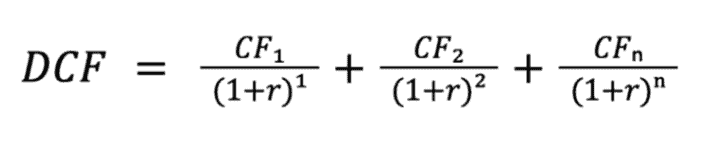
    The formula for the DCF valuation method is:
    Discounted Cash Flow Model

    Where CF1 = Cash flow of year 1

    CF2 = Cash flow of year 2

    CFn = Cash flow of year ‘n’

    n = number of periods

    r = discount rate

    Cash flow refers to the net amount of cash and cash equivalents moving in and out of business. For valuing a startup, we take free cash flows, which refer to earnings (including interest) net of taxes

    The number of periods is the number of years cash flows are expected to occur.

    The discount rate is usually taken as the weighted average cost of capital (WACC) or cost of capital. WACC refers to the return expected by the providers of capital.

    Let’s understand this method with the help of an example:

    Suppose your company A Ltd. is evaluating a new project. Your company’s WACC is 10% hence the discounting rate. The project has the following cash inflows for the next five years along with the initial investment of $1 million.

    Consider the long-term growth rate to be 15%.

    So terminal cash flow is calculated for the period after five years as follows

    Free cash flow after Year 5 = Free cash for the last period (Year 5) * (1 + growth rate)

    Year
    Cash flow (in $)
    Discounting factor (10%)
    Discounted Cash flow (in $)
    1
    100,000
    0.909
    90,909
    2
    200,000
    0.826
    165,289
    3
    300,000
    0.751
    225,394
    4
    400,000
    0.683
    273,205
    5
    500,000
    0.621
    310,460
    5
    575,000   (terminal cash flow)
    0.621
    357,075
     
    The sum of discounted cash flows
     
    1,422,332

    Hence the value of the startup, in this case, is $1,422,332

    Scorecard Valuation

    Formulated by Bill Payne, the scorecard valuation is one of the most popular methods used by angels.

    Like the Berkus method, the scorecard method doesn’t rely on financial projections but compares other funded startups in the same region with added criteria.

    First, you determine the pre-money valuation of the company. Then, you’ll compare where your company stands on the following parameters.

    1. Strength of the Management Team (0-30%)
    2. Size of the Opportunity (0-25%)
    3. Product/ Technology (0-15%)
    4. Competitive Environment (0-10%)
    5. Marketing/ Sales Channels/ Partnerships (0-10%)
    6. Need for additional investment (0-5%)
    7. Other (0-5%)

    Now let’s take an example to understand this startup valuation method better.

    Suppose your company X Ltd is looking to raise funds.

    The first thing you do is find the average pre-money valuation of comparable companies. Say, you found pre-money valuations of three companies:

    A Ltd
    $3,500,000
    B Ltd
    $5,000,000
    C Ltd
    $3,500,000
    Average pre-money valuation
    $4,000,000

    Now, you have to adjust this valuation based on some attributes. This is how we find the adjustment factor.

    Attribute
    Range
    Actual weight (X)
    Target company (X Ltd) (Y)
    Factor (X*Y)
    Strength of the management
    0-30%
    20%
    100%
    0.2
    Opportunity size
    0-25%
    15%
    60%
    0.09
    Product/ technology
    0-15%
    15%
    130%
    0.195
    Competitive Environment
    0-10%
    10%
    150%
    0.15
    Marketing/ Sales Channel/ Partnerships
    0-10%
    5%
    75%
    0.0375
    Need for additional investment
    0-5%
    5%
    100%
    0.05
    Other
    0-5%
    0%
    80%
    0


    Adjustment factor
    0.7225

    The actual weight you assign to each parameter is subjective to your judgments. For example, if you believe the management team is not strong enough, its weight can be lowered to 20%. If you think there is a lot of competition in the market then the weight can be 10%.

    The target company’s impact is assessed based on a worksheet which is a list of various issues and their impact.

    The adjustment factor (0.7225) is multiplied by the average pre-money valuation ($4,000,000).

    This gives the target company’s pre-money valuation to be $2,890,000.

    Venture Capital Method

    Venture capital firms invest in startups by buying a portion of the company in exchange for money. They use startup valuation to determine how much of a company they should buy.

    In the absence of positive cash flows or good comparable companies in the market, it becomes difficult to establish the value of a company.

    As a result, Bill Sahlman introduced the venture capital method of startup valuation that focuses on the Exit Value (EV) or Terminal Value (TV), which is the value at which the company is expected to be sold at a future time.

    Let’s understand the process with an example.

    You are looking to raise $5 million as an investment for your startup.

    First, determine the company’s financial forecasts including projected sales, EBITDA, and Net Profit.

    Year 1
    Year 2
    Year 3
    Year 4
    Year 5
    Revenue
    $1M
    $10M
    $30M
    $55M
    $100M
    EBITDA
    $0.5M
    $2M
    $5M
    $15M
    $20M
    Net income
    $0M
    $1M
    $3M
    $6M
    $10M

    Now, let’s say that the Venture Capital firm wants to exit by Year 5. This implies that the Exit Value will be calculated at Year 5.

    The comparable companies in the market are trading for 10 times their earnings (net income)

    Exit Value (EV) = Net Income x Multiple

    EV = $10M x 10 times = $100M

    Now, you discount the exit value with a rate equal to the desired rate of return of VC investors to reach a Present Value (PV).

    Rate of return expected = 33%

    Using the DCF formula

    PV = $100M / (1 + 33%)^5 = $24M

    This present value of $24M is the company’s post-money valuation.

    Now subtract the initial investment of $5M to get the pre-money valuation.

    So the pre-money valuation will be $19M.

    To calculate the ownership stake of VC

    Amount of initial investment / post-money valuation

    $5M / $24M = 20.83%

    Risk Factor Summation

    The risk factor summation or the RFS method is a pre-money valuation method for early-stage or pre-revenue startups.

    Like the scorecard valuation, the RFS method begins with a base value which is the pre-money valuation of a company computed on the basis of comparable startups.

    This base value is then adjusted for 12 standard risk factors.

    Simply put, you compare your startup to similar startups in the market and judge whether you have a higher or lower risk.

    Each of these risks is assigned a score within the range [-2,2] depending on its severity.

    Rating
    Risk
    Adjustment to Pre-money valuation
    +2
    Extremely Positive
    Add $500,000
    +1
    Positive
    Add $250,000
    0
    Neutral
    Add/ Minus Nothing
    -1
    Negative
    Minus $250,000
    -2
    Extremely Negative
    Minus $500,000

    You will understand this better with the help of an example.

    Suppose you are looking to raise funds for your startup FabFood Ltd from the market.

    You start by determining a benchmark value which is computed by taking the average of the valuations of comparable startups in your area.

    Name
    Valuation
    ABC Foods Ltd.
    $4M
    XYZ Edibles
    $3.5M
    PQR Ltd
    $6M
    Spoodle Ltd
    $2.5M
    Average pre-money valuation
    $4M

    This value will be the benchmark value which will be adjusted for the following risk factors.

    Risk Factor
    Rating
    Risk of the Management
    1
    Stage of the Business
    2
    Exit Value/ Potential lucrative exit risk
    0
    Risk of reputation
    -1
    Supply chain risk
    -2
    Political risk
    0
    Funding/ Capital raising risk
    1
    Sales and marketing risk
    1
    Competition risk
    -1
    Technology risk
    1
    Litigation risk
    0
    International risk
    2
    Sum
    4

    You now multiply this number by $250,000 to arrive at the adjustment value.

    Risk adjustment = 4 x $250,000 = $1 million

    So, the total pre-money valuation of your startup is $4 million + $1 million = $5 million.

    For Post-Revenue Startups

    Startups that have made some money by selling their product or service in the market are known as post-revenue startups. They have concrete financial data which can be compared with other companies in the same industry to ascertain their valuation.

    So let’s understand a few startup valuation methods used by post-revenue startups:

    Standard Earnings Multiple Method

    A multiple of earnings is a valuation approach in which the value of a firm is established by multiplying its earnings by a multiple.

    For example, if a firm has $1 million in earnings and a multiple of 5, its valuation is $5 million.

    This implies that under this strategy, two elements impact the value of your company: the company’s earnings and a multiple.

    A company is valued on the basis of its operating performance over the years. As a result, most companies use  EBIT (Earnings before Interest and Taxes) – operating profit – as a measure of their earnings. While sometimes, companies also use EBITDA to measure earnings.

    The next step is to choose an earnings multiple. Businesses in the $1-10 million range use a multiplier of 2-4x while businesses larger than $10 million can use a multiple as high as 8 – 12x.

    Many factors influence the value of the multiple.

    • Industry: The most common factor is the industry in which the business operates. Small service companies tend to have a smaller multiple like 2-3x. On the other hand, software as a Service (SaaS) companies can have a multiple as high as 15x.
    • Revenue trend: If the business shows a year-on-year or month-on-month growth rate in revenue, it will receive a higher multiple than a company whose revenues are decreasing.
    • Company age: A well-established company with a powerful brand value and a strong customer base will have a larger multiple than a company that is just starting out. These elements take time to build and are an indication of stability thus increasing the multiple.

    The simplicity of this method makes it extremely popular for startup valuation. Another major factor is that most startup valuation methods are for pre-revenue startups, but this method gives a way to calculate it for startups who have some level of earnings.

    Market Multiples Method

    The market multiples approach is a startup valuation method based on the principle that similar companies in the same industry should have a similar value.

    To use this method, an investor or analyst of the company identifies a group of comparable companies and gathers data on their financial performance and metrics like revenue, earnings, and cash flow.

    Based on the metrics gathered, various financial ratios are calculated. An average or median of these ratios are then used to determine the multiple for valuing your startup.

    Let’s understand this better with the help of an example.

    Suppose you have an e-commerce startup – A Ltd.

    The first step is to collect financial data of all comparable companies in the industry:

    Company
    Revenue
    Net Income
    EBITDA
    P Ltd
    $100M
    $20M
    $30M
    Q Ltd
    $50M
    $5M
    $7M
    R Ltd
    $10M
    $2M
    $1M
    S Ltd
    $75M
    $6M
    $8M

    Next, you calculate financial ratios as follows

    Company
    Price-Sales Ratio (P/S Ratio)
    Price-Earnings Ratio (P/E ratio)
    Price EBITDA ratio
    P Ltd
    8x
    40x
    26.67x
    Q Ltd
    2.5x
    25x
    17.85x
    R Ltd
    2x
    10x
    20x
    S Ltd
    1.2x
    15x
    11.25x

    Now, to determine the market multiple, you have to take the median or average of financial metrics.

    Let’s take the average of the P/S ratios of all comparable companies.

    Average P/E ratio = (8x+2.5x+2x+1.2x) / 4 = 3.425x (market multiple)

    The estimated value of your startup is calculated as follows:

    Startup value = Revenue x market multiple

    If the revenue of your startup is $15M then your startup valuation will be

    $15M x 3.425 = $51.375 Million.

    Book Value Method

    The book value method of startup valuation is a method where the value of a company is determined by taking the net value of its assets and liabilities.

    Companies can use this startup valuation method at any stage of their life cycle.

    Effectively, this method is based on the company’s balance sheet, where its value is calculated by subtracting the value of liabilities from the assets. This is also known as the net worth of the business.

    Let’s illustrate this with the help of an example:

    Suppose you have a startup that manufactures sustainable utensils for households. This is your financial information:

    Liabilities
    Amount
    Assets
    Amount
    Capital
    $1,000,000
    Plant & Machinery
    $500,000
    Creditors
    $450,000
    Debtors
    $550,000
     
     
    Cash
    $400,000
    Total
    $1,450,000
    Total
    $1,450,000

    Now net worth or book value of your company is calculated as

    Book Value = Total assets – Outside liabilities

    Book Value =  $1,450,000 – $450,000

    Book Value = $1,000,000

    Capital in your business is not an outside liability because it represents your (owner’s) ownership in the company.

    However, this method may not accurately reflect the true value of a startup. Financial statements frequently fail to represent elements like intellectual property, brand identity, and management team quality. This strategy does not consider a company’s revenue forecasts and future growth potential.

    So it is best advised to pair this with other startup valuation methods to arrive at a more accurate valuation.

    Go On, Tell Us What You Think!

    Did we miss something?  Come on! Tell us what you think about our article on startup valuation methods in the comments section.
  • How To Make A Brochure: Complete Guide

    How To Make A Brochure: Complete Guide

    A brochure is more than just a piece of paper with information about a business or an organisation. It’s a story waiting to be told.  

    There is no single marketing objective of the brochure. You can do everything and anything with a piece of paper – you can spread brand awareness, promote products or services, spread the word about the upcoming event and do more.  

    Basically, a brochure is a powerful, tangible marketing collateral that can help you connect with your audience and build a lasting impression.

    But how to make a brochure that truly stands? You might think it is easier to make a brochure, but when you sit to create one, you definitely encounter challenges.

    If you’re unsure where to start, here we are to guide you every step of the way. You will also find a few tools in this guide to help you make your brochure quickly.

    Tools
    What is it?
    Who is it for?
    Cost
    Canva
    A web-based graphic design tool to create and edit designs for brochures, social media posts, flyers, and more.
    Non-designers & Professionals looking to create and print brochures
    Free and US$12.99/month, for up to 5 people
    Microsoft Publisher
    A desktop publishing software to create and edit designs for brochures, flyers, and more. 
    Experts looking to create professional-looking designs on a Windows PC.     
    Comes with Microsoft 365 subscription
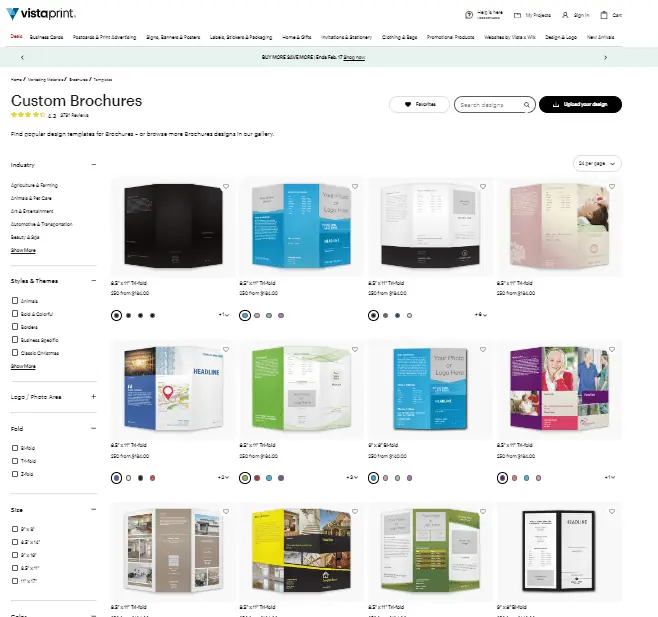
    VistaPrint
    An online designing and printing company that offers a range of templates and printing services for brochures, business cards, flyers, and more.                   
    Anyone looking for a one-stop shop for design and printing services.
    25 ($1.29/Unit)
    Adobe InDesign
    A professional-grade desktop publishing software to create and edit complex designs for brochures, magazines, flyers, and more. 
    Professional graphic designers
    Premium: US$9.99/mo (For Brochure Templates only)
    Venngage
    A web-based graphic design tool to create and edit designs of brochures, infographics, and more.                   
    Newbies looking to create professional-looking brochures without extensive design experience.                   
    Premium: US $16 /month/user Business: US $39 /month/user Enterprise: $499 /month for 10+ seats/yearly
    Fiverr
    A freelance marketplace where users can find and hire designers and other creatives
    Anyone looking for professional design services or wanting to offer them at an affordable price.
    With Fiverr, you can get basic brochure design services starting at around $25
    Upwork
    A freelance marketplace that connects businesses with professionals
    Anyone seeking or offering affordable and professional services
    Basic brochure design services can start at around $40.

    What Is A Brochure?

    A brochure is a small booklet or leaflet used as a marketing tool to accomplish the marketing objective.

    It is often used to inform or promote a product, service, event, brand, or organisation in a visually appealing and easy-to-digest format.

     Brochures are typically printed on glossy or high-quality paper and often include various information such as images, text, and graphics. Brochures can be distributed in multiple ways, including – by mail, in person, or at events. 

    Why Do You Need A Brochure?

    A company or a marketer uses a brochure as an effective marketing tool to provide comprehensive information about their business, products, or services. But there are other reasons why people need and create a brochure:

    •  Provide information: Brochures are a great way to provide detailed information about a product, service, event, create an e-manual, show deals, or offer a menu to potential customers .
    •  Build brand awareness: You can design a brochure to showcase a company’s branding and values and help build brand awareness or store awareness among (prospective) customers.
    •  Generate leads: Brochures include contact information or a call to action, which makes it easy for potential customers to get in touch with a company or request more information.
    •  Serve as a leave-behind: Brochures are left behind with individuals after they have received them in sales meetings, trade shows, on streets, stores or other places. This gives potential customers a tangible reminder of a company’s products or services and a chance to get back to those details.
    •  Help with offline marketing: Brochures can be distributed at events, through direct mail, or as part of a door-to-door campaign, making it a versatile marketing tool that can reach a broad local audience.

    How To Make A Brochure

    Design elements, such as layout, type, content, and imagery, are essential in a brochure because these elements make the brochure visually communicate the message and information contained within the brochure to the audience.

    That makes the brochure more attractive and engaging, increasing the chances that a reader will read and retain the information. So, let’s get all the elements and designing of a brochure right.  

    • Types – There are various brochure types, including Single Fold, Tri-Fold, Z-Fold, Gate Fold, Double parallel fold, Double gatefold, and more.
    • Content – The content should be clear, concise, and well-organised to communicate the brochure’s message effectively.
    • Image – High-quality, relevant images can help to break up text and make the brochure more visually appealing.
    • Layouts – This refers to the overall design and layout of the brochure, including the headline, typography or font, brand elements, contact information, a call to action, text, and visuals. The layout should be clean, easy to read, and consistent with the brand identity to make the brochure more effective and attractive.

    To get all these elements right, here is how we go step by step into designing a Brochure:

    Types Of Brochures

    When it comes to creating brochures, there are many options to choose from, and there is no one-size-fits-all for brochures.

    You might want to create brochures according to your needs and usage, including maps, educational, product, informational, event, or menu brochures.  

    Based on your needs and goals, you can choose the type of brochure you want to create depending on your goal. Here are a few common types of brochures:

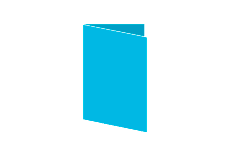
    • Single-Fold Brochure: A brochure that folds in half, with one panel on the front and one on the back.
      half fold
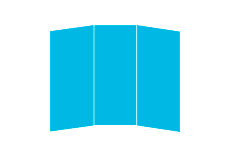
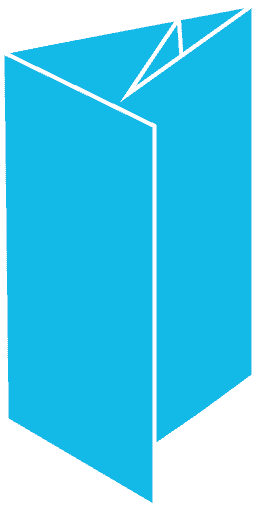
    • Tri-Fold Brochure: It is a popular option that folds into three equal sections, allowing ample space to include information and images.
      tri fold
    • Z-Fold Brochure: This brochure folds into a “Z” shape, each folded in on the other, allowing for a unique, interactive layout.
      z fold
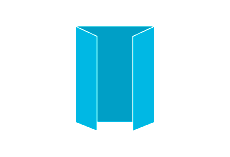
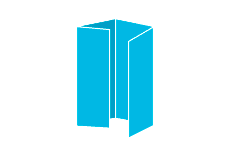
    • Gate-Fold Brochure: This brochure folds to open like a two-panel gate, revealing more information as the reader unfolds it.
      gate fold
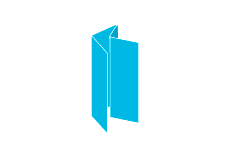
    • Double-Parallel Fold Brochure: This brochure folds in half twice, with two panels on the front and two on the back (two parallel folds opening in the same direction).
      double parallel fold
    • Double-Gatefold Brochure: This brochure gets folded to open like a gate twice, revealing more information as the reader unfolds it. It has a total of eight panels.
      double gate fold
    • Roll-Fold Brochure: This brochure gets folded into a series of panels that roll out like a scroll. It is an excellent option for showcasing a large amount of information as the reader opens the roll.
      roll fold brochure
    • Custom Brochure: This is a brochure that is tailored to meet the specific needs of a business or organisation. It can be created in any size, shape, or format.

    Planning and Research

    While planning to make a brochure, take into consideration the following points to create and print your brochures effortlessly.

    • Identifying the target audience: Before creating your brochure, it’s important to identify your target audience. It will help you tailor the content and design of the brochure to suit your needs and interests.
    •  Determining the purpose and message of the brochure: Once you know your target audience, you should determine the purpose and message of the brochure. It will help you guide the overall tone and content of the brochure.
    •  Researching competitors and industry trends: It’s also essential to study and analyse your competitors and industry trends to ensure that your brochure stands out and is relevant to your target audience.
    • Determinating the brochure maker: Determining the brochure maker is an important step in creating a professional-looking and effective brochure. There are three main options to make a brochure:
      • DIY (Do-It-Yourself): This option involves creating the brochure yourself using tools such as Microsoft Publisher, or Adobe InDesign. It is an option for you if you have design experience or are willing to create a brochure from scratch.
      • Outsourcing: This option involves hiring a designer or graphic artist on digital maret place platforms such as Fiverr or Upwork to create the brochure for you. It is an option for you if you don’t have the time or skills to create it yourself, but want to hire a professional freelancer to make a brochure for you.
      • SaaS based template providers: This option involves using a SaaS-based template providers such as Canva, VistaPrint, or Venngage, to create a brochure. This option is best for you if you want a professional-looking brochure with minimal design experience.
    • Choosing the right printing method: Consider the cost and quantity of brochures when choosing a printing method.

    Content Writing

    As content will communicate the message and attract potential customers or clients, it is essential to ensure that it is well-written, informative, and actionable.

    • Write a compelling headline: A great headline grabs the attention of your target audience and encourages them to read on.
    • Create clear and concise content: Keep the content of your brochure clear and concise and make sure it speaks the tone of your audience. Get text-heavy for Gen-X or Bloomers, but visual-heavy for Gen Z. Use bullet points and headings to make it easy to read and scan.
    • Include call-to-action and contact information: Ensure that your brochure includes a call-to-action and contact information, so your target audience knows how to get in touch with you.

    Design and Layout

    Once you have the content – text-heavy or visual-heavy – its time to design the brochure

    • Choose a colour scheme and font: Once you have the content, it’s time to design the brochure. Choose a colour scheme and font that is consistent with your brand and appeals to your target audience.
    • Create a layout and structure: Create a layout and structure that is easy to follow and visually appealing. Add plenty of white space, clear headings, and break up text with images and graphics. Ensure the most crucial information is prominently placed and easy to find.
    • Integrate Images And Graphics: Use images and graphics to break up the text and make the brochure more engaging.

    How To Make A Brochure Online

    If you are a non-designer looking forward to having a user-friendly graphic design platform that allows you to create professional-looking brochures with minimal design experience – Canva is for you.

    If you are an expert desktop user who wishes to make professional brochures using a variety of templates and design tools – Microsoft Publisher is your go-to place.

    If you want to create a brochure using advanced designs and layouts, use Adobe InDesign – a professional-grade desktop publishing program to make your brochures.

    If you are looking for a one-stop shop to design and order the prints for your brochure at an affordable cost, leverage the offerings of VistaPrint’s online brochure design and printing service.

    If you have minimal design experience but want to create engaging brochures, Venngage, an online brochure design tool, is for you.  

    These are just a few best brochure-making tools to make a Brochure. It depends on your preference and the design sophistication you want for your brochure.

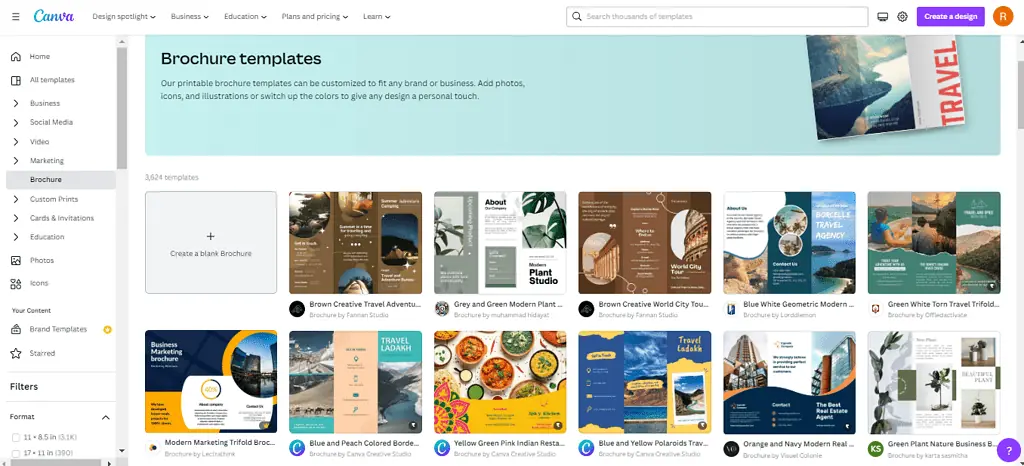
    How To Make Brochure In Canva

    Go to Canva – Browse the available brochure templates – Select the one that best suits your needs – Customise the template by adding text, images, and graphics – Adjust the design elements, such as colours and font, to match your branding – Preview – And download your brochure in a variety of formats, including PDF, JPG, and PNG

    How To Make Brochure In Canva

    Create Brochure On Microsoft Publisher

    Open Microsoft Publisher – Select the template that best suits your needs – Get creative and add your text, images, and graphics – Adjust the design elements – Preview – And export it as a PDF.

    Create Brochure On Microsoft Publisher

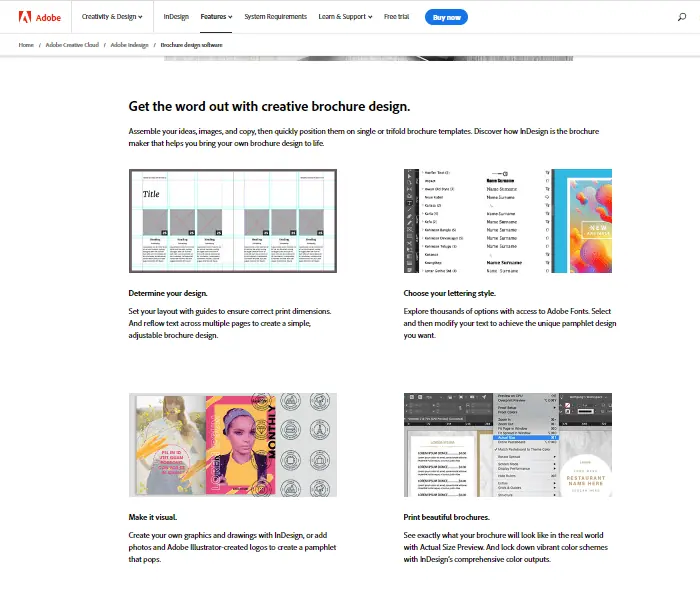
    Make Brochure On  Adobe InDesign

    Open Adobe InDesign – Create a new document – Select the best suitable brochure template or create your layout – add text, images, graphics, and your customisations – Adjust the design elements, including colours and font – Preview – And download your brochure in PDF or JPG format.

    Make Brochure On  Adobe InDesign

    Create Brochure On VistaPrint

    Go to the VistaPrint – Select the brochure template – Add your own text, images, and graphics – Customise the colours and font to suit your brand – Preview and Done.

    Create Brochure On VistaPrint

    Make Brochure On Venngage

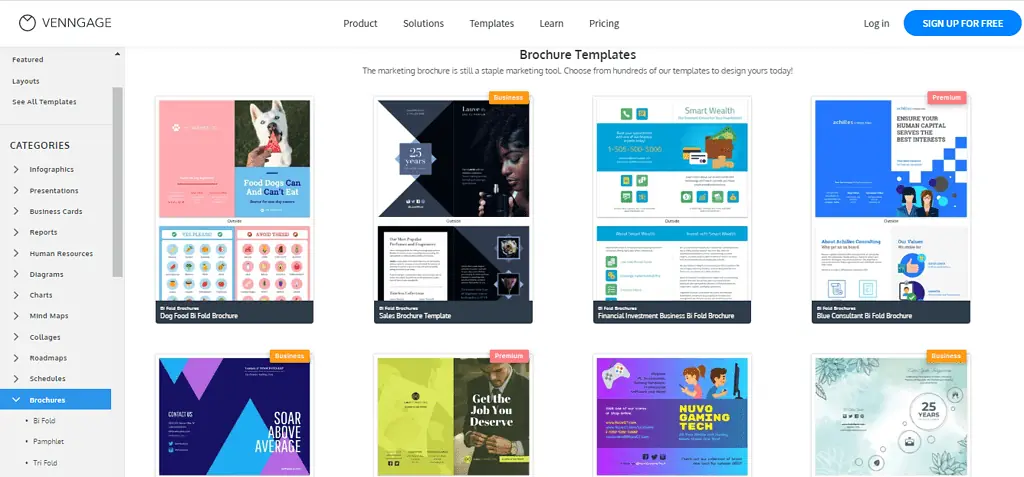
    Go to Venngage – Browse the available brochure templates and select the one that best suits your needs – Edit the template by adding your text and images – Add and customise the colours and font according to the brand – Preview – And download your brochure in PDF, JPG, and PNG formats.

    Make Brochure On Venngage

    Print Brochures Using Canva & VistaPrint

    With Canva and VistaPrint’s user-friendly interface and a wide range of templates, creating and printing a professional-looking brochure is easier. These tools allow you to design your brochures and order the desired quantity of copies, all in one place.

    Once you are done designing, simply order your copies on Canva or VistaPrint and have them delivered right to your door. With Canva and VistaPrint, you can save time and hassle while creating a stunning brochure that will grab the attention of your target audience.

    Bottom-Line?

    Creating a brochure can be a great way to showcase your business and connect with your audience. To make a brochure that stands out, use a clean and visually appealing layout, include clear headings, and mix text with images and graphics.

    When it comes to tools, consider using a web-based graphic design tool, desktop publishing software or online printing services. Each has different features and costs. Choose the one that fits your budget and design skills. Consider the overall objective of your brochure and the audience it’s intended for.

    Go On, Tell Us What You Think!

    Did we miss something? Come on! Tell us what you think about our article on How to make a brochure in the comments section.

  • How To Make A Flyer: Step-By-Step Guide

    How To Make A Flyer: Step-By-Step Guide

    Once upon a time, a local café struggled to spread awareness about its products and services and attract customers despite serving delicious coffee and pastries. They decided to try direct marketing, and they thought of – distributing flyers that tell a story.

    With a clear target audience in mind, they crafted a compelling message, highlighting the café’s community spirit, use of fresh ingredients, support of local farmers, promo codes, and offers to attract the local audience. They distributed this single-page-printed marketing asset (flyers) in the neighbourhood, and the café’s customer base grew.

    The moral of the story, you ask? A well-crafted flyer can make all the difference in attracting new customers.

    Here’s a guide to show you how to create a flyer that tells your unique story and stands out from the crowd.

    Tool
    What is it?
    Who is it for?
    Cost
    Canva
    A user-friendly graphic designing tool to create appealing flyers and other visual content
    Individuals, non-designers, and small and medium-sized businesses
    Free or 12.95/month for premium
    Adobe Creative Cloud
    A professional graphic designing tool to create business flyers 
    Professionals and businesses
    $20.99/month
    Visme
    A graphic designing tool to create interactive flyers
    Individuals and professionals
    Free or 19/month for premium
    Piktochart
    An appealing graphic designing tool to make flyers quickly.
    Non-designers, beginners, or small businesses
    Free or $14/month
    MyCreativeShop
    A simple professional graphic designing tool to create a high-quality flyer
    Businesses
    $19 .95 /month

    What is a Flyer?

    A flyer is a single-page document used to promote and advertise a business, event, product, or service.

    This marketing collateral typically contains information such as dates, times, location, and pricing, as well as images and graphics to make it visually appealing, but it is different from brochures and posters.

    Brochures
    Posters
    Flyers
    Brochures are multiple-fold print materials that provide detailed information about a product or service.  
    Posters are large, visually striking print materials used for advertising or promoting an event or message displayed in a public place.  
    While flyers (one-sheet) are often distributed in public spaces, handed out at events, or mailed to potential customers.  

    Why Do You Need A Flyer?

    The main reasons why people create a flyer are:

    • Distribute marketing messages to the local audience, as they are handy
    • Promote the business and its products and services
    • Spread awareness about the upcoming event, offer, sale or product launch
    • Share information with the entire available market

    Besides, they are low-cost and low-effort marketing options that greatly impact the people and effectively share the message.

    People create flyers for several other reasons, including:

    • Product and Service Offerings: You can use a flyer to visually, clearly, and concisely showcase your business’s product and service offerings.
    • Upcoming Events and Promotions: You can leverage the flyer distribution scheme to promote upcoming events and offer special promotions, encouraging people to attend or take advantage of them.
    • Sales and Discount Opportunities: You can use a flyer to announce special deals or discounts, encouraging people to use them.
    • Charitable Initiatives and Giving Back: You can share flyers to promote charitable initiatives, encourage people to get involved and give back to the community.
    • Building Brand Recognition and Visibility: A flyer can help establish a business’s brand and make it more recognisable to potential customers.

    For example, you can use a flyer to promote or spread awareness about –

    • A new yoga class starting in the house
    • To promote a new bakery that opened in the town recently, and more.

    How To Create A Flyer?

    Creating a flyer can be daunting, and it might take a little effort, planning, and creativity to make a successful one.

    But the question is, how to design a flyer correctly?

    By following these step-by-step guidelines, you can quickly make a flyer effectively, even if you do not have much design skills.

    Determine Target Audience

    Start with identifying who is your target audience. It will help you decide on:

    • The language
    • Design elements
    • Mode of distribution and location to distribute it, and
    • The overall tone of your flyer

    Consider factors such as age, interest, gender, income, and geographic location while determining the target audience.

    Decide The Goal & Specify The Copy

    Clearly define what you want to achieve with your flyer whether it’s announcing an upcoming event,  promoting a product or service, or encouraging people to get involved in a charitable initiative.

    Keep the message clear and concise, and specify a copy using language that will resonate with your target audience. Highlight the most important information or call to action.

    For example, if you are making a flyer to promote a comedy night with a standup comedian, you will keep the language friendly and make the flyer funky.

     While if you create a flyer to promote a business event, you will keep the language professional and design it elegantly.

    Develop The Content

    After deciding on the audience; it is time to effectively communicate the message through your audience’s language. So, to convey the message and grab the audience’s attention, here’s how to make a flyer with catchy content.

    Add All Four Elements Of Content

    The four main elements of the content are:

    • Heading – A captivating heading that grabs your audience’s attention
    • Subheading – an intuitive subhead that provides a sneak peek of what’s to come
    • Body Copy – A copy that delves deeper into the topic and entices the reader
    • CTA – A powerful CTA that encourages engagement and action

    Without these elements, your content may fall flat. So, make sure to include them in your next masterpiece!

    Keep It Simple And Easy To Read

    The more simple and easy-to-reach language you write, the better and easier it is for the audience to read. Avoid industry jargon or hard words.

    Use Bullet Points And Short Paragraphs

    If your audience is GenZ, who are more visual lovers,  make the window for written content small and add more visuals. Whereas if your audience is Generation X, Millennials, or even boomers, you can elaborate the content a bit.

    However, always add bullets and short paragraphs to your flyers. It makes the content easy to scan and understand. It helps the audience quickly identify key information.

    Highlight Key Information

    In a flyer, emphasise only essential points for the audience, such as promotions, discounts, or event details and do not write any detailed information about anything until required.

    Proofread For Errors

    Before printing them, you must check for accuracy and clarity to ensure that the information is accurate and clear. You can ask your peers to take the feedback.

    Design The Flyer

    To make a flyer that attracts people’s attention, delivers the key message, and fetches real results, you need to design your flyer in the right way. To create the flyer, you have three options:

    Often more than not, marketers are not expert designers, but if you are an expert and it is easier for you to create a flyer on your own, you can use Adobe Express or Adobe Photoshop. But, you need to decide on strictly:

    • Images – Choose high-quality photos that align with your target audience and goal for your flyer.
    • Colour Scheme – Select a consistent colour scheme that aligns with your brand or message and visually appeals to your audience.
    • Typography – Choose appropriate font styles, sizes, and spacing to enhance the readability and overall aesthetic of the flyer.

    If you choose to outsource the design, you can find freelance professional designers on platforms like Fiverr, Upwork, or 99Designs. Ensure you clearly communicate your goals, target audience, and design preferences to the designer to ensure they produce a flyer that meets your needs.

    However, creating a flyer on your own is a big task and outsourcing it costs a lot of money.

    So, if you do not want to spend much time or resources, you can use the ready-made templates provided by SaaS-based template tools to create a flyer on Canva, Piktochart, Visme, or Adobe to make your flyers quickly.

    How To Make Flyers Online?

    Here is a step-by-step process to make flyers with online tools –

    Choose A Template

    Choosing a template is an easy and cost-effective way to create a flyer. You can select templates designed for your specific industry and cater to the audience in that industry. Many online platforms offer templates. Here are the tools:

    • If you are looking for a user-friendly flyer maker tool using Canva’s pre-built templates, you can create high-quality flyers quickly.
    • If you want to create a professional flyer on a pre-built template – Adobe Express is a flyer creator for you.
    • If you want to create a visually interactive flyer that communicates better, use Visme to create a flyer.
    • Having no design skills to create a flyer that catches people’s eye, you can use beautiful templates of Piktochart to create one.
    • If you want a web-based flyer design tool that helps you create, customise, and design inspiring marketing material, create a flyer using MyCreativeShop.

    Create A Flyer On Canva

    Open Canva – search for ‘Flyers’ – Go to categories and choose one – Find a perfect template – Customise and add your information – Preview the Flyer, and it is ready to get printed.

    Create a flyer on Canva

    Make A Flyer On  Adobe Express

    Go to Adobe Express – Click on ‘Create’ – Choose ‘Flyer’ – Choose Template – Get creative and add your information – Click ‘Preview’, and you are done.

    Create a flyer on adobe

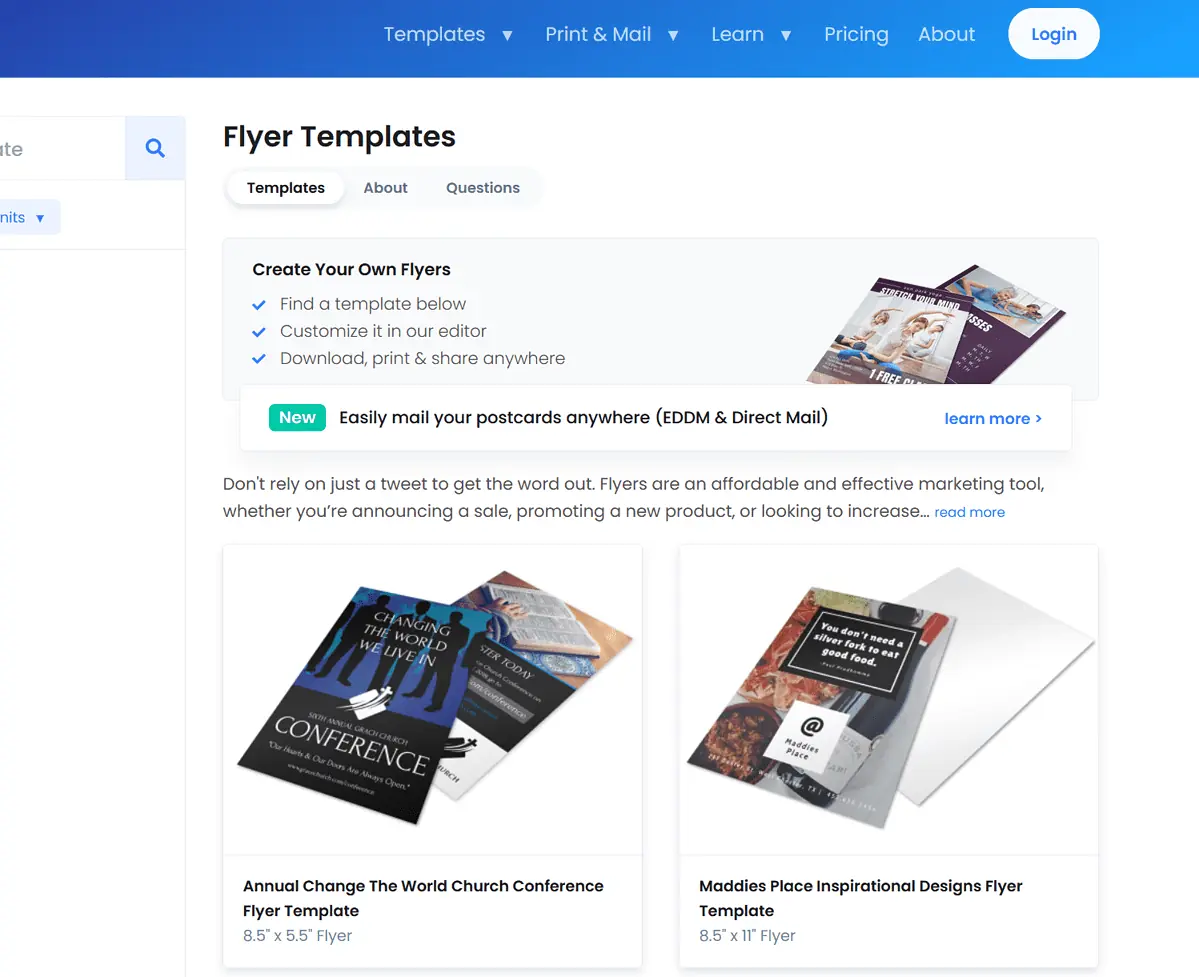
    Design a Flyer On Visme

    Go to Visme – Click on ‘Templates’ – Choose ‘Flyer’ in the category – Search for the template in the left side ‘search box’ – choose a perfect template for you – Finally, click on ‘Preview’, and it is done.

    Create a flyer on visme

    Create A Flyer On Piktochart

    Go to Piktochart – Click on ‘Templates’ – choose ‘Flyer Templates’ – Search a template in the ‘Search box’ – Find the right template – choose ‘Edit’ – Add your information and get creative – Click on ‘Preview’ – Edit it if you want, and it is done.

    Create a flyer on piktochart

    Make A Flyer On  MyCreativeShop

    Go to MyCreativeShop – Click on ‘Templates’ – Choose ‘Flyer’. Click on ‘Create your own flyer’ if you want to create it from scratch or choose a template from the category to customise the pre-built template – add your logo, pictures, and other information – Get creative – download it – Preview it and done.

    Create a flyer on mycreativeshop

    Add A Catchy Headline

    Add a catchy and attention-grabbing statement summarising the flyer’s main message. It should be placed prominently on the flyer and be easy to read, so much so that it grabs the reader’s attention and entices them to read more.

    Add A Subhead

    A subhead is a perfect way to break up your flyer and provide additional information that you could not complete in the heading. Use it to highlight key points or summarise the main message of your flyer. Keep it very small and crisp.

    Add An Informative Body Copy

    The body copy of your flyer is where you can really dive into the details but concisely, as flyers are not meant to be text-heavy. Make sure to include all the necessary information, such as dates, times, offers, locations, and any other relevant details.

    Use Images And Graphics

    Add visual elements that sweeten the overall design and convey information more interestingly. Choose graphics and images carefully to match the theme and message of the flyer. Make all these elements complement the text, not overpowering it. Always use high-quality images and graphics to make the flyer stand out.

    Add Contact Information

    Add essential details, such as the company’s name, website, phone number, and email address, that allows the audience to contact the business. Place them in a prominent spot on the flyer and use straightforward designs or fonts to make them easy to read and understand.

    Include A Call To Action

    Add clear and specific instructions with persuasive language that encourages the audience to take a desired action. For instance – ‘visit our website’, ‘make a purchase’, ‘grab the deal’, and more.

    For example,

    Headline:

    “Let’s go & Enjoy Your Summer!”

    Subheading:

    Heaven Beach Resort

    Body Copy

    Get relaxed and feel the ocean breeze that you are looking for/with your family.

    Images and Graphics:

    A colourful image of a beach with palm trees and a graphic of a sale tag with a “10% off” text.

    These images and graphics are chosen to match the theme of the flyer and convey the message that it is a summer promotion. They complement the text and make the flyer more engaging.

    Contact Information:

    Company Name: “ABC Beach Resort”

    Website: “www.abcbeachresort.com”

    Phone Number: “1-800-123-1234”

    Email Address:[email protected]

    CTA: Make A Call To Confirm Your Bookings, Now!

    Flyer Example

    Decide On Distribution Methods

    By considering the distribution methods (handing out, mailing, posting or bulletin boards) when designing the flyer, you can ensure that the design and message of the flyer align with the methods you plan to use to distribute it.

    Print Your Flyer

    Most of the time, the flyers we send are not digital but are printed handouts – you can get them printed if you have made them on Canva or VistaPrint. You can design with these tools, and you can order high-quality prints.

    Using the entirely different libraries of templates dedicated to the flyers, you can design and order prints of flyers with both VistaPrint and Canva.

    When sharing your flyers digitally – Download flyers in the Pdf format from the tool you used to create them – Ensure the flyers have all the links intact – and send them via email.

    Follow-Up

    It is difficult to gain the success rate of the flyers distributed in hand, but you can still calculate it by tracking the number of responses to the call to action or in-store purchases who refer to the flyer.  

    You can also monitor the engagement with the flyer by tracking the number of shares, likes, and comments on social media platforms and tracking website visits, phone calls, or in-store purchases.

    Analyse the demographics of the audience who responded to the flyer to understand better who the message resonated with to gain insight for further usage.

    Bottom Line?

    Creating a flyer that stands out and effectively communicates your message to your target audience doesn’t have to be daunting. This blog provides a step-by-step guide on how to design a flyer that is visually appealing and achieves its purpose. Start by determining your target audience, decide on the goal and copy, and design the flyer with the right design elements and layout. Follow these guidelines, and you’ll be on your way to creating a successful flyer.

    Go On, Tell Us What You Think!

    Did we miss something? Come on! Tell us what you think about our article on how to make a flyer in the comments section.

  • Entrepreneurial Skills – Types, Examples, & Importance

    Entrepreneurial Skills – Types, Examples, & Importance

    Entrepreneurial skills encompass a wide range of competencies, including leadership skills, networking, business planning, marketing skills, sales techniques, and more. 

    Because you can apply entrepreneurial skills to any field, job role, and industry. Together, developing entrepreneurial skills form the cornerstone of any successful entrepreneur’s toolkit, which provides the foundation for innovation, growth, and success. 

    In this competitive business landscape, whether you are starting a new venture or driving growth in a current one, having a strong entrepreneurial skill set is a key determinant of long-term success and financial stability.

    So if you are looking to add entrepreneurial skills to your skills bucket, read on as we explain the two types of entrepreneurial skills, top entrepreneurial skills, and how to learn them. We will also add a few real-life examples of entrepreneurs who succeeded on the basis of their strong entrepreneurial skills. 

    Entrepreneurial Skills Two Main Types

    There are two main types of entrepreneurial skills: hard skills and soft skills.

    Both hard skills and soft skills are essential for entrepreneurial success. A well-rounded entrepreneur will have a strong combination of both. Here is what both skills mean:

    Hard Skills

    Hard skills are the technical skills that an entrepreneur has to run a successful business. You can learn these skills through formal education or on-the-job training. These hard skills include things like financial management, marketing, sales, operations management, and more.

    Soft Skills

    Soft skills are the interpersonal and communication skills which are used to present your power of knowledge, which are critical to success in entrepreneurship today. These skills include leadership, team building, communication, negotiation, time management, problem-solving, and decision-making. Unlike hard skills, you can not quantify soft skills, but you can develop them through life experiences and personal growth. 

    Top 5 Hard Entrepreneurial Skills

    Having strong hard entrepreneurial skills will give you a competitive edge and help you effectively manage and grow your business. These skills include:

    Financial Management and Analysis

    Financial management is a critical part of running a successful business. It involves how you monitor the company’s finances, including budgeting, forecasting, and making decisions based on data. 

    You, as an entrepreneur with strong financial management skills, will make well-informed decisions on:

    • How to allocate resources
    • How to invest in growth opportunities
    • How to minimise costs 

    This can help you ensure the long-term financial stability and success of your business.

    Business Management and Administration

    Entrepreneur management involves effective management of the day-to-day operations of a business to ensure that it runs smoothly. 

    This involves how well you understand the different aspects of business administration, such as human resources, legal compliance, and customer service. 

    Entrepreneurs with strong business management and administration skills effectively delegate tasks, manage a team, and maintain a strong focus on the company’s goals and objectives.

    Technology and Digital Proficiency:

    In today’s fast-paced business environment, it is essential for entrepreneurs to have a strong understanding of technology and digital tools. 

    These skills will let you streamline business operations, reach customers more effectively, and stay ahead of the competition. 

    Entrepreneurs with technology and digital proficiency skills are able to leverage digital tools and platforms to improve business efficiency, drive growth, and boost profitability.

    Supply Chain Management

    The supply chain is a critical aspect of any production company, as it involves the flow of goods and services from raw materials to finished products. 

    With proficiency in these skills, you can ensure that the supply chain is efficient, drives quality materials, and is cost-effective. 

    With efficient supply chain management, you can minimise costs, improve delivery times, boost production quantity, and maintain strong relationships with suppliers and customers.

    Technical Skills

    In some industries, it is important for entrepreneurs to have technical expertise in order to understand and implement complex systems and processes within their businesses

    Technical skills can help you identify and resolve technical challenges your team or company faces, implement new technology, and improve the overall efficiency and effectiveness of your entire business operations. 

    Whether it’s coding, engineering, or another technical field, having strong technical skills can give an entrepreneur a competitive advantage and increase their chances of success.

    Top 5 Soft Entrepreneurial Skills:

    Soft skills play a crucial role in building strong relationships and effective leadership, communication and decision-making, leading to improved customer satisfaction, operations, and growth for entrepreneurs. Here are the skills it includes:

    Teamwork and Leadership

    Teamwork and leadership skills are the most sought-after skill by entrepreneurs who wants to build a successful business. 

    An entrepreneur with strong teamwork and leadership skills brings together a team of individuals and leads them towards a common goal very positively. 

    With teamwork and leadership qualities, you will captively motivate and inspire your team members, foster a positive work environment, and encourage healthy collaborations and creativity. 

    Mastering these skills is critical if you want to build a solid and effective team that can drive business success.

    Communication and Listening

    Excellent communication and listening skills are indeed crucial skills for entrepreneurs who want to build strong relationships with customers, partners, and employees. 

    Entrepreneurs with strong communication skills can clearly and effectively convey their ideas and vision while also actively listening to the needs and concerns of others. 

    If you own these skills, you will essentially build trust, understand, and establish a mutually beneficial relationships with stakeholders.

    Customer Service and Relationship Building

    Customer service and relationship building is the key components of any successful business. 

    Entrepreneurs who are able to provide excellent customer service and build strong relationships with customers are more likely to retain those customers and grow their businesses. 

    If you get to possess this skill, you will:

    • Understand the needs and wants of your customers
    • Know their pain points
    • Address any issues that arise
    • Work to build long-lasting, positive relationships

    Which all, in combination, will enable you to fetch benefits for both the customer and the business.

    Critical Thinking and Problem-Solving

    Problem-solving is an essential entrepreneurial skill, as being an entrepreneur entails various challenges and problems that need to be addressed. Besides, critical thinking involves careful analysis of strategies, facts, reports, analytics, and more.

    If you have strong critical thinking and problem-solving skills, you can very well analyse different challenges and come up with innovative and effective solutions. You can think creatively, evaluate different options, and make informed decisions that drive business success. 

    These skills are critical for navigating the ups and downs of entrepreneurship and for driving growth and success in the long term.

    Branding, Marketing, and Networking

    Branding, marketing, and networking are essential components of any successful business. 

    These skills involve understanding the target market, creating a strong brand image, and leveraging marketing channels and networking opportunities to reach new customers and build lasting relationships.

    If you understand how to effectively market and brand your business and network with others in the industry, you are more likely to reach new customers, establish strong relationships with partners and suppliers, and grow your business. 

    How To Learn Entrepreneurial Skills

    To become an effective entrepreneur requires continuous learning and improvement. There are different ways you can use to develop and improve your entrepreneurial skills. Here are different skillsets you can use:

    Read Books And Attend Workshops

    There is a wealth of information available in books and workshops about starting and running a successful business. These resources can provide insights and strategies for developing your entrepreneurial skills and help you stay up-to-date on the latest trends and best practices.

    Here are the books to read:

    The Lean Startup: How Today’s Entrepreneurs Use Continuous Innovation to Create Radically Successful Businesses by Eric Ries

    Good to Great: Why Some Companies Make the Leap… and Others Don’t by Jim Collins

    The Art of Possibility: Transforming Professional and Personal Life by Rosamund Stone Zander and Benjamin Zander

    The Lean Entrepreneur: How to Accomplish More by Doing Less by Brant Cooper and Patrick Vlaskovits

    Here are the workshops to attend:

    Stanford Graduate School of Business: Entrepreneurship Program

    Harvard Business School: Entrepreneurship Workshops

    MIT Entrepreneurship Center: Entrepreneurship Workshops and Courses

    Techstars: Entrepreneurship Workshops and Programs

    Entrepreneur Works: Entrepreneur Workshops and Training Programs

    Seek Mentorship And Guidance

    Working with a highly-skilled mentor or coach in your known can provide you with valuable guidance and feedback.  With personalised advice, they can help you identify areas where you need to improve and provide you with actionable tips on how to do so.

    Gain Practical Experience

    The best way to develop your entrepreneurial skills is by taking hands-on experience in the same. Consider starting a small business, working for a start-up, or taking on a leadership role in a non-profit organisation with a professional’s guidance.

    Network With Other Entrepreneurs And Industry Experts

    Networking with other entrepreneurs and industry experts can provide you with new ideas, inspiration, and opportunities for collaboration. You can attend events, join a business association, or connect with an online community to converge with other entrepreneurs.

    Real-Life Examples Of Entrepreneurs Who Used Specific Skills

    Mindset Development Made Apple

    Steve Jobs, the co-founder of Apple, is known for his ability to think differently and challenge the status quo. He have had a strong entrepreneurial mindset that allowed him to take risks and pursue his passion, which ultimately led to the success of Apple.

    Business Planning Developed Amazon

    Jeff Bezos, the founder of Amazon, carefully planned out his business strategy and always kept the customer at the centre of his decisions. He identified the need for online shopping and executed a plan to make it a reality, leading to the creation of one of the largest e-commerce companies in the world.

    Bottom Line

    Entrepreneurial skills encompass a range of competencies that are critical to the success of any entrepreneur. These skills can be broadly divided into two categories – hard skills and soft skills. Hard skills involve technical expertise in areas like financial management, business administration, technology and digital proficiency, supply chain management, and technical skills. Soft skills include interpersonal skills like teamwork, leadership, communication, customer service, and relationship building. Developing a strong combination of both hard and soft skills can provide a foundation for innovation, growth, and success for any entrepreneur. Keep learning and growing to keep making your entrepreneurial skill set more commendable. 

    Go On, Tell Us What You Think!

    Did we miss something? Come on! Tell us what you think about our article on Entrepreneurial Skills in the comments section.
  • The History Of Telegram

    The History Of Telegram

    Since its inception in 2013, Telegram has gained massive popularity across the globe. The messenger app has been downloaded over 1 billion times worldwide, with India, Indonesia & Russia being the countries with the most installs. During the Russian invasion in 2022, Ukraine’s President Volodymyr Zelensky relied on Telegram to address his nation. Even for terrorists, Telegram became their “app of choice”!

    But how did Telegram become so big? Here’s a brief history of Telegram explaining its ideation, popularity and relevance today.

    Who Founded Telegram?

    Pavel Durov and Nikolai Durov are the founders and owners of the messaging app Telegram. The two brothers founded Telegram in 2013 while still living in Russia.

    Famously known as Russia’s Mark Zuckerberg, Pavel Durov is known for his distinctive dress sense as he only wears the colour “black”, like the character Neo in the matrix. He describes himself as a libertarian and is on a mission to provide the world with fast, secure, and anonymous communication. But the road to his techno-utopian dream hasn’t always been easy.

    A Little Backstory

    It is the year 2006. Freshly out of St. Petersburg State University, Pavel Durov designs a social platform and names it VKontakte, also known as VK, which is Russian for “in-touch”. Originally conceived as a platform for university students, VKontakte gains popularity among the general public and starts welcoming all users. Seeing this, Nikolai Durov, Pavel’s older brother, joins the company as a chief technical officer. Together, the Durov brothers work to achieve a single goal, i.e. creating a version of Facebook for Russian cyberspace but only faster and better.

    VK had all the features that a typical Facebook user was familiar with: a user profile, direct messaging, a wall for posting content and, most importantly, a display of the user’s personal information. Pavel regarded the website as a non-anonymous extension to the university forum spbgu.ru (also created by him), available only via invitation from other users. As VK quickly became popular, the app scraped off the invitation requirement, and its user count started skyrocketing. 

    VK Gains Momentum  

    In less than a year, VK overturned its domestic rival Odnoklassniki, becoming the most popular social network in Russian cyberspace. Albert Popov, the founder of Odnoklassniki, believed that this sudden explosion in popularity was partly due to VK’s willingness to tolerate explicit content and copyright violations. While Odnoklassniki focused on connecting middle-aged people with their former schoolmates, VK evolved as a one-stop-shop platform that catered to the young and hip. Users went to VK to connect with old friends, find new ones, search for work, or illegally download the latest pop album – it was YouTube, Facebook and Spotify all rolled into one.

    Troubles Begin At VK

    By the early 2010s, VK had gained over a hundred million users. Its wide reach caught the attention of the Russian government. In December 2011, a wave of protests swept the country, opposing the parliamentary election results. In an attempt to salvage the situation, the federal security service asked VK to shut down groups and pages using the site to coordinate and rally the protests. Pavel responded to their request by posting a picture of a dog in a hooded jacket sticking its tongue out.

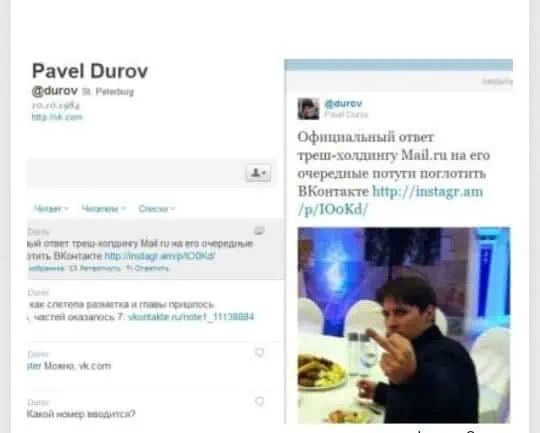
    Mail.ru Group, a Russian tech conglomerate and one of VK’s principal backers, was meanwhile attempting to take full ownership of the company. In a now-famous response, Pavel posted a photo of himself and called Mail.ru Group a “trash holding company”.

    Pavel Durov

    Durov was subjected to a media smear campaign and accused of misusing company funds. A video circulated In April 2013 showed Pavel behind the wheel of a white Mercedes, running over the foot of a police officer and absconding from the scene, even though Pavel claimed he wasn’t driving it. Shortly after, law enforcement raids Pavel’s home and VK’s office. Days after the incident, United Capital Partners announced it had bought 48% of VK’s equity. In January 2014, Pavel sold his remaining 12% share to Mail.ru, hung his hat as CEO and left Russia.

    The Rise of Telegram

    The Rise of Telegram

    After leaving Russia, the Durov brothers obtained citizenship by donating $250,000 to the country’s Sugar Industry Diversification Foundation.

    In August 2013, Pavel pulled the rabbit out of the hat – enter Telegram, an encrypted chat service. It was launched for iOS on August 14 2013 and Android on October 20 2013. Pavel provided the fund and infrastructure for the project as he reportedly left Russia with reportedly 300$ million after Vkantakte’s buyout. His brother, Nikolai, focused on coding and created the MTProto protocol that is the basis for the messenger.

    Telegram started as an encrypted messaging system and was essentially founded so the Durov brothers could communicate between themselves without the Russian security services snooping on them.

    Telegram was originally based out of a small Berlin office. Still, the staff uproots to a new location now and then, working out of a series of hotel rooms or accommodations rented mostly on AirBnb.com.

    The servers of Telegram are spread across the globe, with five data centres situated in different parts of the world, while the operations centre is based in Dubai, United Arab Emirates

    Milestone Features by Telegram

    • Bots: In June of 2015, Telegram released the Bot API. It created a platform for users to create and publish their own bots. Bots exist to add features to Telegram and make users’ lives easier – bots can handle payments, moderate groups, fetch emails and much more.
    • Channels: In September ’15, Telegram introduced Channels, a tool for broadcasting to the masses. Channels can have unlimited followers, offer view counters for each post and only let the admins post.
    • Supergroups: As WhatsApp increased its user limit for groups to 1000, Telegram introduced the “Supergroups”, which supported up to 5000 members. In September 2015, Telegram introduced channels for broadcasting messages to the masses. The supergroup’s size increased from 1000 to 5000 members in 2016. Groups levelled up in June ’17, increasing the maximum number of members to 10,000. In Jan ’19, the maximum size of groups increased to 200,000 members.
    • Secret chats: In July 2017, Telegram introduced Secret Chats with end-to-end encryption and added a self-destruct timer for photos and videos to allow users to send disappearing media.
    • Passports: In July ’18, Telegram launched Passport as a unified authorisation service for ICOs, financial services and other platforms based on real-life ID.
    • Video calls: With 400 million active users, Telegram added video calling with end-to-end encryption like Signal & WhatsApp.
    • Moving chat history from other apps: In Jan ’21, Telegram allowed users to import old messages and media from other apps like WhatsApp, Line, and KakaoTalk.

    Telegram: The App of Choice for ISIS

    In September 2015, when asked about the use of Telegram by the Islamic State of Iraq and the Levant (ISIS), Pavel Durov stated:

    “I think that privacy, ultimately, and our right for privacy is more important than our fear of bad things happening, like terrorism.”

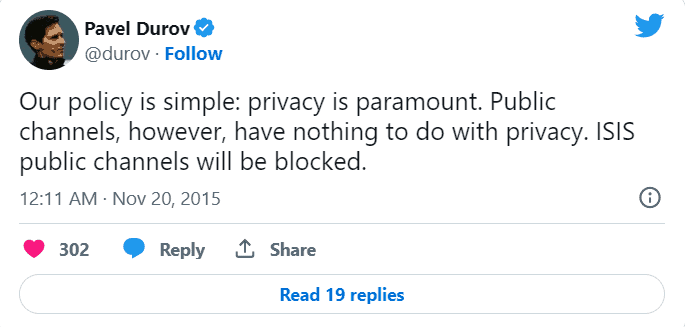
    ISIS recommended Telegram to its supporters and members, and by October 2015, they managed to double the followers of their official channel to 9,000. In November 2015, Telegram announced that it had blocked 78 public channels used to spread ISIS propaganda.

    Telegram: The App of Choice for ISIS

    Telegram further stated that it would block public channels and bots related to terrorism. Still, it would not honour “politically-motivated censorship” based on “local restrictions on freedom of speech” and that it allowed “peaceful expression of alternative opinions.”

    Telegram Premium

    On June 21, 2022, Telegram launched an optional paid-for subscription called Telegram Premium that unlocks additional exclusive features while supporting the development of the Telegram app. It’s a part of, as Telegram likes to call it, a sustainable funding initiative that’s driven by users and not by shareholders or advertisers.

    “Contributions from Premium subscribers will help improve and expand the app for decades to come, while Telegram remains free and independent, maintaining its values ​​of putting users first, redefining how a technology company should work.”, the company stated in a blog post.

    Telegram Vs WhatsApp: The Public Rivalry

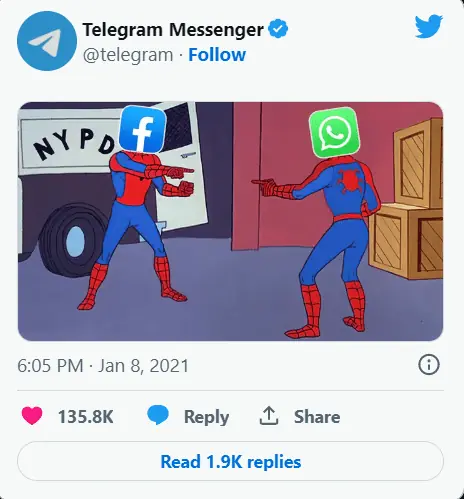
    At the beginning of Jan 2021, WhatsApp announced an update to its privacy policy while asking users to permit sharing their data with their parent company Facebook. This sparked a new wave of criticism and online trolling, especially on Twitter. Telegram didn’t hesitate to participate and posted the following meme:

    Telegram Vs WhatsApp: The Public Rivalry

    This criticism continued further with a blog written by Telegram’s founder and CEO Pavel Durov on his Telegram channel. He wrote, “I hear Facebook has an entire department devoted to figuring out why Telegram is so popular. Imagine dozens of employees working on just that full-time. I am happy to save Facebook tens of millions of dollars and give away our secret for free: respect your users”. Durov continued in the post, explaining the talk going on about WhatApp’s new privacy policy.

    On October 6, 2022, Pavel sent out a public message on his Telegram channel where he warned people to “stay away from WhatsApp”. He ended the message by saying, “I’m not pushing people to switch to Telegram here. With 700M+ active users and 2M+ daily signups, Telegram doesn’t need additional promotion. You can use any messaging app you like, but do stay away from WhatsApp – it has now been a surveillance tool for 13 years.”

    Telegram Key Statistics

    Telegram annual users since 2014 to 2021:

    Date
    Monthly Active Users (MAUs)
    March 2014
    35 million
    December 2014
    50 million
    September 2015
    60 million
    February 2016
    100 million
    December 2017
    180 million
    March 2018
    200 million
    October 2019
    300 million
    April 2020
    400 million
    January 2021
    500 million
    July 2021
    550 million

    Sources: (Telegram, Statista)

    Go On, Tell Us What You Think!

    Did we miss something? Come on! Tell us what you think about our article on the history of Telegram in the comments section.
  • What Is A Flyer? – Definition, Purpose, & Components

    What Is A Flyer? – Definition, Purpose, & Components

    Imagine a college student strolling down the streets of a bustling city, surrounded by people, bright lights and colourful storefronts, when he gets handed a paper with a catchy phrase and an invitingly bold design.

    He finds the design catchy, the message clear, and the information relevant. This sparks his interest in learning more about what is being advertised.

    This paper that the college student just received is commonly known as a flyer. It comes in several shapes, sizes, and varieties and serves more than one purpose.

    But what exactly is a flyer? What are its components, and how is it used?

    What Is A Flyer?

    A flyer is a single sheet of marketing collateral used to promote a product, service, upcoming event, business, or brand in a single, eye-catching, easy-to-digest format.

    In simple terms, a flyer is a printed paper containing information about a certain event, business, product or service. It is used to increase awareness and draw attention to the advertised item(s).

    Flyers come in many sizes and shapes; common flyer designs include single-page prints such as postcards, door hangers, handouts, brochures and mailers.

    They are printed in mass and are usually small in size. Often they are no larger than an 8.5 x 11-inch sheet of paper.

    The main focus of creating and distributing flyers is attracting attention, generating interest in the promoted item, and encouraging people to take action, such as visiting a website, attending an event, or making a purchase.

    Flyer Vs Brochure

    Flyers and brochures are both popular marketing collateral, but they both have different purposes and distinct features, which serve different purposes that set them apart. Here are the differences:

    Flyer
    Brochure
    Printed on one flat sheet        
    There are different types of brochures – Single-Fold, Bi-fold, Tri-Fold, Z-Fold, Gate-Fold, Double parallel fold, and many more.
    Distributed freely        
    Distributed more exclusively
    Great for catching the eye of perspectives (potential customers)
    Great for providing detailed information to already interested clients.
    Cheap and easy to make, less detailed as compared to a brochure
    More specialised and costly to produce. The design and printing process may require more time and effort.
    Often printed on one side      
    Printed on both sides
    Ideal for promoting events or displays, a new business or a store, generating leads and capturing new customers       
    Ideal for showcasing features, services, and products, providing more in-depth information to existing customers or prospects.

    What Is The Purpose Of A Flyer?

    The flyer’s primary purpose is to attract customers’ attention and persuade them to take action based on the content.

    Companies define flyers as a handbill and advertising sheets they hand out to people on busy streets, a few target locations, busy public places, and events, pin on bulletin boards, or distribute in store windows as a tangible sheet to remember about the store later.

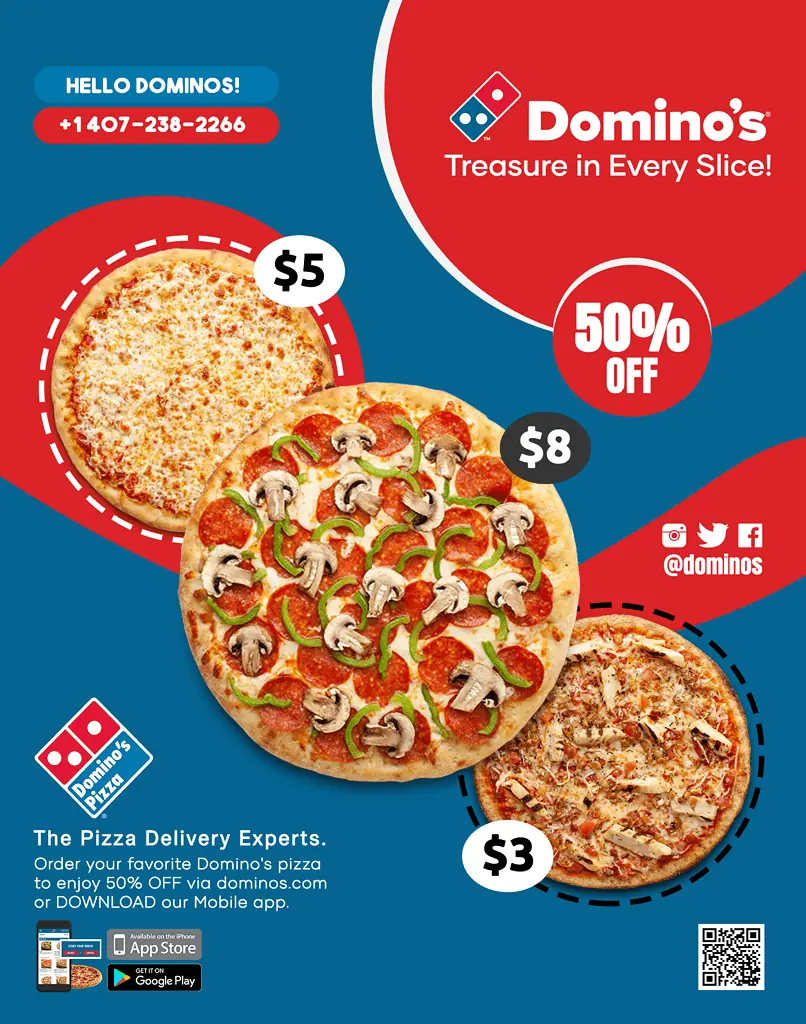
    Flyer example for Products:

    Flyer example for Products
    Source: behance.com

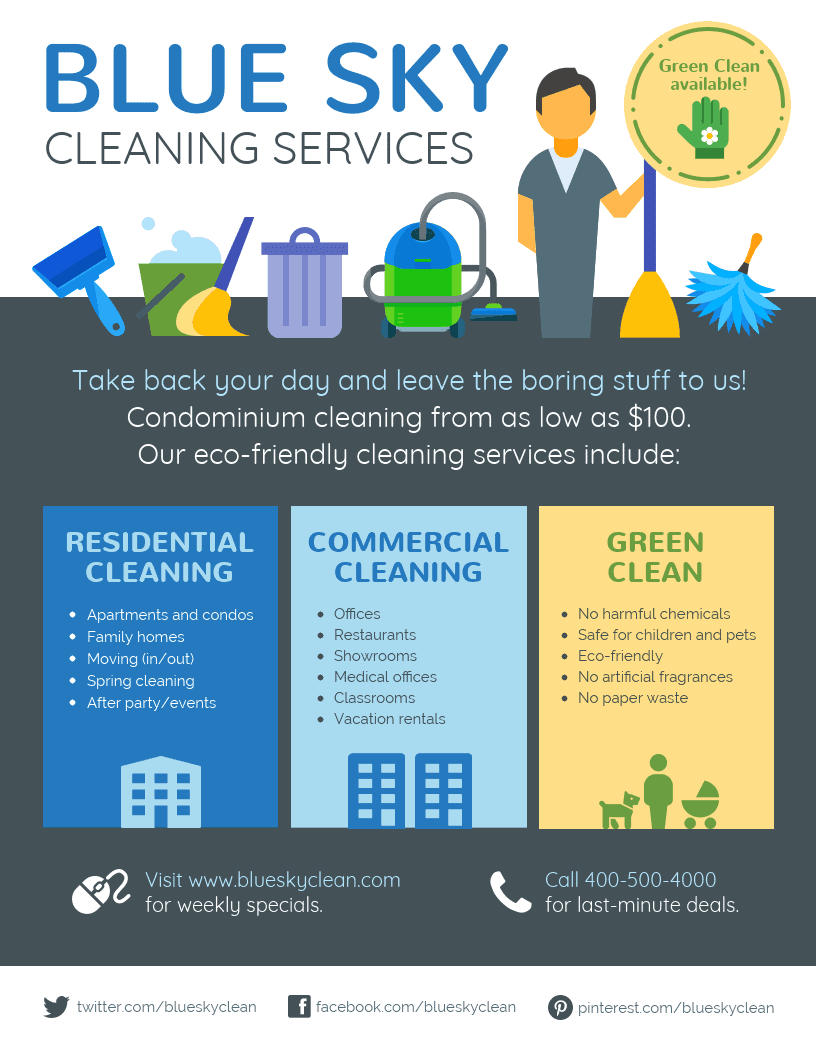
    Flyer example For business:

    Flyer example For business

    Components Of A Flyer

    The components or elements a flyer usually includes are:

    • Heading: The headline or title that grabs the reader’s attention. It aims to capture the readers’ attention and convince them to read the rest of the content.
    • Body Copy: The main body copy that follows the heading provides users with more details about what the brand is offering, such as discounts, benefits or services.
    • Images: Vector/Raster graphics used to stand out from other flyers and to convey the message visually.
    • Call-To-Action (CTA): A button, phrase or graphic that encourages the user to take immediate action, such as “visit the store” or “call us now”.
    • Contact Information: The essential part of a flyer is to provide contact information like phone numbers, address and email addresses so that users can contact the brand.
    • Logo: While not always present on a flyer, logos help to identify the company and create brand recognition.

    Here’s an example –

    • Heading: Blue Sky Cleaning Services
    • Subheading: Take back your day and leave the boring stuff to us!
    • Body Content: Residential cleaning. Commercial cleaning. Green Cleaning.
    • Imagery: A man is standing with a broom, duster, vacuum cleaner, bucket and mop, dustpan, and a separate logo of green clean available.
    • CTA: Visit www.blueskyclean.com for weekly specials.
    • Contact Info: Call 400-500-4000 for last-minute deals.
    flyer example
    Source: Venngage.com

    The Types Of Flyers

    There are many different types of flyers, each with its own specific purpose and audience. Some common types of flyers include:

    Promotional Flyers

    The main idea of a promotional flyer is to promote a product or service. They are typically distributed in public places like shopping centres, street corners, or through direct mail. They often include a clear, attention-grabbing headline, offers, an image of the promoted product or service, and a call to action.

    Promotional Flyers

    Event Flyers

    As the name suggests, the event flyer promotes a specific event, such as a concert, party, or fundraiser. They typically include information about the date, time, location, and cost of the event, as well as a description of what people can expect. They may also include an image or design that relates to the event.

    Event Flyers

    Informational Flyers

    The ideation behind the informational flyer is to provide information about a particular topic or issue to the target audience. For instance, if the informational flyer is about recently opened Yogaclasss in the neighbourhood, the flyer will contain information about the yoga instructor, the timing of the classes, charges, what challenges people can overcome doing yoga, contact information, and a CTA.

    Informational Flyers

    Coupon Flyers

    These flyers are used to offer discounts or special promotions to customers. They often include a coupon code or a QR code that can be scanned to redeem the offer.

    Coupon Flyers

    Steps To Make A Flyer

    Creating a flyer can be a great way to promote an event, product, or service. Here is a step-by-step process for how to write a flyer:

    Identify The Purpose Of The Flyer

    Before starting to create a flyer, it’s essential to understand –  what marketing goal a business wants to achieve with a flyer. Is the aim to promote an event, a product, or a service, offer a coupon, or spread awareness? Knowing the flyer’s purpose helps create a clear and effective message.

    Understand The Audience

    Knowing who the target audience is will help identify who the flyer will speak to and how that audience will benefit the business. To understand the audience, consider their interests, demographics, and pain points when creating the flyer.

    Make A Plan To Relay The Information

    Think about the key information the flyer wants to convey to the audience. Create an outline of the main points that have to be included in the flyer.

    Once the purpose and the audience are in place, spine up the content, add all the elements and draft the content for the flyer. This will also help decode the type of flyer design to be used.

    Choose A Relevant Flyer Designing Platform

    There are several different platforms available that cater to different users based on their expertise.

    For non-designers with no designing experience can create a flyer online on template-oriented platforms like Canva or Visme using their drag-and-drop editors and varied templates.

    For experts, Adobe Illustrator and Microsoft Publisher work well as they are powerful vector graphics editing and layout software programs commonly used for creating professional-quality flyers.

    Choose/Create Flyer Design Layout

    Once the designers have chosen a platform, they can choose a designed layout from a variety of pre-made layouts or create their own. Choose a visually appealing layout with all the design elements, including colour, visuals, images, and other visual elements aligned with the content outline.

    Preview And Share The Final Product

    Before printing or distributing the flyer, preview it to check for any errors or issues. Share it with the team or friends to get feedback and make any necessary changes. Once done, share the final product via email or get printed to distribute to the audience.

    Bottom-Line?

    A flyer is a simple yet effective marketing tool used to promote products, services, or events. It’s a versatile medium that is distributed in various ways, from handing them out on the street to mailing them to potential customers.

    However, it is important to remember that the flyer’s design and message play a crucial role in its effectiveness. A well-designed and well-written flyer can effectively communicate information to the intended audience and ultimately lead to the desired outcome.

    Go On, Tell Us What You Think!

    Did we miss something? Come on! Tell us what you think about our article on What is a Flyer? in the comments section.
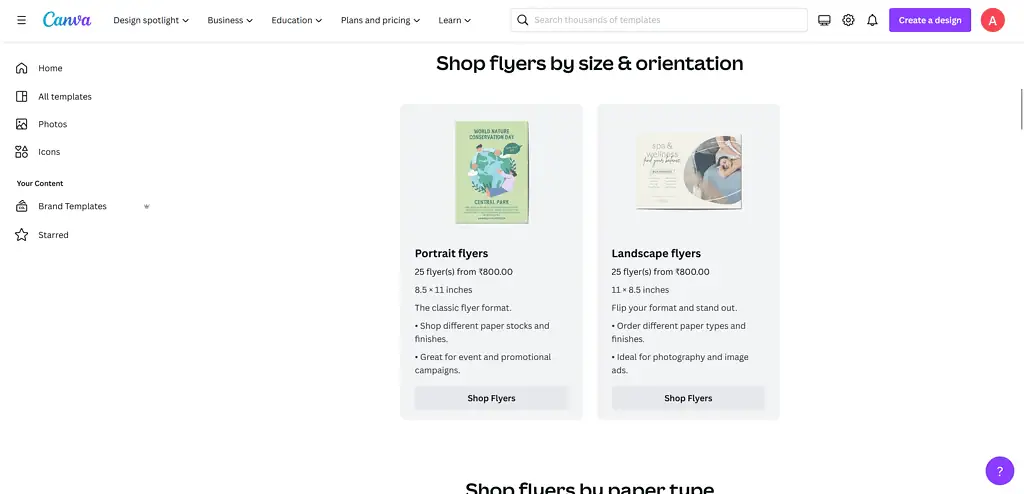
  • 20 Proven Business Ideas For Students

    20 Proven Business Ideas For Students

    Starting a business isn’t a feat accomplished only by people of one specific age range. You can be a student, a young adult, or even a senior; the only thing that matters is having an idea and the will to make it happen.

    But know that starting a business isn’t your usual part-time job. It will require dedication, commitment and hard work. Don’t get into entrepreneurship if you only want to earn a quick buck.

    If you are still interested in starting your own business while studying, here are 20 business ideas for students that may help get the creative juices flowing:

    Tutoring

    Do you particularly stand out in some subject? If you answered yes, you can consider teaching it to someone else.

    Choose any subject in which you excel – English, Maths, or Science and start offering tuition services. You can enrol as a tutor on platforms like Preply, tutor.com, Wyzant or an expert on websites like Chegg.

    You can also look for students in your neighbourhood if you wish to teach offline. Often you will find immigrants and foreign workers who struggle to learn English and younger students who need help in their academics.

    Private tutors can earn a great deal of money by tutoring for a couple of hours each week. You can charge anywhere between $10-$100 per hour depending on the subject and concepts.

    Platform
    Tutoring options
    Requirement
    Pay per hour
    Preply
    Online based
    Age – 16+
    Set your own rate Pay 18%-33% commission
    Wyzant
    Online and in-private
    Age – 18+
    Set your own rate. Pay 25% commission
    Tutor.com
    Online
    Enrolled as college sophomore or higher
    $39. Pay 69% commission
    Chegg
    Online
    Have tutoring experience Enrolled or completed degree in university
    $21

    Drop Servicing

    Selling services is a common approach to get started with a business. However, you do not have to execute a service in order to sell it.

    Drop servicing is a method where you offer services to your clients that are not performed by you. Instead, you seek somebody to do the work for you.

    You serve as an intermediary, selling a service to a client and later hiring a less costly freelancer or an agency to do the task. It’s amongst the most sought after business ideas for students.

    For instance, if you charge $200 for a service where you can get it done for $150 by someone else, then the remaining $50 is your margin.

    Websites like Fiverr, Upwork allow you to choose from a list of freelancers most suitable for your work.

    Platform
    How to get a gig?
    Commission to be paid
    Categories of services
    Fiverr
    Browse from available gigs
    20% of what you earn
    200+
    Upwork
    Post jobs and receive proposals
    5%-20%
    70+

    Social Media Creator

    You can make a lot of money as a social media creator by using well-known platforms like Instagram, TikTok, Facebook etc. But you must know how to market a brand effectively.

    Create a page to interact with audiences and build a community of followers. Generally, meme pages, celebrity pages, influencer profiles etc, have the largest viewership.

    Now, social media creators earn money through sponsored posts, brand deals, promotions, influencer marketing and more. A majority of business marketers compensate creators when they attract significant market views and following.

    Not sure where to begin?

    Here are a few courses to help you understand content creation:

    Social Media Manager

    You don’t always need to be a creator to generate income from social media. As an alternative, you can handle the social media accounts of other companies.

    Many business owners seek the assistance of social media managers because they lack the necessary expertise to manage their online presence.

    As a social media manager, you must engage with audiences on different platforms, respond to their queries, schedule posts, add stories and more.

    There are several free scheduling tools in the market to help you.

    Platform
    Inbox Manage
    Posts Scheduling
    Posts creation
    Analytics
    Social Bee
    Not available
    Scheduling option with multiple shares of the same post
    Integration with Canva, Unsplash & Giphy
    Yes
     visit
    Radaar
    Social Inbox
    Scheduling option with options to tag users.
    Integration with Canva, Crello, Grammarly, etc.
    Yes
     visit
    Hootsuite
    Inbox to let you contact the audience directly
    Schedule upto 350 posts at a time  
    Not available
    Yes
    Buffer
    Not available
    Scheduling with custom posting schedule
    Not available
    Yes

    Photography and Videography

    Love to struggle till you get that perfect click? This may be the perfect business plan for you.

    You can start by a freelancing photography business where you offer all kinds of services.

    Partner with marketing firms to cover events or capture content for future posts and advertisements. Photographers are also sought after by models or even certain students for professional content.

    As you advance in the field, you can begin to focus intently on one niche to make yourself stand out.

    The biggest issue in this business, however, is the cost of the essential equipment. You may still think of it as a one-time investment.

    You can create your own website and take the help of social media and digital marketing to promote yourself. Ask your friends and relatives to be your first customers.

    Another way is to work as a freelancer in initial days, gain some experience and customer reviews and then begin with your own business on a website.

    Caretaker

    Caretaking can have two major aspects:

    Childcare: You can consider turning your love for spending time with children into a side business.

    Simply put, you will watch children for parents who have demanding work schedules and can’t afford to send their child to daycare.

    Parents often want their child to get extra attention specifically when they are not around. This won’t be feasible in a daycare. As a result, babysitters are paid significant compensation for their services.

    Pet sitter/ Dog walking: Think of getting paid to interact with animals. Owners will leave their pets with you when they are on work or going on a vacation.

    You’ll be responsible for feeding, walking and generally caring for the pets when their owners are gone.

    If there are a lot of dogs in your neighbourhood as pets, you can offer morning or evening services as a dog walker. To get even more money, you can walk several dogs a day.

    Delivery service

    It is a way of making money by walking, biking or with a car.

    You can enroll as delivery partners with food joints or app based services like Uber Eats, DoorDash among others.

    Businesses typically charge significant fees for delivery to a customer’s door.

    On the contrary, you can develop your own business by collaborating with local vendors to ensure quick delivery at inexpensive prices.

    Younger workers tend to eat out frequently during their lunchtimes. Target them with quick eatables like sandwiches, fries, burgers etc made locally. You may introduce pre order service to deliver at lunchtime.

    Another option is to list yourself as a carrier for Amazon which would pay you to carry items to customer’s houses.

    Platform
    Requirements
    Pay
    Benefits
    Uber Eats
    At least 19 years old One year experience
    $15-$20 per hour
    Cash out earnings quickly Can deliver on cars, scooters, bike or even on foot
    visit
    DoorDash
    At least 18 years old
    $20-$25 per hour $10.50 base pay + tips and promotions
    Can schedule hours in advance Largest delivery market share
    Amazon
    At least 21 years old
    $18-$25 per hour
    In built GPS to guide you to location Time flexibility

    Web Designing And Development

    Think about web development as a business venture if you are passionate about learning programming languages and designing websites.

    You can use your hard skills to assist businesses in improving their presence online. Reach out to local firms who fail to recognise the benefits of having a website.

    Along with this, you might find online businesses with inefficient websites.

    Explain to them how a website would improve their visibility online and help in generating customer leads.

    Offer them your services as a web developer and deliver them your best work. If you perform well in the first few projects, word will get out and you will wind up with a lot of business.

    Dropshipping

    Dropshipping is an ecommerce business model that doesn’t require you to store inventory. Instead, you partner with a dropshipping supplier who holds the inventory and ships orders directly to customers. You manage the online store, process payments, and handle customer service issues but don’t have to worry about stocking products or shipping orders.

    In simple terms, customers can view products offered by you on your website; but you don’t have those products stocked on your shelves.

    Instead, you purchase the same item from the seller at a discounted price and ask them to ship it to the customer’s address when they place an order.

    Your commission covers the total difference between the two.

    You make money by reselling other people’s products.

    Since, as a student, you may lack a warehouse facility to store these items, hence this business model is perfectly suitable for you.

    Record Audiobooks

    If you could get paid for reading aloud, would you?

    You can make money by narrating audiobooks on a variety of platforms who pay you well for reading aloud.

    For example, on Audible, you can narrate an audiobook and get a share of its sales.

    Becoming a narrator is simple. You go to their website and read about their requirements before creating an account and a portfolio.

    After signing up, you must build a strong profile by uploading relevant samples and auditioning for reading out excerpts of books.

    You get to record a whole book only when you clear the audition. As a result, building a reputation becomes important.

    ACX is a platform that allows you to narrate a book only after the book’s rights holder approves it.

    Platform
    Pay
    Audience reach
    Audible ACX
    $300 per hour on average
    Amazon, Audible Make up 43% of the audiobook market
    Findaway Voices
    20% of royalties to narrators
    Libraries Distributors
    visit

    Start Freelancing

    If you excel in certain areas like content writing, graphic designing, illustrating, logo designing, editing, copywriting etc. Freelancing might be a terrific option for you to earn money while continuing your studies.

    Many businesses often look for temporary assistance in particular areas where hiring employees is not the best option.

    You, a freelancer, would come in on a contract basis and will get paid after the delivery of the project.

    As a freelancer, you work with several clients rather than just one. One of the most significant advantages of becoming a freelancer is the experience you gain that will help you later in your profession.

    When you become a freelancer, sites like Fiverr and Upwork are great places to market your skills. But you can also use your network to provide services to clients directly.

    Platform
    How to get a gig?
    Payment method
    Service fees
    Fiverr
    Receive proposals and invitations on basis of your post
    Direct deposit PayPal
    20% on all earnings
    Upwork
    Use connects or respond to an invitation
    Direct Deposit Bank transfer PayPal
    20% upto $500   10% from $500.01- $10,000   5% above $10,000

    Make Money Reselling

    Similar to dropshipping, reselling is a business model where you buy goods from manufacturers and retailers at lower prices from the market and list them on your website at a higher price.

    When a buyer evaluates the items, makes a choice, and places an order, the price difference becomes the reseller’s commission.

    Unlike dropshipping, there is no third party involvement in the process of reselling.

    If you ultimately narrow your attention to a certain area, this may quickly turn into a very lucrative company strategy.

    One popular way of reselling among students is to resell old notes and books at lower prices to classmates or the upcoming batch of juniors.

    You may create your own website or sign up for an account with a website like Shopify or Amazon.

    Platform
    Type
    Design
    Starting price
    Shopify
    Website builder and host
    Online web builder and templates
    $29 per month
    Amazon
    Third party marketplace
    Controls your design
    $39.99 per month

    Provide Transcription Services

    You can put your typing skills and understanding of the English grammar rules to great use by starting a transcribing business. It is a service where you convert speech into written form

    In addition, it doesn’t require you to do professional training or put in long hours. As a result, it becomes an ideal business idea for a student.

    The demand for transcription services exists almost everywhere – sometimes as minutes of a meeting while other times as summary or notes of a speech .

    You can even consider transcribing lecture notes and selling them to your classmates.

    Organise Trips

    If building itineraries and organising trips is something you can relate to greatly, this might be just the business idea for you.

    Its not easy to look for places worth exploring, handling bookings and building a whole itinerary around it. However, if you are passionate about it, this may become your reality.

    You can plan student outings for weekends, festivals, and events in exchange for a commission.

    Schools often have departments which can give you the opportunity to propose a travel plan for student trips.

    When you gain relevant experience over the years, you may end up opening a travel agency of your own.

    Podcasting

    Do you know that podcasts have earned as high as $50,000 per episode?

    Much like starting a YouTube channel or website, podcasting is a highly lucrative business for someone who is good at speaking and debating.

    A podcast usually features a guest and a host discussing on a particular event or topic.

    Becoming a professional requires time and work but you can start with with popular topics and short clips who are capable of going viral on the internet.

    You can record your podcasts as YouTube videos generate income through another stream.

    Beginning with you can invite family members, friends or someone in your network who inspired you to join you on a podcast and have a discussion with you.

    Further, this recording can be aired on Spotify or YouTube.

    Platform
    User share
    Type of content
    Spotify
    23.8%
    Audio and video based
    Youtube
    24.2%
    Video based
    Apple Podcasts
    16%
    Audio and video based

    Affiliate Marketing

    Marketing is not just an expense, but it can also generate revenue.

    Affiliate marketing is a strategy where you make money by promoting products of others. With each sale you make, you receive a small commission.

    You should start by creating a YouTube channel or a website with considerable traffic. After that you can sign up for affiliate programs with companies looking for marketers through sites like Amazon Associates, Clickbank, Shareasale, LinkShare.

    You must include a link to the businesses’ product on your website or channel. You will now be paid each time a buyer clicks on the link to purchase the item or subscribe to their services.

    As a student, you can cover your course fee by selling items such as books and other related products.

    Platform
    Associated websites
    Visit
    Amazon Associates
    436,979
    Impact
    4373
    Clickbank
    12,022
    ShareASale
    30,606
    Rakuten LinkShare
    35,995

    Sell Your Photos/Artwork

    Are you an art enthusiast who finds solace in drawing and creating art?

    If you are a digital artist who uses apps like Procreate and Adobe Illustrator to create artwork; this might be the perfect business idea for you.

    Have you considered selling your artwork?

    NFTs or Non fungible tokens are a way to demonstrate ownership of an artwork. You can sell your artwork as NFTs on a blockchain in exchange of cryptocurrency (mainly Ethereum).

    Sounds complicated?

    Read on here to learn about NFTs in full.

    If you want to sketch directly on a paper or a canvas; you can put up your art for sale at galleries, exhibitions or even your campus grounds.

    Most college students are looking for posters/ artwork or photographs to decorate their dorm rooms. You can make money by selling your best artwork to these students.

    Offer Online Courses

    Offering online courses is a way of sharing your expertise in a particular area with the rest of the world, much like tutoring.

    In place of books and notes, students choose video material for their educational needs. As a student, you may create make educational content in your field of study and post it on platforms like Coursera, Udemy and LinkedIn Learning.

    Alternatively, you can develop your own app to give other students access to your material.

    However, you must first select a platform and your desired subject. After this, You may create courses and charge students a fee to enroll in them.

    Platform
    Audience
    No. of users
    Specialisation
    Coursera
    Individuals and organisations
    113 million
    Anyone can create a course on any topic
    Udemy
    People or teams who want to acquire new skills
    50 million +
    Anyone can create or offer courses on any topic
    Linkedin Learning
    Individuals or teams
    27 million +
    All course fall under business/ technology or creative
    visit

    Start Live Streaming

    Why play a video game by yourself, when you can play it for an audience and earn money off it.

    Live streaming involves broadcasting the footage of your game as you play it.

    Twitch and Youtube Gaming are well-known streaming platforms in the gaming domain.

    Once you reach the required threshold of followers, you get paid for the traffic you bring in with your stream.

    However, you may also turn to other niches such as live streaming baking, cooking lessons or educational content online.

    Platform
    Who is it for?
    Features
    Visit
    Twitch
    Primarily for video game and pop culture streamers
    Viewers can interact with any streamer
    YouTube Gaming
    Live broadcasts of video games, e-sports etc
    Better monetisation options
     visit

    Local Reviewer

    Becoming a local reviewer is probably one of the easiest business ideas for students as it doesn’t require much investment.

    You can start your own review website and post your own opinions on products, services, locations etc.

    Every time someone buys a new product, they look for reviews online. As a result, review websites are in charge for educating consumers so they make informed decisions.

    You can easily start and manage a website with little or no investment.

    Sure enough there are a ton of review websites on the internet for big cities. But small town establishments like accommodations near universities lack adequate web ratings.

    Once you advance in the field of reviewing, you can diversify by adding more areas like reviews of food chain, books, places and businesses among others.

    Your audience grows as you post more. Later you might work with companies to become an affiliate marketer or influencer.

    Go On, Tell Us What You Think!

    Did we miss something? Come on! Tell us what you think about our article on Business ideas for students in the comments section.
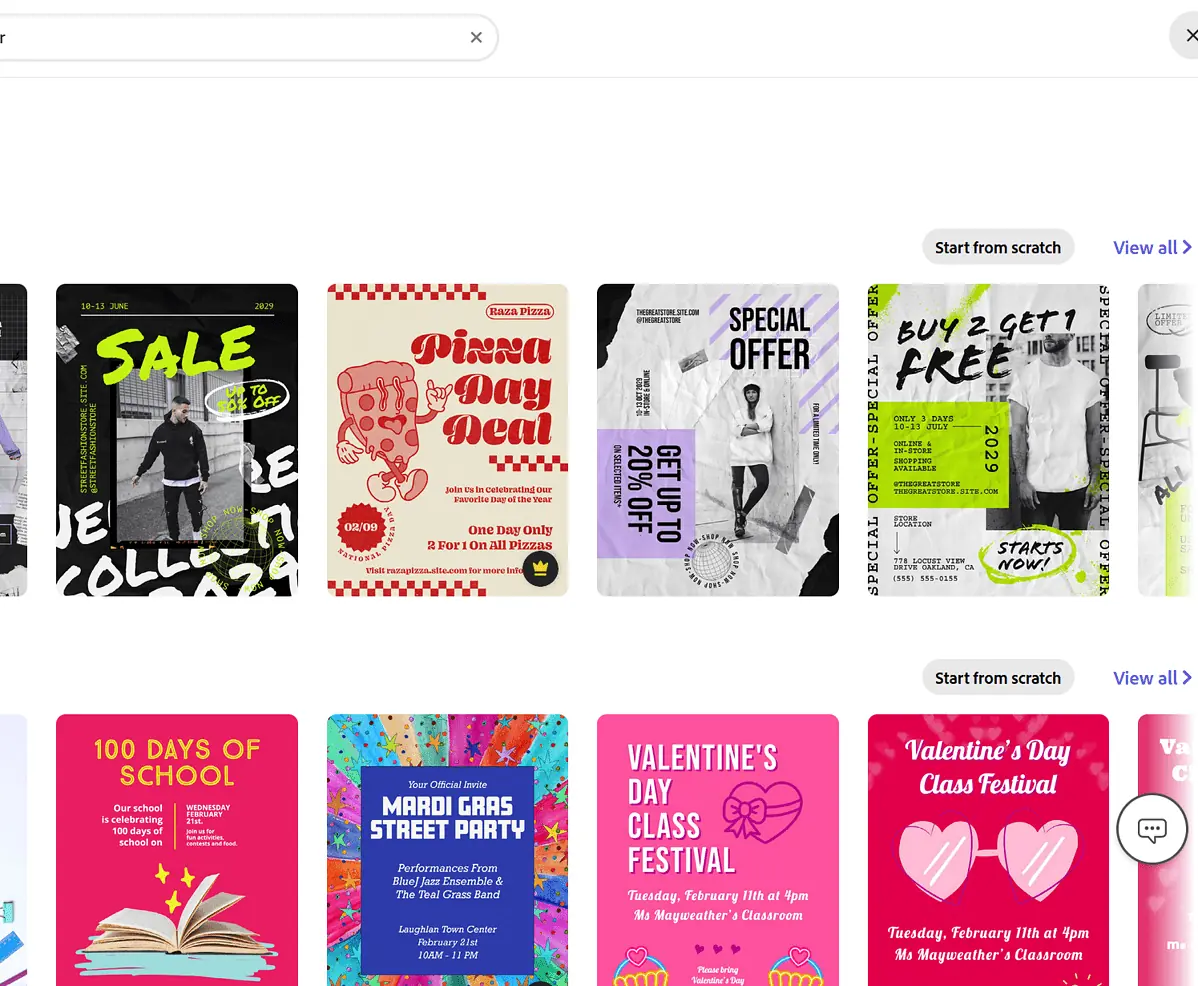
  • How To Make Money From Your Phone [Complete Guide]

    How To Make Money From Your Phone [Complete Guide]

    Money doesn’t grow on trees, but you can earn it by tapping into the internet’s vast potential. With the rise of the digital age and 6.6 billion people having smartphones, there are many opportunities to make a living online. 

    It sounds too good to be true, but you can make an insane amount of money from your phone. 

    You probably know a few people who make money from their phones. 

    You must be wondering, how do they do that? How can you make money from your phone?

    Entrepreneurs like Sara Mauskopf and Anne Halsall, co-founders of Winnie, started working from the phone and now run a successful business. Kevin Systrom and Mike Krieger created a mobile app and earned a lot online; even Tai Lopez and Grant Cardone make millions online. 

    Yes, It is possible!

    But they did not become millionaires overnight. They started from somewhere and worked hard. So, if you are here to dip your toes and start making money using your phone, here are a few surefire ways that will help you earn. 

    Sell Items Online

    With the rise of ecommerce platforms like Etsy, Amazon, and eBay, it’s easier to start selling items from your phone. 

    The seller applications of these platforms are mobile-optimised, so you do not need a PC or laptop to sell your product in these marketplaces. You can use your phone to manage orders and process payments.

    To get started, you first have to decide your niche and source the material. When you have your product sourced, take pictures of each product and list them in your store with SEO-optimised product descriptions and a fair price. 

    Whether you have a physical or digital product like an ebook, you can list any of them on these platforms, all with your phone.

    Start Drop Servicing

    Drop servicing is a kind of business model in which you sell services to clients and hire less expensive freelance professionals to complete the work. 

    For example, if you want to offer a web development service to a client for $15 per hour, you find professionals on Fiverr, or Upwork for $7 per hour, get the work done from them and deliver it to your client. You earned $8 per hour.

    Similarly for designing jobs you can take help from freelancers at 99Designs.

    Besides, you can use Fiverr and Upwork to get clients and find freelancers. It works both ways. To get clients, make your profile as a freelancer, and to hire freelancers, make another profile of a client.

    Take Online Surveys 

    Yes! You can make money by filling up the surveys. 

    If you have some spare time that you spend scrolling social media – you can utilise that time to make £800 a year by taking online surveys.

    There are dozens of market research companies recruiting new members to fill out surveys for them for cash rewards. But not all companies are legit and pay off!

    You can quickly fill out the surveys using your phone. You just have to choose the options for the questions they provide – like we choose MCQs. And it is really as simple as it sounds!

    Companies run these surveys to make improvements and get genuine opinions from the people, and pay you as you spare your time to give your opinion to them. 

    Each survey on these applications takes around 15 minutes, and taking four surveys, i.e., sparing an hour:

    • Using Toluna, you can make £3.75 an hour
    • Using Swagbucks, you can make $5 an hour
    • Using Branded Surveys, you can earn 50 – 500 points per survey, where 100 points = $1 

    Start Online Teaching

    If you are a subject matter expert, you can enrol on any of these websites Tutor.com, TutorEye, and TutorMe, choose a subject and get a few students willing to learn. You can simply switch on the mobile camera and give your students 1-on-1 classes. 

    You can choose from over 250+ subjects on these platforms, where they have students in millions. 

    These platforms make logging in from your phones, interacting with students, and taking classes easier. 

    Moreover, if you are a professional teacher or a professor, you can host your own courses on Udemy. Udemy does not charge a fee to create and host a course on Udemy. You can publish as many paid and free courses as you like and earn a decent amount. 

    Begin Writing Online

    If you are a writing expert and passionate about writing, explore the opportunity to monetise your passion through online platforms using your phone. 

    You can easily find freelance writing jobs on platforms like Upwork and Fiverr. These sites connect writers with clients for a wide range of projects, including blog posts, copywriting, articles, and even ebooks. 

    As a writer, you can choose the projects that align with your interests and skill set and work from the convenience of your own phone. 

    You can use Google Docs or Microsoft Word applications to write on your phone, save your content on the phone, and share it from there. You can also use tools like Grammarly on your phone to add a professional touch to your writing

    Become A Delivery Driver

    Many companies like Uber Eats, Domino’s, Pizza Hut, Shipt,  and even local restaurants look for delivery drivers. 

    As convenience has become increasingly important to us, and it’s easier to have groceries, packages, restaurant meals, and prescriptions delivered to our homes, delivery driver jobs have exploded in the market. 

    You can download any of the apps mentioned above on your phone, as they all are easily operable on phones, and add your bank account and other details. As soon as you get approved, you can start to work and get paid for every delivery. 

    But these big names always require you to have access to a vehicle. If you have one, it is a win-win situation for you. Alternatively, you can look for delivery jobs at local restaurants, medical facilities, or other places that provide vehicles.

    Start Gig Work On Fiverr & UpWork

    As leading platforms for freelance work, Fiverr and Upwork  present an exceptional opportunity for individuals seeking to monetise their skills and expertise. With gig opportunities being purchased on the platform every four seconds, it’s a highly active and dynamic environment for sellers to thrive in. Plus, it’s as simple to operate Fiverr or Upwork on a phone as it is to WhatsApp or a social media site. 

    As a seller on Fiverr or Upwork, you can offer a wide range of services, such as writing, social media management, video editing, and more. 

    • You can use Microsoft Word, Google Docs, Grammarly, and more tools to write. 

    • You can use tools like Canva, VN, and more mobile-friendly tools to edit videos. 

    • And as almost all of us manage our personal accounts on social media, you can manage your client’s social media effortlessly on the phone in the same way. 

    One of the major advantages of these platforms is the autonomy it provides to sellers. You have the ability to set your own prices and charge extra for additional services or tasks that you provide to your clients – providing an avenue for maximising your earning potential.

    This, coupled with the volume of gig opportunities, makes Fiverr and Upwork ideal platforms for those seeking to supplement their income through freelance work from phone.

    Invest Time In Stock Trading

    Online market trading and investing in the stock market was a tough nut to crack earlier. But, applications like Zerodha, eToro, Robinhood, Webull, and many others made it a lot easier to get knowledge about the stock and the market, analyse the performance of every stock and more – thus making investment easier. 

    Besides, these applications and all this information are particularly made to operate on the phone. 

    Though investing and managing the stock is now easier from the phone, and you have everything on your tips, you need to have complete knowledge of the stock market to invest in the right place. 

    When you want to park your money on a stock:

    • Read about the stock performance compared to its peers
    • Study the growth pattern of the revenue of the company
    • Study the overall outlook of the target industry
    • Read thoroughly about the dividend payouts of the company

    Taking note of this information about a stock will help have a basic knowledge of the stock. Besides, there is much more you need to read about the stocks and markets before you invest your money. So, be wary when using these platforms and working in the stock market. 

    Become A Virtual Assistant 

    A virtual assistant (VA) extends their services to the business or professionals. A VA provides assistance and offers support by performing their tasks remotely and not moving to their physical work location. 

    You can help people with tasks such as scheduling appointments, virtual bookkeeping, cold calling, chat support, research, data entry and more. 

    And the good news is – you can do it all, whether it is data entry, cold calling, providing chat support or more easily from the phone. The applications most companies use for chat support include Zendesk, LiveChat, tawk.to, and more, which are all available to download on phones.

    Besides, other VA works that engage you in cold calling require no tools, and data entry is way too easy to do on the phone than on PCs. 

    Mostly small businesses and entrepreneurs take these VA services, and you can bid on such projects on Upwork or Hirect. You can also get clients from LinkedIn. 

    Start A Dropshipping Store

    If you want to sell products but do not wish to hold the inventory – dropshipping business is for you. You can create a store online on your phone and sell products to customers that aren’t yours but belong to a third party. 

    You act as a bridge between the producer and the customers. 

    For instance, dropshipping is when you sell clothes but don’t keep their stock. You only use the pictures of a third party on your website, and when someone wants to buy one, you ask that clothing company to send it directly to the customer’s house, avoiding the need to worry about stocking and delivering.

    The store can be of anything, including clothing, groceries, pet products, toys, or anything. 

    Make an account on DSM Tool, Modalyst, or others, get your products from Alibaba.com or other sites and start your dropshipping business right away from your phone. 

    Take Video Editing Projects

    If you’re good at video editing, you can use your phone to edit videos for businesses, vloggers, social media enthusiasts, or other content creators.

    The trend of video content is on the rise, and when you edit or create professional videos on the go for your clients – monetising this opportunity is the key!

    You can leverage advanced mobile adaptive video-editing tools, like VN-Video Editor, Canva, InShot, and more, to create or edit videos like professionals.

    You can get projects from Fiverr, Upwork, and LinkedIn, the best digital services marketplaces. Make yourself known as a freelancer or a professional, send proposals, get projects, and work for them to maximise your earnings – All from your phone. 

    Create An Audiobook

    There’s a growing demand for audiobooks as people (mostly Gen Z) are turning to audio to consume content, and this audiobook market is largely untapped. 

    Creating and selling an audiobook on your phone can be done in a few simple steps:

    • Write or select a book to narrate and record it using your phone’s microphone.
    • Edit and convert the recording to mp3 format.
    • Share and promote audiobooks on Audible, Amazon, and iTunes.
    • Set a price for your audiobook, track your sales and withdraw your earnings.

    Keep in mind that this process may take time, but with persistence and patience, you can achieve success. 

    If you have no voiceover skills, no problem!

    You can hire professionals or get AI Text-To-Speech tools.

    You can find professionals from freelance sites, including Upwork, Fiverr, Hirect, and more.

    You can use AI text-to-speech tools like Uberduck and VoiceMonk that have 5k+ plus expressive voices and a variety of languages in which you can record your book. 

    Become A Social Media Manager

    If you are a social media enthusiast, have good knowledge of social media, create and schedule posts, engage with followers, run ads, and grow an audience, you can be a social media manager for a small or a growing company. 

    Even if you do not know how to run ads or manage a professional social media account, take courses from Hubspot or Udemy whenever you have time on the go and get certified as a social media manager. (these are very small courses)

    Network and stay updated with social media trends, find a few helpful tools that work on the phone and use Fiverr, Upwork, Hirect, or LinkedIn to get clients. 

    Use your phone to access resources, manage, schedule posts, engage with followers and even measure the performance of your campaigns to optimise and increase ROI using google analytics or other tools.

    You can easily manage multiple accounts from your phone and earn a decent amount as a social media manager. 

    Bottom-Line?

    Are you ready to turn your phone into a money-making machine? Look no further as we unveil the secret world of earning cash right at your fingertips. It’s time to take control of your financial future with a variety of ways to make money from your phone. From selling items online, to drop servicing, online surveys and teaching, these strategies are designed to turn your spare time into a decent cash flow. The world of online earning is open to anyone who is willing to put in the work. Don’t wait. Discover how you can start raking in the dough and which way suits you best to make money from your phone.

    Go On, Tell Us What You Think!

    Did we miss something? Come on! Tell us what you think about our article on how to make money from your phone in the comments section.
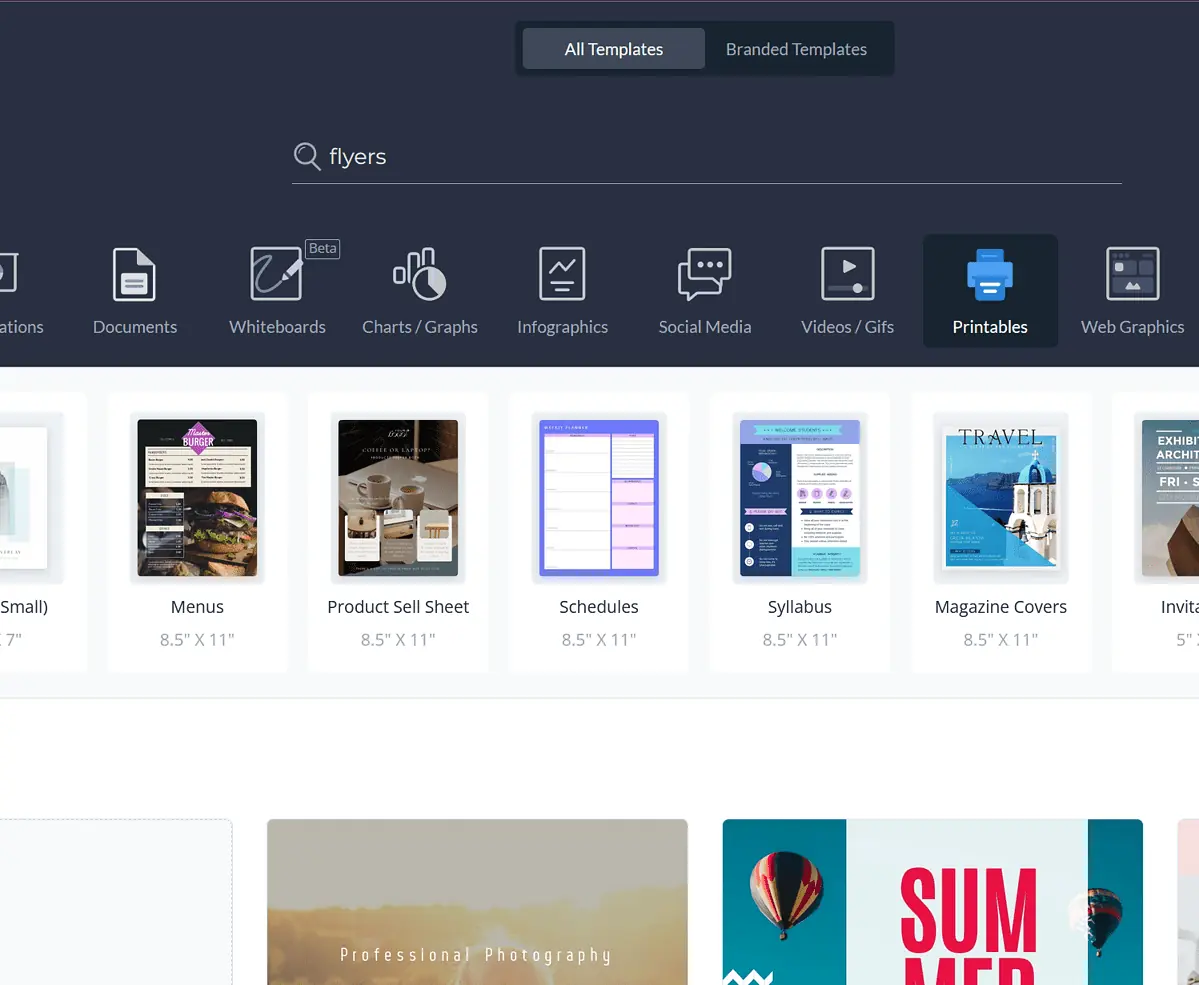
  • How To Make A Reel With Photos? [Complete Guide]

    How To Make A Reel With Photos? [Complete Guide]

    Instagram reels are well known for their short videos that invite everyone to participate in cultural trends, collaborate with the community, engage the audience, and showcase new ideas visually in an appealing way.

    But if you are one of many with a spiral of pictures and videos to flaunt but face a tough time creating an engaging reel and staying in trend, this blog will help you quickly create an Instagram reel with photos.

    This guide takes you through 3 apps where you can make a reel with photos, including the Instagram app, Canva, and VN.

    • If you want to create a basic reel, Instagram is your app.
    • Want to make a template-based professional-grade Reel? Canva is your go-to place.
    • And if you want to create a reel from scratch and make it your own way, VN is for you.

    Let’s dive in to get through the nitty-gritty of how to create a reel with all these apps.

    How To Make A Reel On Instagram With Photos?

    Creating a reel on Instagram with photos is a simple process that can add a dynamic and visually appealing element to your Instagram profile. Here’s a step-by-step guide on how to do it.

    Option 1: Open the Instagram App – Swipe Right – Go to the reels section at the bottom – Start recording the Reel immediately, or select photos from the gallery to add them.   

    Here is how:

    Option 2: Alternatively, go to the ‘My Story’ option at the top left corner of the home page –  select ‘Create’ to create a reel. You can create a reel from your existing story, add photos to create a new reel, or start recording a reel immediately.

    Here is how:

    You have chosen your method for creating the Reel, you can set the duration of the video. To do this, tap on the encircled ’15’ on the left side of the screen and set the duration to 15, 30, 60, or 90 seconds.  

    Next, to make a reel smaller than 15 seconds, click on the ‘clock’ option and use the slider to adjust the length.

    You can also set the timer to  3 or 10 seconds on the screen’s right side. The countdown to start recording a reel begins after you press record.

    You can also customise the speed, effects, gestures, and layout of your Reel. To do this, choose the desired options from the left side of the screen and add them to your Reel until it meets your desired level.

    Now, it’s time to add pictures to your Reel.

    To add photos to your Reel – click on the ‘+’ sign at the bottom left of the screen – and select up to 10 photos. You can add music, edit the duration of each image, and preview the Reel before posting it.

    If you want to include a specific part of a song in your Reel, you can edit the song and choose the desired portion to add.

    You can also add text to your Reel while customising the font, colour, and animation. If you want the text to be visible for only a short duration, tap on the text and drag the slider on the bottom to the desired point.

    When satisfied with your Reel, you can post it to your Instagram profile for your followers to enjoy. Before you hit the ‘share’ button, add hashtags, a caption, and set a cover image!

    How To Make A Reel On Instagram With Photos with Canva and VN

    While Instagram allows you to make and share a reel, it has several limitations that prevent you from making cool and trendy reels that get viral.

    Instagram often lags and crashes and does not have motion graphics or beautiful layouts to let you stay trend-savvy for specific trends like 3D photo challenge, 27 photos challenge and more. Besides, you can also not control your animated text duration and add transitions.

    An alternative to Instagram is using the design tools – Canva or VN to create a reel with photos, which provides access to customisable templates, graphics, tools and more that give you complete control over your Reel.

    Make a Reel With Photos On Canva

    Canva makes making reels with photos easier with its pre-built templates easy to edit. Here’s how to customise Canva Reels templates and create your Reel quickly, accessing thousands of elements, fonts, animation options, trendy songs, effects, and more.

    In the Canva editor, search for ‘Instagram Reels’ and choose a template.

    Canva editor

    Click on the three ‘horizontal dots’ tap on ‘Resize’ and customise the size.

    Canva reels editor
    Canva reels editor

    From the ‘category’ section, choose the category of your template. You can choose from thousands of reel templates for your business needs, marketing, education, and even food recipes.

    Canva reels editor filters

    After choosing the template, you can add your favourite photos.

    Canva reels editor overview

    Using the drag arrow ‘>’ at the bottom, stretch the template to make it lengthy. You can also use the ‘+’ sign or ‘Add’ option at the bottom to add a new space to the Reel.

    make a reel with photos on canva

    You can adjust the slider, can cut the template into as many small halves as you want, and get to add as many pictures as you want (but remember the upper limit is 90 seconds).

    Now it’s time to get creative and add pictures. Click on the ‘+’ sign encircled in purple on the left side of your screen to upload photos from the gallery, drive, or other applications. 

    Another way to replace the pictures of the template with yours is to click on the picture you want to replace, click on the ‘Replace’ option at the bottom left, and add your photos. Repeat this method to add every image to the Reel.

    add pictures canva reel editor
    add pictures canva reel editor

    You can add elements from the same section, including graphs, gifs, tables, and more; add text, and choose the font you want.

    Now, click on ‘Elements’, search ‘audio’ and tap on ‘Audio’ just below the search bar. You can browse different audios for different moods and find the one that resonates with your Reel.

    add audio to reels

    When you add the audio, it appears at the bottom in the purple line. Double-click on it to adjust the starting point of the music.

    edit reels on canva

    To get more creative, click the ‘+’ sign between the sections to add transitions. You can apply the same transition to all or choose a unique one for every slide.

    edit reels on canva
    edit reels on canva
    edit reels on canva

    Once you’ve finished and you’re ready to export your Reel, preview it, edit it more if you want, and download by clicking on the  ‘Download arrow’ and then the purple ‘Download’ button. This exports your video in the correct format, aspect ratio and resolution for you to upload it on Instagram.

    Make Instagram Reels With Photos And Videos On VN

    VN is one of the best video editing and reel-making apps for Apple users, Androids, and desktops. It is a cross-device, cross-platform compatible software.

    Now, to make an Instagram Reel on VN, there are two ways. You can start from scratch or use their templates.

    To use their templates, click on the ‘+’ sign in the bottom right corner and go to the ‘templates’ section.

    create reels on vn
    create reels on vn

    You can directly choose a template from the ‘Instagram reel’ section (but that will not have too many options). Or you can search for the type of template you want in the search option and access hundreds of templates in that category.

    reels templates on vn
    reels templates on vn

    Choose a template, ‘ Download’ the one you want to customise, and click on ‘Use Template’.

    creating reels on vn
    creating reels on vn

    To make a Reel using a template, replace their picture with your photos or videos.

    creating reels on vn

    Edit the content and add your own, preview the Reel, and save it in the VN app or download it by hitting the ‘download arrow’ given at the top right corner.

    creating reels on vn
    creating reels on vn

    Alternatively, to make a reel from scratch, click on the ‘Default’ option and click on the ‘+’ sign in the bottom right corner.

    create reels on vn
    create reels on vn

    Now add the media – amazingly, you can make a reel that allows you to display everything – because you can use up to 70 media from your gallery. You can use videos and photos alone or a combination of them.

    select media for reels on vn

    After selecting the images and videos, you can add music, and text, insert stickers and even add a video to a picture or vice versa.

    editing reels on vn
    editing reels on vn

    Now, a reel is ready to post already! But you can get as creative as you want to with your Reel. Because VN has got various editing options, hundreds of filters, fonts, music options, and much more to enrich your Reel.

    Bottom Line?

    In summary, creating a reel on Instagram with photos is a powerful way to showcase your content and stand out on the platform. The Instagram app allows for the easy creation and editing of reels with platform’s built-in features. However, for those looking for more advanced customisation options and design elements, using a design tool such as Canva or VN can elevate your Reel to the next level.

    With Canva, you have access to a plethora of pre-built templates, graphics, animations and other design elements that can help you create a truly unique and professional Reel. With VN, making reels from scratch and having complete control over your Reel and its design is easier.

    No matter what route you choose, taking the time to create a visually stunning reel with photos can help your content reach a wider audience and make a lasting impression

    Go On, Tell Us What You Think!

    Did we miss something? Come on! Tell us what you think about our article on how to make a reel with photos in the comments section.
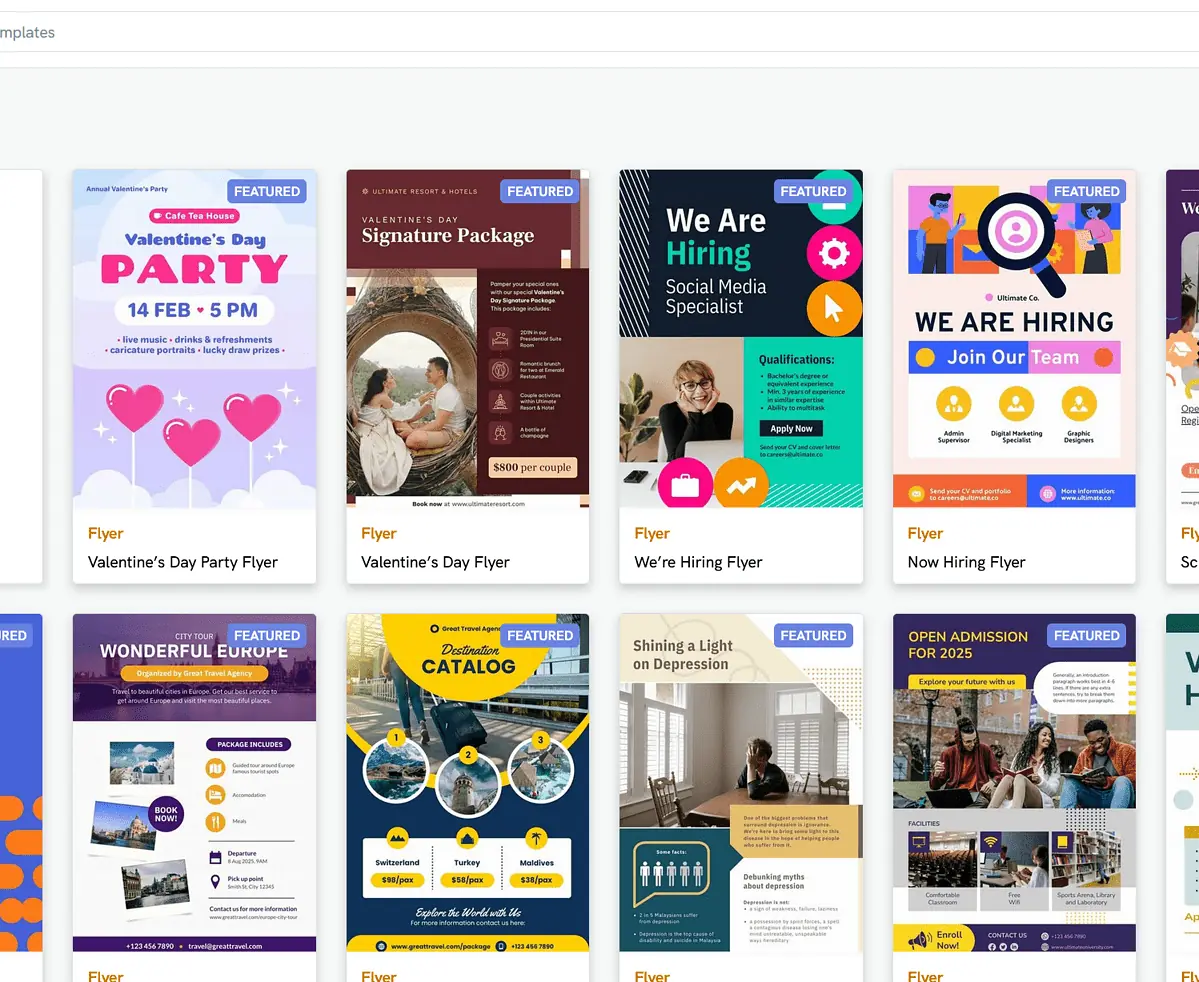
  • What Is Loss Aversion? – Definition & Examples

    What Is Loss Aversion? – Definition & Examples

    Humans are roughly 2.5 times more sensitive to losses than they are to gains of similar size. This explains why losing a 50$ bet hurts more than winning a 50$ bet. The idea that people tend to feel more pain from losing something than pleasure from gaining something of equal value is known as loss aversion.

    But what is loss aversion? How does it affect human behaviour?

    What Is Loss Aversion?

    Loss aversion is a concept in behavioural economics that describes people’s preference for avoiding losses over accruing equivalent gains.

    It is a cognitive bias that explains why for individuals, the pain of losing is much more powerful than the joy of gaining something. In other words, people tend to be more motivated by avoiding losses than they are by pursuing gains.

    For example, the pain of losing $50 dollars is far greater than the joy of finding $50.

    Loss aversion typically plays out when people make decisions that involve risk. The fear of regretting a bad decision, such as making an investment and losing money, causes them to be more conservative in their approach.

    Why is Understanding “Loss Aversion” Important?

    Nobody likes to lose, especially when it comes to money. However, even rational thinkers can fall prey to their loss aversion bias. Here’s how possessing a sound knowledge of loss aversion can help anyone make better business decisions:

    Make Better Investments

    Loss aversion can prevent people from making the best decisions for themselves to avoid the risk of failure or loss as much as possible. Though being risk-averse is helpful in a lot of scenarios, it can prevent people from making logical choices as the fear is too intense or powerful. In such cases, people develop a negativity bias, i.e. giving more importance or weight to negative experiences than to positive or neutral experiences. For example, a person might be hesitant to invest in the stock market because they are afraid of losing money, even though they know that investing could earn them a higher return in the future.

    Avoid Sunk Cost Fallacy

    Sunk costs are outlaid of time, effort and money that are already spent. And since they are already invested, they can’t be recovered. Humans tend to focus too much on sunk costs, leading them to believe that they have too much invested to quit. For example, If a person purchases a movie ticket for 10$, they will feel like they have to stay for the entire movie, even if the movie is terrible. This is known as sunk cost fallacy. This unwillingness to concede a loss on a bad investment simply arises from the tendency to avoid a loss at all costs. That’s why people continue to pump money into a bad investment, hoping it will turn fruitful one day. However, this only motivates irrational behaviour and results in a greater loss of resources.

    Examples of Loss Aversion

    Loss aversion broadly affects a person’s judgements and decision-making, such as forming a preference, valuing a product and purchasing. Below are some common examples of loss aversion impacts real-life situations:

    Endowment Effect

    The endowment effect describes how people tend to assign a higher value to the products that they already own than to identical items they don’t own. For example, if a person is offered to exchange their favourite pair of sneakers (that their mother gifted to them) for a new pair, chances are they will not exchange them and continue to wear them.

    The endowment effect arises because the pain experienced by an individual as a result of giving up the goods they already own is stronger than the pleasure experienced in buying a brand-new, unused product. Humans consider relinquishing the goods that they already own as a situation of loss.

    Status-Quo Bias

    Status quo bias describes how people have a tendency not to act or to prefer inaction so the current state of affairs remains unchanged.

    This bias stems from the innate desire to prevent loss at any cost and can be used to explain why people fail to take advantage of investment opportunities. Rather than placing their money in investments with a certain degree of risk, people often leave their money in low-yield savings accounts. The status quo bias leads people to maintain their current financial situation instead of taking a risk and improving their financial gains. 

    Disposition Effect

    The disposition effect is the tendency to hold onto assets that are losing money in the hopes of turning them around while prematurely selling off winning assets to make a profit. For example, investors tend to hold onto stocks that have fallen in price for far too long while prematurely selling off stocks that have risen in price.

    Loss Aversion Vs Risk Aversion: What’s The Difference?

    While the two terms may sound like the same thing, loss aversion is different from risk aversion.

    Risk aversion refers to the tendency to avoid taking risks to minimize potential losses, while loss aversion refers to the emotional discomfort associated with losing money.

    For example, a risk-averse investor may limit their portfolio to low-risk investments, whereas a loss-averse investor may be unwilling to sell a stock even when the price is declining.

    Another key difference is that while risk aversion is a rational decision-making strategy, loss aversion is just an emotional response to losses.

    Loss Aversion in Business

    Customers make buying decisions based on the desire to avoid a loss. Marketers carefully study this behaviour and take advantage of it as they plan campaigns or write copies. Here are a few common tactics that they commonly use:

    • Scarcity: Marketers create fear of loss by creating a sense of scarcity. For example, they may use phrases like “limited time offer” and “act now” to encourage potential customers to take immediate action or risk missing out on the opportunity. Ecommerce marketplaces like Amazon use scarcity principle to run flash sales that compel buyers to make a purchase before the offer ends.
    • Free Trials: Free trials are another way marketers take advantage of loss aversion. Customers are more likely to pay for a product or service when asked to renew their subscription after the trial period because they don’t want to lose access to something they already have and may benefit from. A great example of this is Spotify. Users can take a 30-day free trial of the Premium plan and listen to the same music that they were listening to previously, just ad-free. However, very few people decide to cancel their subscription after the trial period and risk losing access to that perk.
    • Limited-time offers: Limited-time offers are another way marketers take advantage of loss aversion. By offering a product or service at a heavily discounted price for a limited amount of time, customers are more likely to purchase the item out of fear that they may not be able to get it later on. This tactic is commonly used by retail stores around the holidays, when they offer one-day specials to encourage customers to buy now before it’s too late.
    • Ownership effect: It’s hard for people to part with something they own, even if it’s just a digital product or service. This is known as the “ownership effect” or the “endowment effect” and marketers often use this tactic to encourage customers to keep using their products. For example, subscription services that offer discounts for a longer commitment period may entice customers who don’t want to lose out on what they already have, even if they’re not using it.
    • Reframing: Reframing refers to changing how information is presented to the audience. This is also a very common tactic used by marketers. They reframe the critical points as losses and make sure to highlight them so that the customers develop FOMO (fear of missing out) by not acting. For example, “You get a 70% discount if you choose to shop now!”. Here’s the same statement reframed as: “You’re missing out on a 70% discount if you don’t shop now!”. Here, it is being highlighted to the customer that by not acting now, they are losing.

    Go On, Tell Us What You Think!

    Did we miss something? Come on! Tell us what you think about our article on loss aversion in the comments section.