Feedough Logo

Blog

  • I Want to Start a Business But Have No Ideas – A Beginner’s Guide

    I Want to Start a Business But Have No Ideas – A Beginner’s Guide

    So you’ve decided to start a business. Give yourself a pat on the back for taking that first step!

    But the problem?

    You’re struggling to come up with a business idea.

    I know things can get pretty overwhelming, especially when you’re just starting out.

    But don’t worry; while I can’t give you a specific business idea, I can share a proven system to get you started and help you find an idea (or ten) that’s right for you.

    The Business Ideation Process

    Your business idea isn’t everything, but it is the backbone of your success. And this perfect backbone requires a eureka moment.

    But this eureka moment isn’t just luck. Well, most of the time, it isn’t. It is something that requires you to put in the conscious effort and be able to draw inspiration from your surroundings.

    So, how do you find your business idea?

    You use the business ideation process. This process involves four steps:

    1. Find a trigger: A trigger is what sparks your first idea. It can be a problem or a passion you have, an industry trend, an existing business model, or something unique you noticed in the market.
    2. Do research: Once you have identified the trigger, it is time to research and study it thoroughly. Researching involves knowing the competition around you, understanding customers’ needs, and getting a better sense of what your business should be like.
    3. Build a solution to a problem: After researching, you create a solution to the identified problem or need. This is when you convert the idea into a concept and then, in turn, formulate a business model.
    4. Build the business: This is when you bring your idea to life by doing things such as creating a business plan, setting up the ownership structure and registering the business. People often mistake this individual step for the whole process, but it is only one part of the whole process.

    As you see, there’s a lot that you need to do to start a business. It isn’t just the idea at work but a set of steps and procedures you need to take to turn your idea into a real business. But don’t be overwhelmed. Here’s how you can go about with each.

    Getting A Business Idea

    Business ideas are everywhere. It’s just a matter of looking around and seeing what you can do to improve your life or the people around you. Here are some triggers to get you started:

    • Solve a problem: Problems form the basis of businesses, many of which are in our everyday lives. Think about a problem that you have or an issue that people around you face. For example, why is finding a plumber so difficult? Is there a way to make food delivery faster?
    • Find an unmet customer need: Is there any market out there that hasn’t been tapped yet or needs more improvement? For example, a business may be ignoring one problem of its target audience. This requires you to be well-versed in the industry and have the market knowledge to identify what people are looking for. Or you can be a customer this industry caters to.
    • Follow the rip, pivot, and jam method: Uber for x, Amazon for y, and Airbnb for z. This method involves you copying a successful business model and applying it to a different market or industry. You can also tweak the same model with your improvements. For example, Postmates adopted the Uber model (aggregator business model) and tweaked it to offer on-demand food delivery.
    • Adopt the sniper approach: If Amazon is the shotgun targeting several target groups at once, PetSmart is the sniper, targeting one group (pet owners) in the market with a laser-like focus. You can find several such niches, then research their problems and needs and devise a solution.
    • Capitalise using shovels in the gold rush method: With the gold rush method, you identify an emerging trend and provide products or services to capitalise on it. For example, when blockchain mining started gaining traction, many entrepreneurs started offering mining rigs, cloud mining services and trading platforms. Even NVIDIA increased their cryptocurrency-focused product line.
    • Use the intersection method: Find intersections among your skills, interest, and network. For example, if you’re a software engineer who loves hiking and has friends in outdoor gear businesses, you could create a mobile app that helps hikers find help on trails.
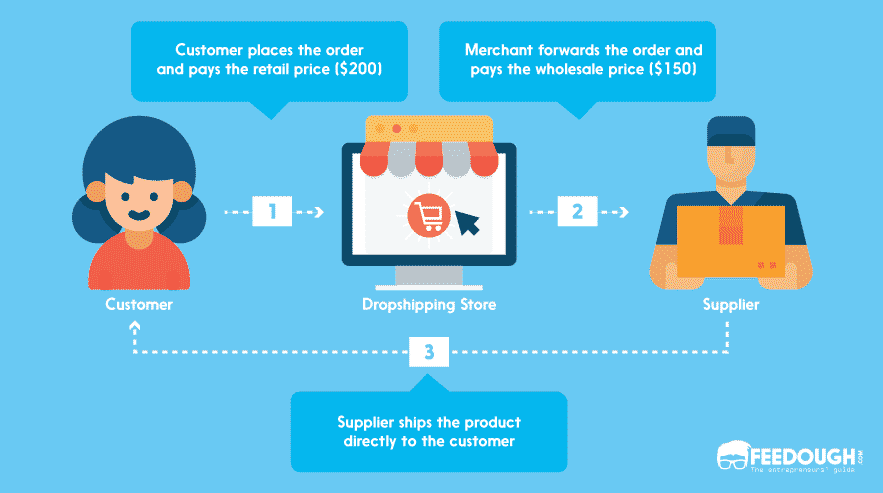
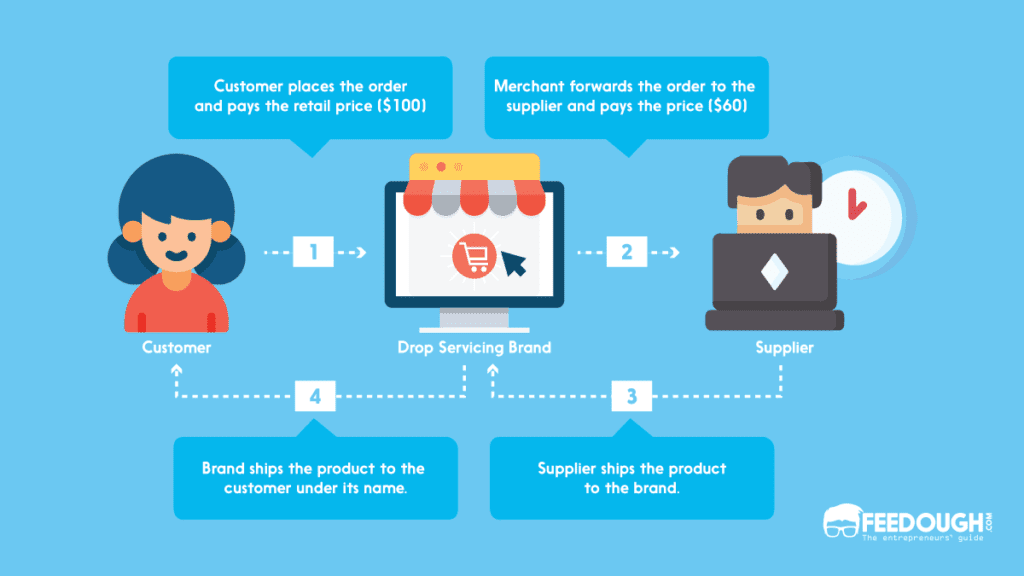
    • The drop-offering method: You find a focused niche with a good following, find sellers that develop offerings catering to that niche, and then offer those white-labelled offerings under your name. For example, you find a client looking for website development and hire a reliable freelancer on Fiverr or Upwork for a fraction of the cost. Then you sell the complete package under your brand at a premium. This is drop servicing. Similarly, dropshipping involves selling tangible products without actually owning the inventory.

    Researching And Validating The Business Idea

    Once you find the business idea that best suits you and your skill set, the next step is to research and validate it. This step is essential to ensure that the market needs your proposed solution as much as you need the business.

    You do this by following the validation process:

    Test The Market

    Start by conducting surveys or interviews with potential customers to understand their problems and validate your problem-solution fit assumption. The problem-solution fit assumption assumes that your target market has the intended problem and is looking for a solution like the one you are proposing.

    A problem with most entrepreneurs is that they conduct these surveys with a formal online or offline questionnaire. It may not be the most convenient way to verify your assumptions accurately.

    Instead, when you are just starting out, it is best to start with informal “1-on-1” conversations where your target customers can feel comfortable expressing their opinions. This will help you understand the true problems your customers are facing and how they want to solve them.

    Validate Your Assumptions

    Just knowing the problem your customers are facing isn’t enough. You also need to ensure that the proposed solution will work for them.

    For this, validating your problem-solution assumptions with your target customers is important. You do this by asking them what solution they would prefer and pay for. You must validate whether your customers would actually use it and be willing to pay for it.

    For example, let’s say your customer hates to live with their family but can’t afford to rent a place of their own. If you’re creating a co-living hostel, you’d need to validate whether your customers would actually use the service and how much they would be willing to pay for it.

    Developing The Solution

    Your solution is your offering to solve the intended problem. It could be a product, service or combination of both. But you must ensure that your utility correlates to your customers’ expectations.

    You do this by building an MVP first.

    The MVP, or the minimum viable product, is a product with just the essential features that customers find useful and are willing to pay for.

    For example, Oyo rooms – the biggest player in the budget hotel space, started with just one leased hotel floor. The founders tested the waters with this MVP and expanded only after they received good feedback from paying customers.

    Forming The Business

    Once your MVP is ready, you build an entire business model around it.

    You need to plan how you will operate and make money. For this, you need a business model canvas.

    A business model canvas is a single-page document that helps you map out all your business components. It includes things like:

    • Who is your customer? What problems do they have?
    • What’s your value proposition? How it solves the problem?
    • What all resources do you need to operate?
    • Which channels will you use to reach your customer?
    • Who are your key partners?
    • How do you make money?

    Once you’re done with the business model, only then can you give the next pat on your back and move on to the next important step: setting up your business.

    Some Interesting Business Ideas

    I know even this guide can sometimes become overwhelming, so here are some ideas to help you get started:

    • Uber for X model: An uber for x model or an aggregator business model involves you to be a middleman between the service providers and customers. For example, Uber for Groceries, Uber for Mechanics, and so on.
    • Dropshipping: Dropshipping is a type of ecommerce business model where you do not keep any inventory with you. Instead, customers order the products from your website, and a third-party supplier then fulfils the orders. Here’s how it goes – a customer places an order on your website, followed by you placing an identical order on Aliexpress or another supplier. Later, the third-party supplier ships directly to the customer and you keep a part of the profit from the entire process.
    • Dropservicing: Similar to dropshipping, drop servicing is when you create a service-based business model and outsource the services to someone else. For example, a customer may order a logo design on your website and you can then outsource the actual design to a freelancer on Fiverr or Upwork. You keep the design fee and pay the freelancer for their work after deducting your profit margin.
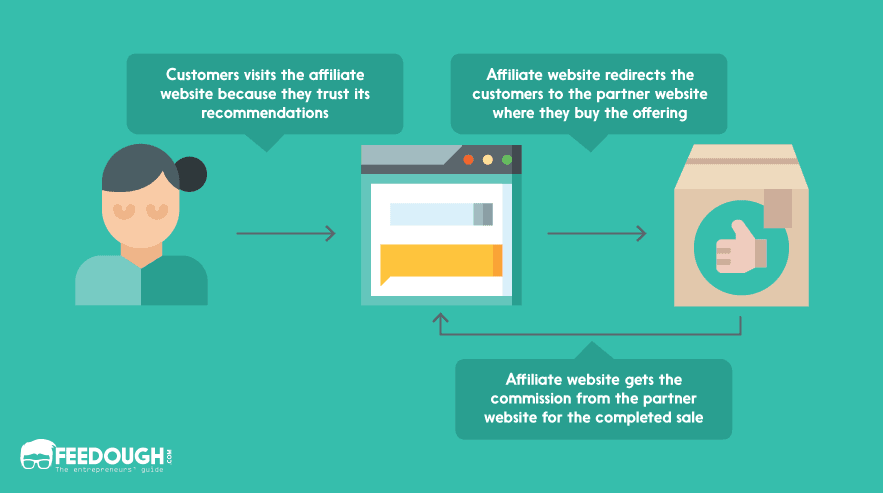
    • Affiliate marketing: Affiliate marketing works by promoting a merchant’s product to your following and making a commission when they purchase. You can use social media platforms, your blog or website, or send emails to prospective customers. Every time a customer clicks on one of your affiliate links and makes a purchase, you earn a percentage of the sale as a commission.
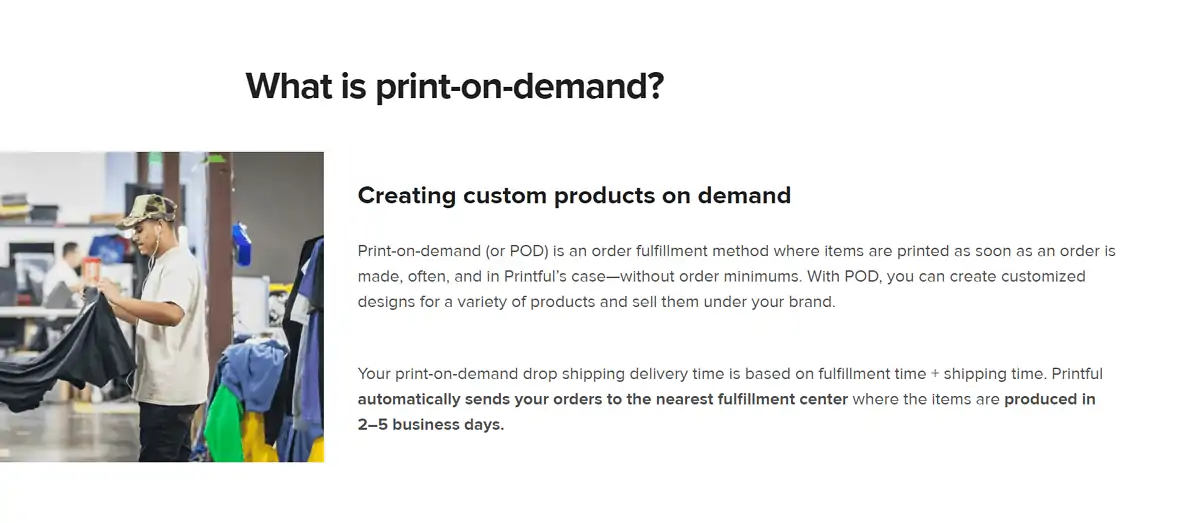
    • Print-on-demand: Print-on-demand (POD) is an innovative business model that enables you to create custom products with your own designs while maintaining a low risk of inventory and capital. With POD, you can design your products on the platform, select which product materials and colours you’d like to use, and set your selling price. When customers order your products, the POD platform prints and ships them directly to the customer.

    Bottom-Line?

    Starting a business requires careful thought and planning. Even though idea generation can be overwhelming, it is best to take the time to consider all options and select the one that most appeals to you. Once you have an idea in mind, research whether there is a market for it, develop your business plan, and only then start to invest money into the business.

    I hope the guide helped you to get started on your business journey and you will not have the “I want to start a business but have no ideas” thought anymore. Still, if you’re looking for some innovative ideas, we’ve listed over 500 of startup ideas for you on Feedough.

    Go On, Tell Us What You Think!

    Did we miss something? Come on! Tell us what you think about our article on I want to start a business but have no ideas in the comments section.
  • What Is Top Of Mind Awareness (TOMA)?

    What Is Top Of Mind Awareness (TOMA)?

    When 66% of people think about a soft drink, they think about Coca-Cola. Not just this, when someone thinks of :

    • Short videos – TikTok comes to the mind.
    • Shoe company – Nike enters one’s mind.
    • Best coffee brand – Starbucks tops the list.
    • Shopping online – Amazon strikes first.

    It’s not a coincidence. These brands have worked hard and spent highly skilled resources and budgets focused on creating top-of-mind awareness.

    But what is top-of-mind awareness, and why is it important? What strategies do companies use to build TOMA, and how is it measured? Let’s uncover this all in this article.

    What Is Top Of Mind Awareness (TOMA)

    Top-of-mind awareness or TOMA is the state in which a consumer or customer thinks of a brand as the first or most prominent option when it comes to a particular category or niche.

    For example, if someone is looking for a new pair of shoes and the first brand name that comes to their mind is Nike, then Nike has achieved top-of-mind awareness.

    From a marketing perspective, TOMA is a measure of how high a brand ranks in the mind of a customer subconsciously while thinking about a category or an industry. It is an important factor in understanding how a brand is perceived in the market.

    In several cases, top-of-mind awareness creates an image of a brand in a person’s mind where they use the brand name as a synonym to the product category. For instance, people use these brand names as generic terms:

    • Google or Googling for using a search engine.
    • Xerox for Photocopy.
    • Frisbee for Flying Discs.
    • Thermos for a Travel mug.

    Why is Top Of Mind Awareness Important?

    TOMA is an important indicator of a brand’s success and can be both qualitative and quantitative in nature. It helps marketers to understand the brand’s presence in customers’ minds, which then helps them to plan effective strategies for promoting their product according to which stage of the funnel their audience lies.

    For example, if the TOMA score of a brand is high and customers are familiar with it, then marketers can focus on creating campaigns to increase interest and desire for their products. On the other hand, if the TOMA score is low then marketers should focus more on creating awareness campaigns and educating customers about their products.

    Moreover, TOMA can be used to compare different product offerings in the marketplace, so businesses have a better understanding of what customers are looking for. This information can then be used to develop and refine the marketing message and product offerings to meet customer needs and drive sales.

    It is also an important measure of the success of advertising campaigns by tracking changes in brand awareness over time.

    Benefits Of Top Of Mind Awareness (TOMA)

    TOMA is a powerful marketing tool for businesses, as it makes the brands achieve increased brand loyalty and sales. Some of the benefits of attaining top-of-mind awareness for business include:

    • Painless PR – When a brand has its name established in the industry, has an online presence, and is recognised by the public, attracting the media’s attention becomes easier.
    • High brand equity – Brand equity refers to the value of a brand in the marketplace. Brands with high TOMA have higher brand equity, leading to increased customer loyalty and better customer relationships.
    • Increased sales – When consumers are aware of a product or service before they begin shopping, they are more likely to buy from that brand as compared to competitors.
    • Improved customer retentionWhen customers have Top Of Mind Awareness (TOMA) of a brand, they are more likely to return to that business when needing similar services or products.
    • Enhanced competitive advantage – Having TOMA gives brands an edge over competing businesses in their industry by giving them higher visibility and recognition from potential customers. This can lead to increased market share and higher profits.
    • Easy Expansion In The Industry – For a brand with roots in the industry, their expansion in the same industry and attracting customers become more manageable.For instance, it’s easier for Nike to launch a new sportswear segment as it already has a vast set of customers ready to try and use it.
    • More Prospects – The more people are aware of a brand, the more they get drawn towards a brand to make a purchase.
    • Effective Marketing – When people are more familiar with a brand, their campaigns and marketing make more sense to people and push them down the funnel.       

    Strategies Brands Use For TOMA

    There are several ways for brands to build TOMA. Here are a few of the most common strategies businesses use to:

    Increase Brand Awareness

    Brands use various channels to create a buzz around their offerings. These include:

    • Social media presence: Acting human and getting involved in discussions related to their industry.
    • Direct Emails: Sending out regular emails that inform customers of new products, services, or promotions.
    • Advertising: Placing ads in print, radio, and television outlets to get their message across to a wider audience.
    • Sponsorship & Events: Partnering with other brands to host events or sponsor campaigns that garner more attention for the brand.
    • Public Relations: Reaching out to industry influencers and media outlets to increase brand exposure.
    • Content Marketing: Creating high-quality content that educates, informs, and entertains their target audience.
    • SEO & Paid Search: Optimising their content and website to improve search engine rankings, as well as utilising paid search campaigns to get noticed in the SERPs.

    Improve Customer Experience

    If a person had a memorable experience with a brand, they are likely to recall it. And there are many ways a brand creates this incredible experience.

    Apple, for instance, has mastered the art of customer experience, allowing customers to connect with their products on a personal level.

    Focusing On Omnichannel Presence

    Being present on multiple channels is not being omnichannel. The brand’s approach needs to stay seamlessly aligned and integrated across all the touchpoints and branding channels to maintain an omnichannel presence. Mastering omnichannel thinking is about resonating with the target audience and enhancing their experience.

    Getting right with the omnichannel approach creates brand uniformity and consistency that will win customers’ trust. 

    How To Measure Top-Of-Mind Awareness

    TOMA is both qualitative and quantitative and can be measured by different metrics. Marketers use surveys, interviews and focus groups to measure qualitative data on customer brands recall. They also track key performance indicators such as downloads, web traffic, word-of-mouth referrals and shares on social media to measure TOMA quantitatively.

    Here are a few key metrics brands use to measure TOMA:

    Brand Recall      

    Brand recall refers to how quickly and easily a customer can recall the brand when presented with different options. This is usually measured by asking survey questions or conducting interviews with customers to assess their knowledge of brands in the market.

    Brand recall is a combination of unaided and aided questions.

    • Unaided Recall – In the unaided recall, the interviewer does not prompt the customer about the brand and asks questions related to a niche to see which brand naturally tops the customer’s mind.
    • Aided Recall – In aided recall, while putting up the question, the interviewer offers a cue (like logo, slogan, trademark, list of names, or more) to ask which one the customer is familiar with.

    Share of search is a metric that measures the brand visibility in organic searches compared to the other competitor brands in the industry. It is a powerful calculation to see how many people think about a brand before they consider other brands.

    Calculating the share of search and measuring and monitoring it regularly is possible through keyword research tools.

    Social Listening

    Social listening is a key metric to measure how many people talk about a particular brand on social media.

    It analyses the percentage of how much space a brand occupies in all conversations or mentions around the category, product or industry going on, on social media.

    Net Promotor Score

    Net Promoter Score is a benchmark tool that measures customers’ experience and satisfaction with a brand.

    It is a single-question survey that a brand takes up to ask their customers about their willingness and likelihood to recommend a brand, product, or service to their friends, family, or acquaintance.

    Other Brand Awareness Metrics

    Other Key Performance Indicator companies use to measure the top of mind awareness include:

    • Branded search volume
    • Brand mentions
    • Paid media reach
    • Social media followers
    • Social media reach
    • Direct traffic

    Bottom Line

    It goes without saying that the significance of top-of-mind awareness is unquestionable. So companies that want to stay at the top of the mind of people when they think to buy a product of a particular category need to have a competent brand awareness strategy in place.

    Even if the companies are big players or just a startup, has loyal customers or want to attract new customers, touching the base at all times is essential.

    Go On, Tell Us What You Think!

    Did we miss something? Come on! Tell us what you think about our article on top of mind awareness in the comments section.
  • History Of Advertising

    History Of Advertising

    Where 1st paid advertisement cost $9  in 1941, today, the advertising spend globally has hiked to:

    • $160 billion for TV and radio ads
    • 17 billion US dollars for Print media ads, and
    • 455 billion for digital and mobile ads

    The history of advertising timelines started in ancient civilisation. It all commenced when people discovered fire, gathered fruits and nuts and protein-rich animals, and settled near water to catch fish.

    Soon after, people installed their settlements, uncovered the importance of earning, and wanted to sell their products.

    It was the birth of advertising.

    As the world kept evolving, with the radical changes and quantum jumps, advertising and marketing grew too. And today, advertising is so mainstream that it follows humans everywhere. It has gained power over humans, so much so as fire, technology, and food.

    https://youtu.be/jmHG92lARUQ

    Let’s get back in time and learn about the interesting facts of the dramatic revolution of advertising and learn how it helped businesses to grow and develop interpersonal relationships with their customers.

    Pre-Modern History

    No one knows how advertising began. But we know that even the earliest businesses started to use it to differentiate themselves from others.

    Moreover, early advertisers used wall painting and oral ways to sell products, which is still present in many parts of Africa, Asia, and South America.

    After a while, sellers advanced their advertising techniques when they realised there were more ways to sell their products.

    The four primary forms of advertisements that existed during the pre-modern age, i.e., before printing, are:

    • Wall or rock painting for commercial advertising – The ruins of Pompeii and Arabia had political campaigns and commercial messages displayed.
      The lost and found advertising on papyrus was pretty famous in Ancient Rome. In fact, the first noted advertising is of a fabric merchant called Hapu who released a papyrus where he offered a reward for the capture and return of an escaped slave called Shem.
      Wall paintings, however, were found in a different part of the world – India, where the Indian rock art paintings started in 4000 BCE.
    • Trademarks (moon, stars etc.) – Several pottery ruin pieces have evidence of potter’s marks, showing evidence of brands. A potter imprinted his thumb on the wet clay or his mark to identify it later.
      The following articles have the marks of the brand, dating back to around 1300 BCE:
      • Pottery jars from ancient Greece and Rome
      • Chinese porcelain, and
      • Pottery made in India
    • Town criers – In towns and cities where most people were illiterate, the town cries were organised to make official announcements.
      • Moreover, as recorded in the Classic of Poetry (11th to 7th centuries BCE), the earliest advertising known in ancient China was oral, where sellers hollered and played bamboo flutes to sell candy.
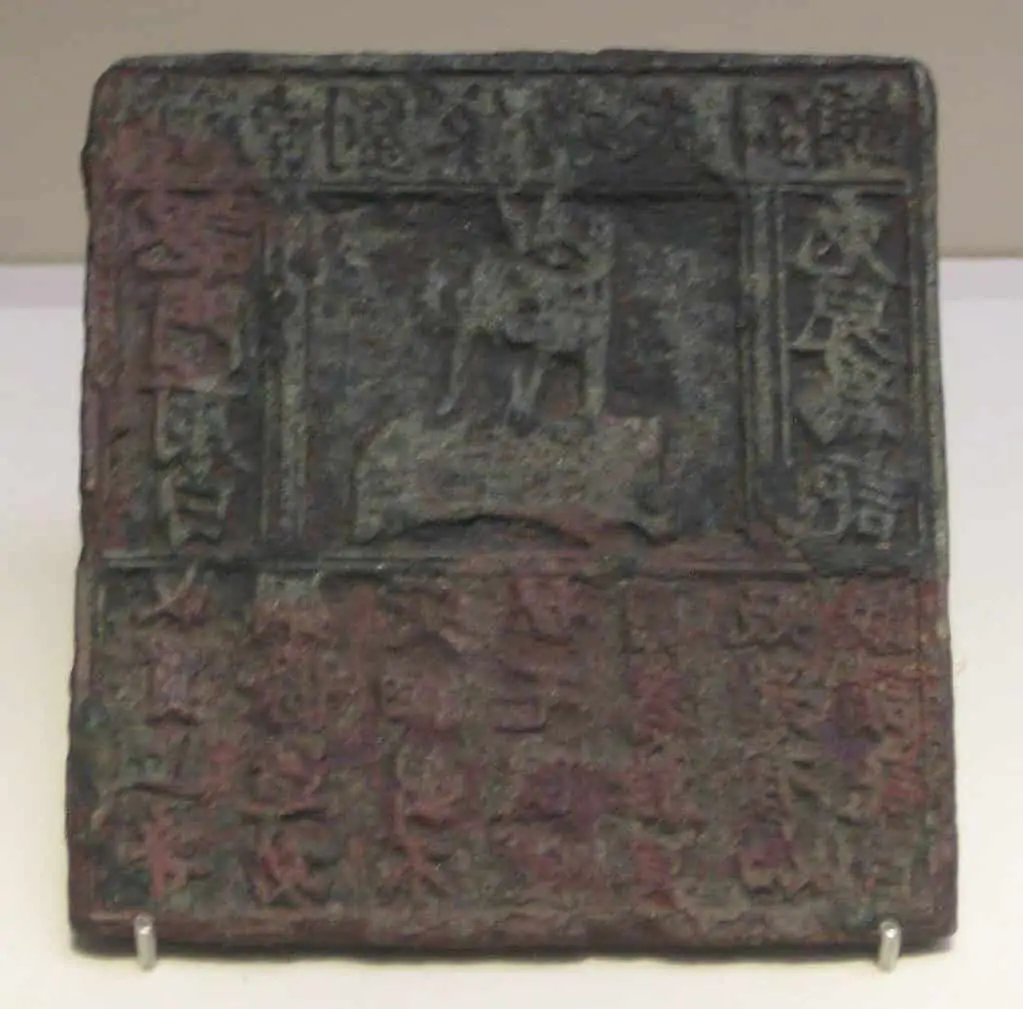
    • Signboards – Shopkeepers hung signs to exhibit the symbols of their trades. Instead of signs that read cobbler or tailor, they used images as signs of shoes and stitching machines. Signboards became a common way for sellers to communicate with their customers.
      The use of signboards had its trace in antiquity when ancient Egyptians, Romans, Greeks, and China placed them in the front of their shops to communicate or announce a market day, meals available for the date, etc.
    China signboard
    Until the 1400s, advertising meant – Notify, and today, it means much more.

    1439: Global Spread Of The Printing Press

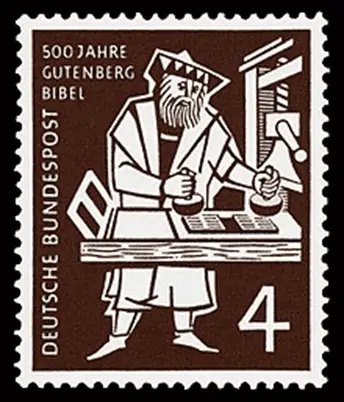
    With the invention of Gutenberg’s printing press with movable type in 1439, the mass printing of flyers and brochures became possible globally. Print advertisement led to materialisation similar to flyers and print advertising we see today.

    Gutenberg’s first significant print work – the 42-line Bible in Latin was printed between 1452 and 1454.

    42-line Bible

    1600s – 1870s: The Newspapers And Magazines Era

    Modern advertising began with the advent of magazines and newspapers in the 16th and 17th centuries.

    The first gazettes appeared in Venice in the mid-16th century. The concert rolled up from there, and the concept of weekly publications reached Italy, Germany, Holland and, in the 1620s, Britain and other regions.

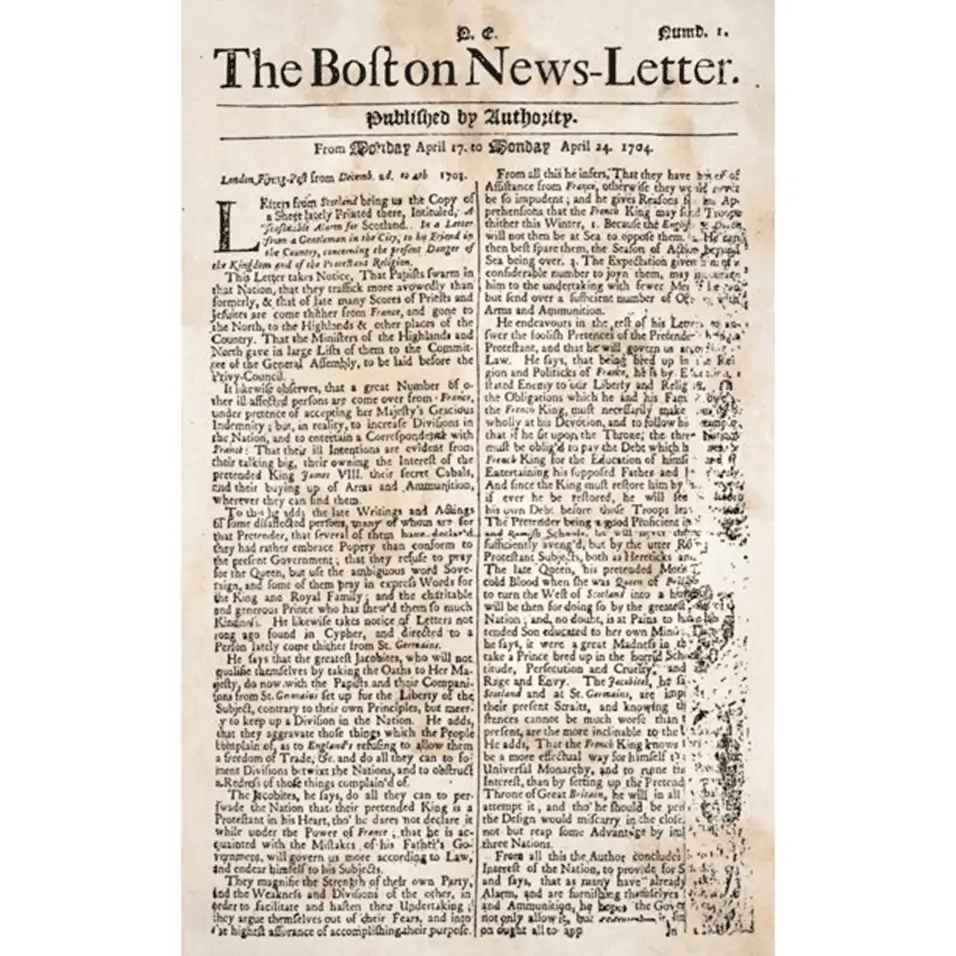
    The first newspaper ad appeared in the Boston News-Letter on May 8, 1704. It was a real estate advertisement selling a plantation on Oyster Bay, Long Island.

    The newspaper carried advertisements from the outset for books and quack medicines and later for various products to mitigate the advertising cost of printing and distribution.

    first newspaper ad appeared in the Boston News-Letter

    The advancement in printing gave rise to:

    • Trade cards started printing on substantial cards with detailed illustrations in the 18th century to keep up the interpersonal relationships with customers.
    • Posters became popular to promote business in 1839.
    • Jared Bell brought billiard printing into practice in 1835 in America and kept advancing to date.
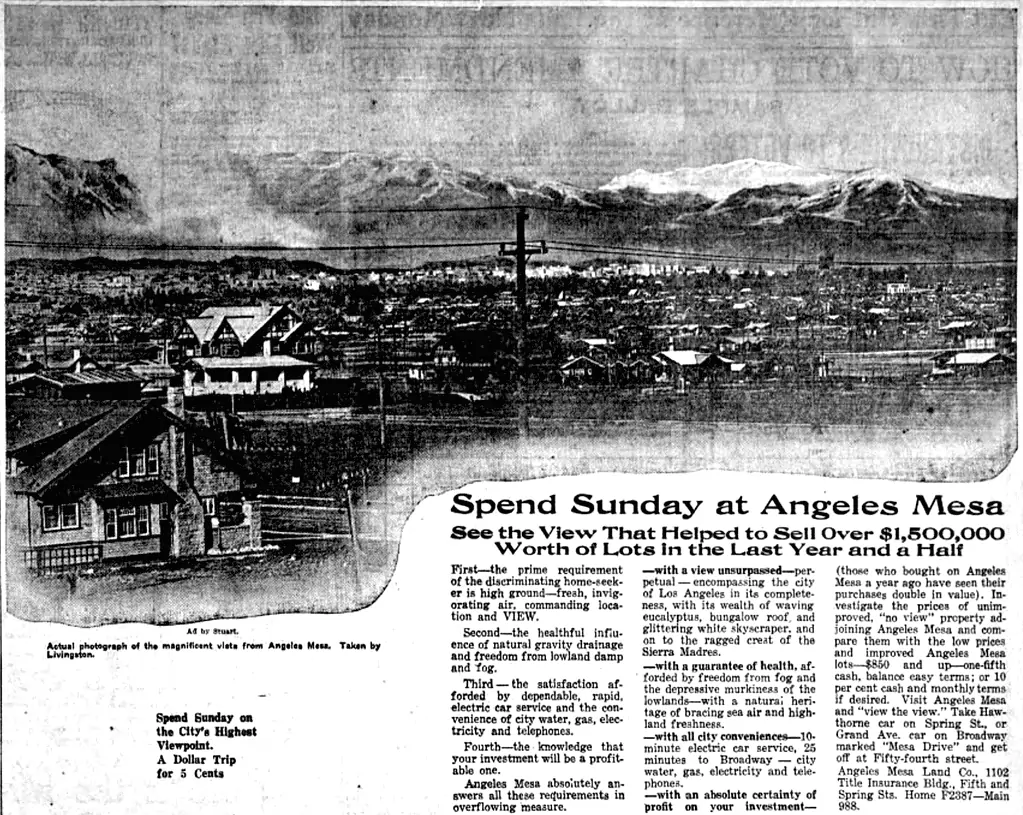
    first newspaper ad

    1870s – 1920s

    During the Industrial Revolution, advertising dramatically increased in the US after the 1870s with the expansion of manufactured product supply to the larger market. The invention of mass marketing helped influence the behaviour of the population on a larger scale. So much so that the total advertising budget went from $200 million in 1880 to nearly $3 billion in 1920.

    The boost in the use of advertising gave rise to the following in advertisements:

    • Sex and psychology – In 1911, the Woodbury Soap Company used images of sexual contact to sell their product – their slogan claimed the women who use their soap gets: “Skin You Love To Touch”.
    • Nudity – Woodbury Soap was the first to use nudity in their ad known as “The Sun Bath”. This ad had a nude woman lying on her side with her back to the camera on the stairs. The text showed that the soap is enriched with “filter sunshine”.
    • Psychology – Many ad men, especially Edward Louis Bernays, promoted and harnessed the “sublimation” approach – in the 1910s and 1920s to advertise cigarettes. The cigarette was believed to give rise to modern and innovative advertising techniques. John B. Watson, the former chair at Johns Hopkins University, implemented behaviourism into advertising that appealed to customers’ emotions (love, hate, and fear).
    • 4A’s4A’s – As advertising was everywhere by the 20th century, Ad agencies were responsible for the content. To take advertising up a notch, 111 charter members and five regional industry groups, on June 4, 1917, formed the American Association of Advertising Agencies, now called the 4A’s4A’s.
    • The American government promoted advertising in the 1920s.
    • Advertising became a vehicle for cultural assimilation.
    • American Association of Foreign Language Newspapers, primarily an advertising agency, gained centralised control over the immigrant press and used it to influence the immigrants.
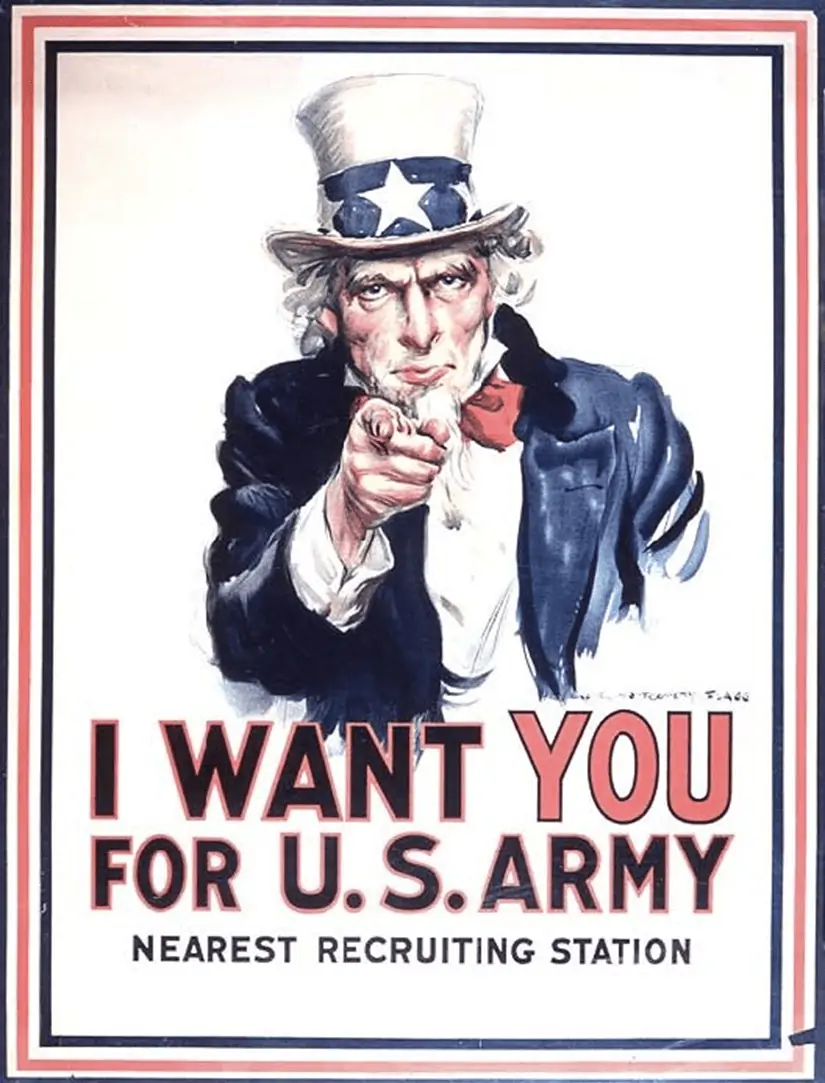
    1917 - Uncle Sam: One of the First Influencers of Graphic Design - I WANT YOU FOR US ARMY!
    1917 – Uncle Sam: One of the First Influencers of Graphic Design – I WANT YOU FOR US ARMY!

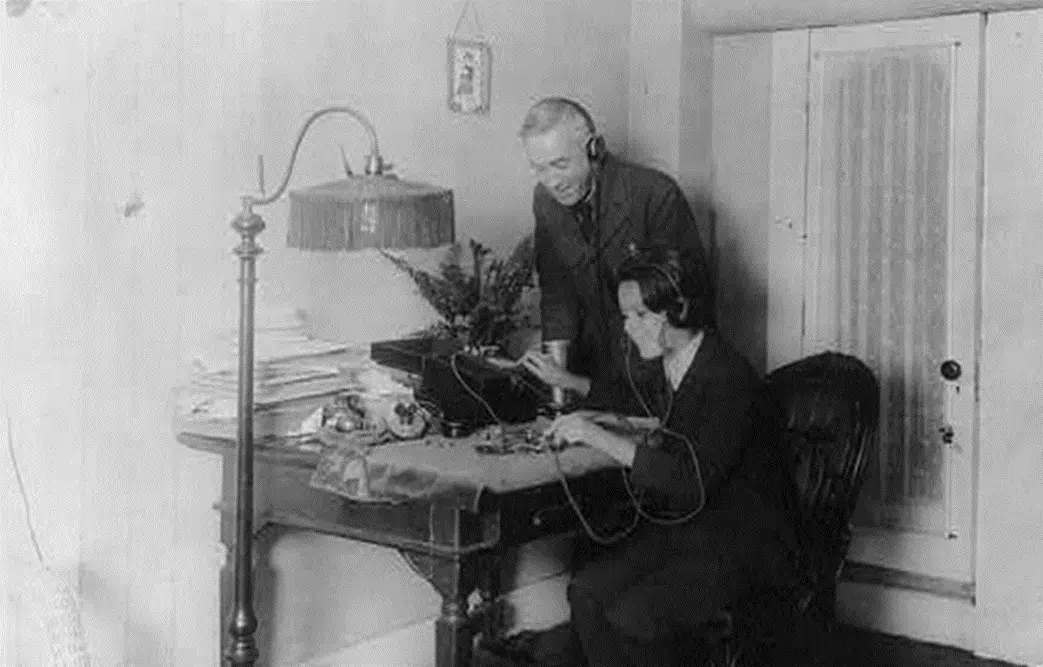
    1920s: When Radio Met Advertising

    When Radio Met Advertising

    Advertising met radio in 1922 when the first ever radio commercial aired on WEAF, New York, on August 28. The government prohibited direct selling. Thus radio host H.M. Blackwell arranged a 10-minute talk on the goodness of living a carefree life in the suburbs at the Hawthorne Court Apartments in Jackson Heights, Queens. That 10-minute talk was backed by direct-indirect selling and cost $50.

    1925: Out-Of-Home Advertising Technique

    In 1925, the out-of-home advertising technique started getting into play, with sequential billboards gaining popularity. So much so that Burma Shave, across the US, propped the rhyming billboards, which took the company from unheard to the number two shaving cream company in the US.

    Burma Shave ad

    1930s: Advertising And World War II

    Advertising came under heavy pressure during the outbreak of the Pacific War in the 1930s. The depression led businessmen to lay back their advertising budgets drastically.

    The New Deal, which had a series of programs, public work projects, financial reforms, and more, gave rise to consumerism and minimised the need for advertising.

    Moving to 1940, advertising played a role in the ideological mobilisation of the American people – as they helped to redefine the “American Way of Life” in terms of a commitment to free enterprise. The role of advertising in the social and political context created a dominant consumer culture in the post-World War II era.

    1940-1950s: The Post-War And Television Advertising

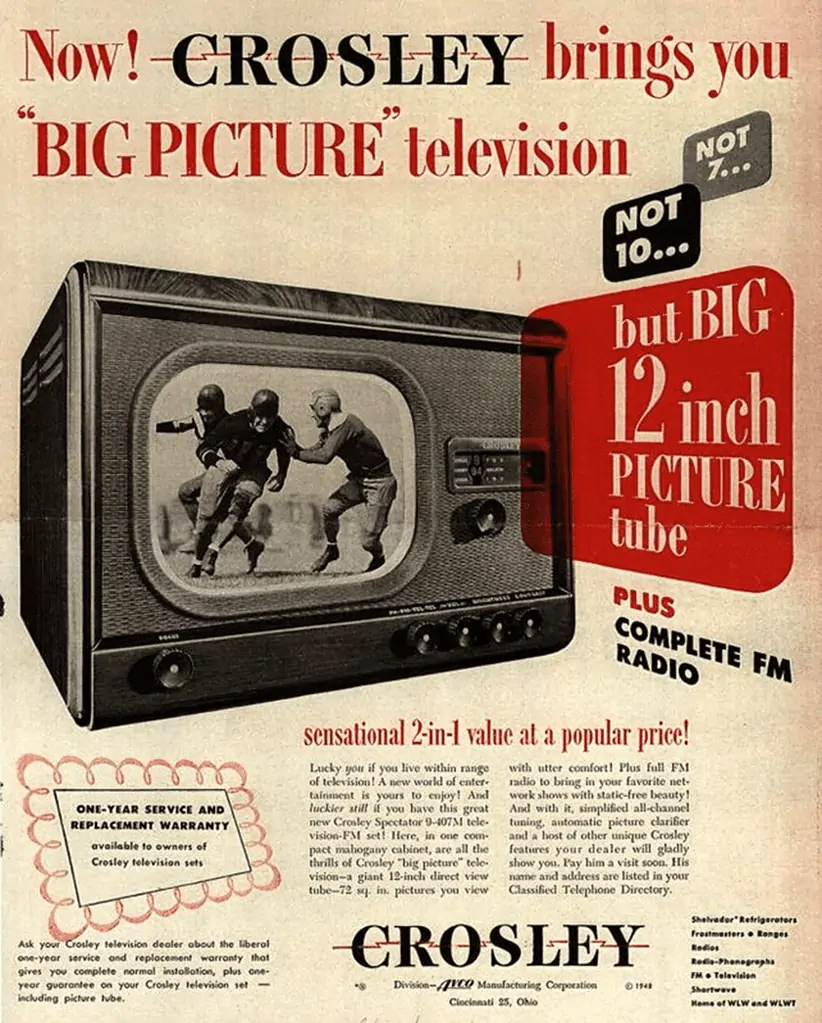
    When millions of Americans settled down in new housing, they spent heavily on automobiles, clothes, furniture, housing, and appliances. Their needs and the television’s entry gave a great enlarging boost to advertising.

    The first TV commercial aired on July 1 1941, which lasted 10 seconds and cost $9.00.

    Television Advertising

    1960: The Psychologists Got Involved In Advertising 

    The 1960s was the golden era in the history of advertising.

    At this time, professionals started to base their ideas on psychology and big data and allocated big budgets. The involvement of psychologists, researchers, and focus groups transformed advertising into a real calculated science.

    1970: Telemarketing

    In 1970, businesses used telemarketing as a common tactic to call their customers and sell products. It was an office version of door-to-door direct sales.

    1973: The Beginning Of The Digital Age

    The synergy of psychology and the advent of new technologies continues to advance the advertising landscape.

    • In 1973, Motorola researcher Dr Martin Cooper developed the first-ever hand-held mobile phone.
    • In 1989, the involvement of science and economics in advertising, which started in 1980, gave a new pivot to the advertising industry: the World Wide Web. It was a kickstart to make advertising go digital.

    1978: Email Marketing

    The emails were being designed since the 1960s. With the introduction of the internet, email sharing became common in government, business, defence/military industries, and universities.

    Gary Thuerk sent the first email marketing blast to 400 people to promote his company’s computers, which resulted in sales of $13 million.

    1981-1984: Computers’ Age

    In August 1981, IBM introduced its first Personal Computer (IBM 5150).

    In 1984, Apple launched its hugely successful Macintosh, convinced by the advertisement made by Chiat/Day and directed by Ridley Scott, which got telecasted on television only once during the 1984 Super Bowl football game. The ad cost them 1 million pounds but reached 26.4% of American houses.

    1985 – Newspaper Advertising

    Print advertising with newspapers worked well, and in 1985, the US industry revenue reached $25 billion. The emergence of desktop publishing contributed highly to revenue growth.

    Cable Television From The 1980s

    The late 1980s and the start of the 1990s witnessed the experience of cable television and, in particular, MTV.

    MTV induced psychological factors into the ads and created a new type of advertising. For consumers, advertising becomes the focus rather than the by-product.

    Special channels got dedicated to advertising, including:

    • QVC
    • Home Shopping Network, and
    • ShopTV Canada

    1990-1994: The Advancement Of The Mobile And The Start Of Text Advertising

    Friedhelm Hillebrand and Bernard Ghillebaert first developed the SMS concept in the Franco-German GSM cooperation in 1984.

    The first message ever sent was by Neil Papworth, a former developer at Sema Group Telecoms, on December 3, 1992.

    1995 – 1997: Search Engines

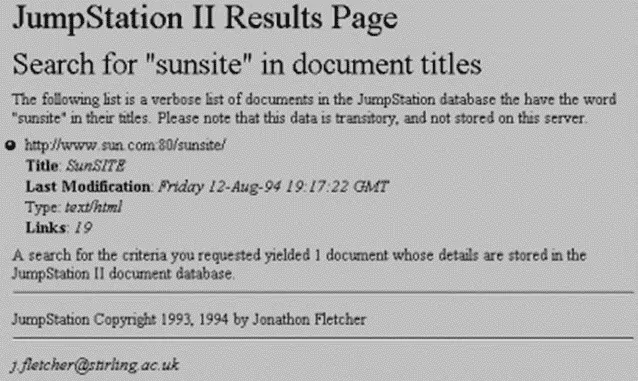
    1995 and 1997 saw the first invention of search engines. From 16M users in December 1995 to 70M in December 1997, it was impressive growth for the internet.

    JumpStation 2 Results Page

    1996 – 2000: Millenium – Adwords!

    In 1996, the advertising industry received DoubleClick, the advertising platform allowing users to run targeted ad campaigns.

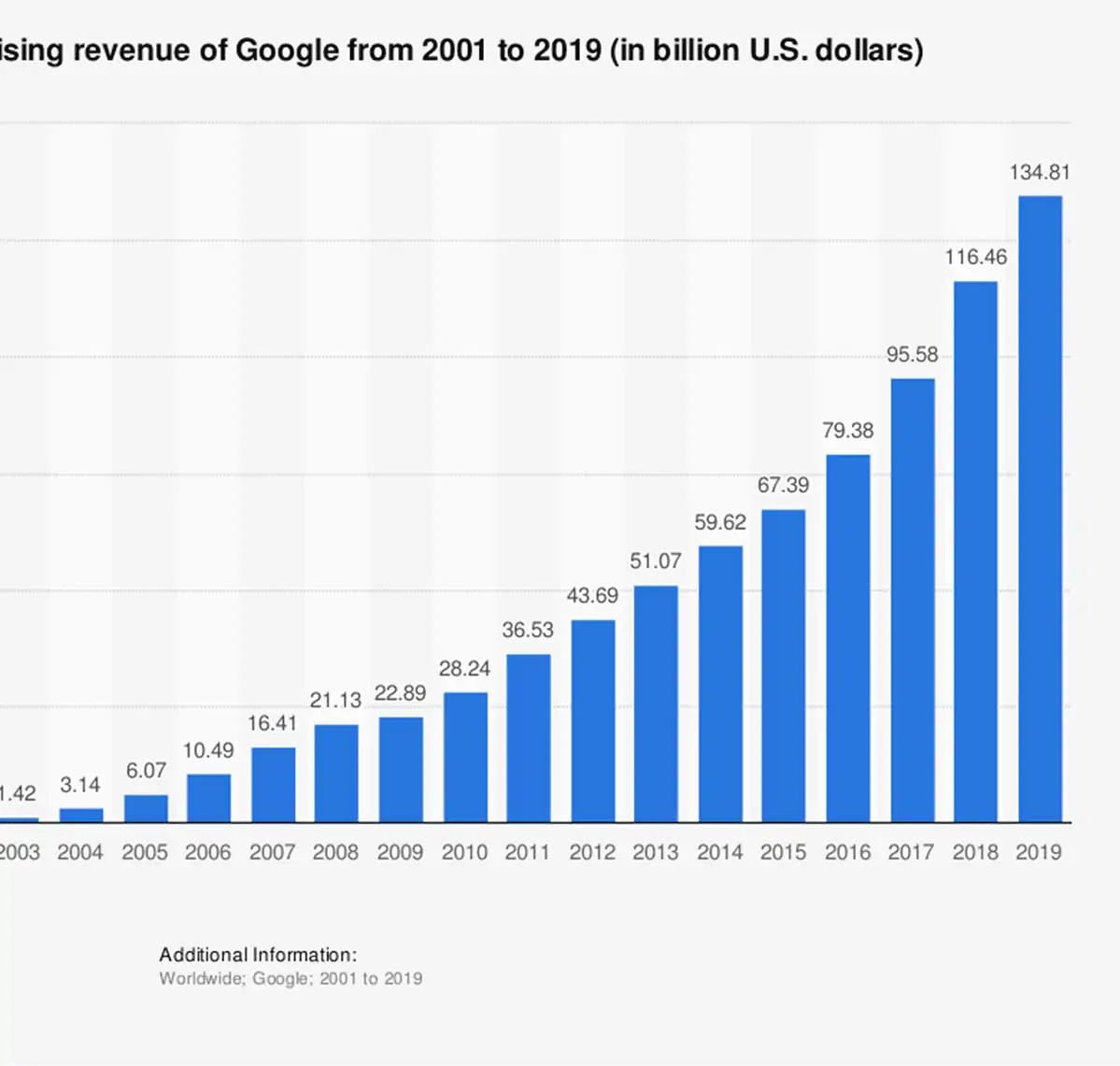
    As Google had a great consumer base, in 2000, it developed Google AdWords. This advertising platform allowed businesses to target audiences and run ads based on their search performance and browsing history. Later in 2007, Google acquired DoubleClick for $3.1 Billion

    2003 – 2007: Web 2.0

    With the advent of social media in 2003 and its rapid growth in popularity, social media, including LinkedIn, Myspace, Twitter, and Facebook, started using their platform and audience to advertise products in 2007 directly and indirectly.

    In 2005, in Google AdWords, native Gmail ads became accessible to all advertisers.

    The AdSense advertising platform launched in 2003 was the first ad network to match ads on a blog and made it possible for bloggers to make money from their blogs.

    2008 – 2009: Online Videos Advertising

    In 2008, 2.4 Billion people in the UK watched online videos, which rose from 1.6 Billion views in 2008. However, since 99 per cent of all videos viewed were viewed on YouTube.com on the property, it made YouTube set in motion 7 Youtube Ad formats in 2009.

    Online Videos Advertising

    2012: Social Media Marketing

    In 2012, Social Media became one of the best lead generators. Social media was used to generate leads and revenue as:

    2012 – 2020s: AI And Automation

    Marketing automation began in 1992. But it was in the mid-2000s when the automation industry started taking shape in the advertising industry.

    It was after 2012 – 2012s when automation started to become a familiar term in the industry and gained popularity.

    Today, automation and AI transformed adverts and emails using big data analytics, machine learning, and other processes. In fact, it is predicted by Statista that markets will spend 126 billion dollars by 2025 on (AI) software worldwide.

    Bottom Line

    From posters and rock paintings to marketing automation, the purpose of advertising has always remained the same:

    • To sell products
    • Develop interpersonal relationships with customers, and
    • Convert prospects into buying customers

    But, the forms and ways of advertising have changed and rapidly evolved. From being a large blanket of operation, it now has a personalised approach that enables the businesses to engage with customers more and drive higher ROI.

    The history of advertising signifies how rapidly approach, methods, understanding, tactics, technology, and customer relation change and develop. And how crucial it is to accept and stay agile in this changing world.

    Go On, Tell Us What You Think!

    Did we miss something? Come on! Tell us what you think about our article on Advertising History in the comments section.
  • What Is Gruen Transfer? How Does It Work?

    What Is Gruen Transfer? How Does It Work?

    Shopping is not just buying things; it is a mixed bag of experiences that involves the use of senses – colour, light, smell and sometimes even taste.

    Unfortunately, it is a widespread phenomenon to enter a shopping mall with the intent to buy a pair of handkerchiefs but check out with a cart full of unnecessary things.

    The shopper enters the store and is presented with a bunch of things that act as external stimuli. Starting with how big and fancy the store is, the brightly lit spaces make the products look more appealing, and the extensive display of these products enables the customer to browse through the whole store. These fundamental factors combine, and the customer goes on a mindless shopping spree. This mindless spree is known as the Gruen effect or the Gruen transfer.

    This guide gives an insight into the Gruen transfer and how brands use it to earn multi-billion dollar profits through impulsive buying behaviour in customers.

    What Is The Gruen Transfer?

    The Gruen transfer, also termed as Gruen effect, is a psychological phenomenon created by the surrounding of the intentionally formed confusing layout that transfers the customer’s attention from their intended buying purpose to the store’s agenda.

    In simple terms, it makes an individual lose track of their original buying intention and leads them to make impulse purchases.

    Gruen transfer involves environments that are designed to confuse and disorient the customers. They include confusing store layouts, catchy displays, smart product placement, attractive advertising banners, multiple checkout lanes, and other distractions like music and lighting.

    Such retail environments are created to stimulate the customers’ senses and draw their attention, leading them to make unintended purchases or upgrades.

    For example, a customer may enter a supermarket intending to purchase groceries. But on the way to the aisle, they pass through a display of discounted clothing items. The customer is drawn to the discounted prices and may buy clothes instead of just groceries.

    How Does Gruen Effect Work?

    The idea behind the Gruen effect is to create an environment where it is difficult for the customer to make rational decisions. It aims to take their attention away from what they were originally intending to purchase and towards other products that the store has to offer. Marketers do it by:

    • Overwhelming shoppers with product choices: By creating a wide variety of products, it becomes difficult for the customer to choose a specific item.
    • Using attractive colours and displays: Bright colours, interesting displays, and attractive packaging draw customers in and create an emotional connection to the product.
    • Creating impulse purchase areas: Placing items at checkouts or strategically placing them in the store encourages shoppers to purchase without thinking it through.
    • Making customers lose track of time: Store layout, music, and smells can create a sense of calm that makes customers linger longer and purchase more.
    • Creating an inviting atmosphere: Stores are designed to look inviting and make customers feel comfortable, encouraging them to stay longer and spend more.

    The Gruen transfer is caused by sensory overload leading to consequent confusion that puts the customer in some form of hypnotic trance, making them susceptible to doing what the marketer wants them to do.

    For example, a common tactic used in retail stores is to place the most expensive items at eye level. Making these items more visible increases the chances of a consumer buying them without having to compare prices with other products.

    What Are The Elements Of The Gruen Effect?

    The Gruen effect results from several elements working together. These include:

    • Ambience: This refers to the store’s atmosphere, environment and decor. How a store is laid out and decorated can influence customers’ emotions and opinions about the products they are considering.
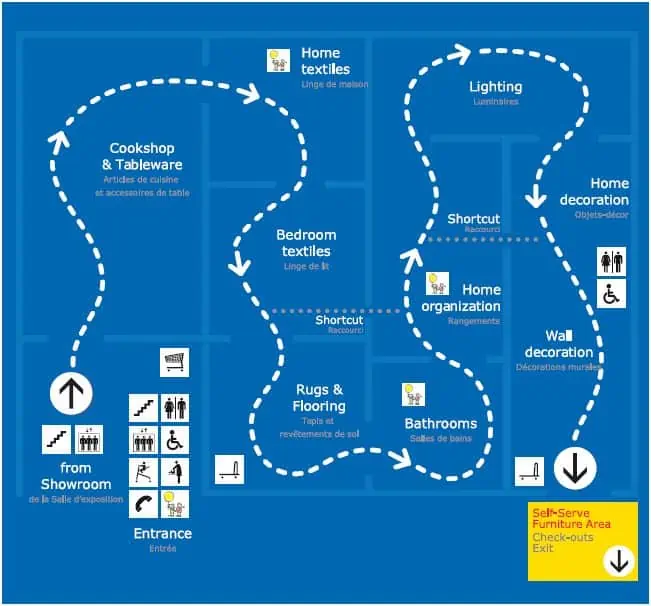
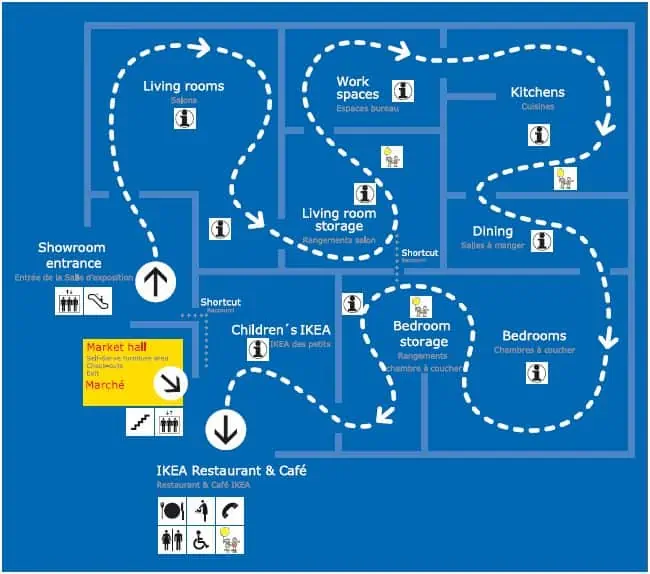
    • Layout: The way products are arranged on shelves and racks also influences customers. For example, Ikea strategically places items around the store to make it look like a maze that confuses customers. This makes them feel like they have to explore more before making a decision, which increases the chances of them buying something.
    • Product placement: Product placement refers to where products are placed in relation to one another. This is used to manipulate customers’ emotions and create an illusion of value for certain products. For example, placing an expensive item next to a cheaper item can make the expensive one look like it’s a better deal.
    • Marketing: Attractive displays, promotional materials, coupons, and discounts all work together to create an atmosphere that entices customers to buy.
    • Salesperson effect: Personal touch often has a more profound effect on customers than digital advertisements. Salespeople can speak directly to the customer, listen to their needs, and guide them through the buying process. They are also in a better position to answer any questions or concerns that may arise.
    • Sensory Appeal: Sight, sound, smell, and touch all have an effect on how customers feel when they are in a store. While soft music and pleasant aromas help create a welcoming atmosphere, visuals such as bold colours, interesting displays, and attractive packaging can also be used to draw shoppers in.

    The Origin Of The Gruen Effect

    During the late 1930s, when commercial spaces and retail stores just started surfacing, and products and facilities were made available, people – businesses faced real challenges:

    • To attract customers
    • To convert leads into customers
    • To make people buy stuff (pardoning their limited purchasing capacity)

    The man who changed this scenario was Victor Gruen, the person credited with designing the first modern shopping mall.

    Gruen’s life’s mission was to design a successful retail space that would not only allure customers inside but also compel them to make an actual purchase. Making his mission a reality, Victor invented the Gruen effect technique. He wanted to re-create a public habitat where shoppers would indulge in impulsive purchasing. 

     “Shoppers will be so dazzled by a store’s surroundings, they will be drawn—unconsciously, continuously—to shop.” 

    wrote Gruen biographer M. Jeffrey Hardwick,

    His conclusions were simple – an excellent store design would increase profits.

    Gruen further visualised a space filled with utility, entertainment and community. He believed that an area where a consumer gets everything he wants gets:

    • Dazzled with the glimpse of a better lifestyle.
    • A sense of association and likes to hang out more in such spaces.
    • Unconsciously and continuously shops.

    In 1956, Gruen’s theories of retailing and mall design were put to the test with the opening of Southdale Center in Edina, Minnesota. This was the first enclosed shopping mall, and it featured many of Gruen’s essential ideas – wide streetscapes so people can window-shop, a central court or gathering place, plenty of natural light and plants, separate stores with different store fronts to create the illusion of a city.

    Today, Gruen’s impact on shopping malls can be seen in almost all modern retail centers. Many of them feature his signature ideas – wide sidewalks, gathering places, and a central focus that draws people in. Malls have also become destinations for consumers seeking entertainment, which is another Gruen idea. Modern malls feature cinemas, theaters, dining and recreation options that draw people in and encourage them to stay longer.

    A survey estimates that today, more than 50% of a shopper’s purchase is usually unplanned, and one of the most efficient ways to influence this behaviour is through a store’s architecture. This was exactly Victor Gruen’s vision – to create an environment that would make people want to stay and shop.

    What Is An Impulsive Purchase – The Final Stage Of The Gruen Transfer?

    Impulsive buying is the act of purchasing products without prior planning to gratify one’s immediate desire to purchase them. It is mainly driven by irrational thinking and emotions. Marketers continuously try to tap this customer behaviour to boost their sales.

    For instance, if a lady leaves the house with the intention to purchase two t-shirts but ends up buying four t-shirts, a handbag, perfume, and nail paint – it is because emotions got carried away with the alluring store’s design and various offers – is an impulsive purchase.

    Applications Of Gruen Transfer

    A person can easily notice Gruen transfer applications in:

    • Shopping malls: Shopping malls are designed to create an atmosphere of convenience, comfort and leisure. They aim to target the subconscious and influence the decision-making process of individuals. They tend to make customers linger in the area longer and make them buy more than what they intended to.
    • Supermarkets: Supermarkets are designed with an aim to increase the number of purchases that customers make. They tend to arrange their placement of products, shelves, and displays so as to make customers reach their intended products only after seeing other products that may catch their attention.
    • Retail stores: Retail stores make use of attractive window displays, lighting and colours that appeal to the customers. They also strategically place the products in a way that entices people to spend their money on items they did not plan on buying before entering the store. For example, Target and Decathlon display all of their sale items and offers right in front of the main entrance to attract customers who can just pick out a cart and start shopping immediately.
    • Restaurants: Gruen effect even plays an important role in restaurants. For example Starbucks uses aroma marketing to draw customers in by having their stores filled with the scent of freshly brewed coffee. Some restaurants also strategically place the menu items at eye level to encourage guests to try something new.
    • Online Shopping: eCommerce platforms like Amazon use the Gruen effect when recommending products based on a customer’s shopping history. By placing related items together, Amazon is able to make the shopping experience more convenient for customers and increase their chances of making an impulse buy. Additionally, websites like eBay have started using countdown timers during sales to create a sense of urgency that can influence shoppers’ buying decisions.
    • Social Media: Companies like Facebook and Instagram use the Gruen effect in ads as well. Personalisation is a key element in social media marketing, as it allows marketers to target specific audiences with ads that feature products they’re more likely to be interested in. By presenting relevant content that resonates with their users, these companies create an environment that encourages impulse buying.

    Gruen Effect Application Example – The IKEA Store

    IKEA follow the ‘The Fixed Path’ tactic to build their stores. This store layout design seamlessly unleashes the Gruen effect on the customers. That is because the set path and direction bound them to navigate the entire store. Walking on the defined path exposes customers to more than 33% of the stores’ products and offers at the same time, enabling them to spend much longer time on the premises.

    ikea layout
    ikea layout

    IKEA also have other approaches up its sleeves than just a store layout, they are:

    The brand recognises the importance of dopamine (the feel-good hormone) when shopping. 

    • Dopamine – The brand recognises the importance of dopamine (the feel-good hormone) when shopping. It is not so tricky for the brand to use. When a person sees, eats, hears or smells something nice, the body automatically releases dopamine, uplifting their overall mood. Despite being a furniture store, IKEA’s establishment of an internal food court has immensely provided profits to the brand. In 2017, the company earned solely $2.24 billion from food sales.
    • ‘Bulla, Bulla’ Effect – the company employs the “bulla bulla” technique, which involves placing a large number of items in bins in a disorganized manner to create the appearance of high volume and cost-effectiveness.

    Bottom Line?

    Gruen transfer is an effective way for businesses to get the most out of their customers. Simply by understanding the customer’s wants, needs, and emotions, retailers can create a layout that will keep customers engaged and willing to spend their money.

    This phenomenon finds its application in several industries, with supermarkets being one of the biggest beneficiaries.

    However, the customer needs to be aware of Gruen transfer and its various techniques to prevent getting tricked into spending excessively. A simple way to do this is to take a few moments and look around before making purchases, so as to assess the environment carefully and make an informed purchase decision.

    Go On, Tell Us What You Think!

    Did we miss something? Come on! Tell us what you think about our article on gruen transfer in the comments section.
  • History Of Instagram – From Whiskey App to Photo Sharing

    History Of Instagram – From Whiskey App to Photo Sharing

    The next time you go on Instagram to scroll down reels, market products, post a picture or view stories, think about how it became such an important aspect of your life. How did two nerds, well-placed at Google, pivot their lives to create a platform that made people share their lives online?

    Every 1 second, 1,074 pictures; every 60 seconds, 64,440 photos; and every hour, almost 4 million images are uploaded on Instagram. But things weren’t always this way. Its growth involved many ups and downs, conflicts and much more in capitalising on emerging trends. 

    Here’s a brief history of Instagram explaining its ideation, the initial model, its rise and popularity, Facebook’s acquisition, and Instagram in the 2020s.

    Who Founded Instagram?

    Kevin Systrom and Mike Krieger founded Instagram in 2010 when they left their jobs to lend their complete focus to Instagram.

    Kevin Systrom and Mike Kriege

    The story started when Kevin, a Stanford University graduate and former Google employee working at Nextstop.com, learned the potential of entrepreneurship and was fascinated by his love for Burbon Whisky.

    The Burbn  – Whiskey Dream Of Kevin

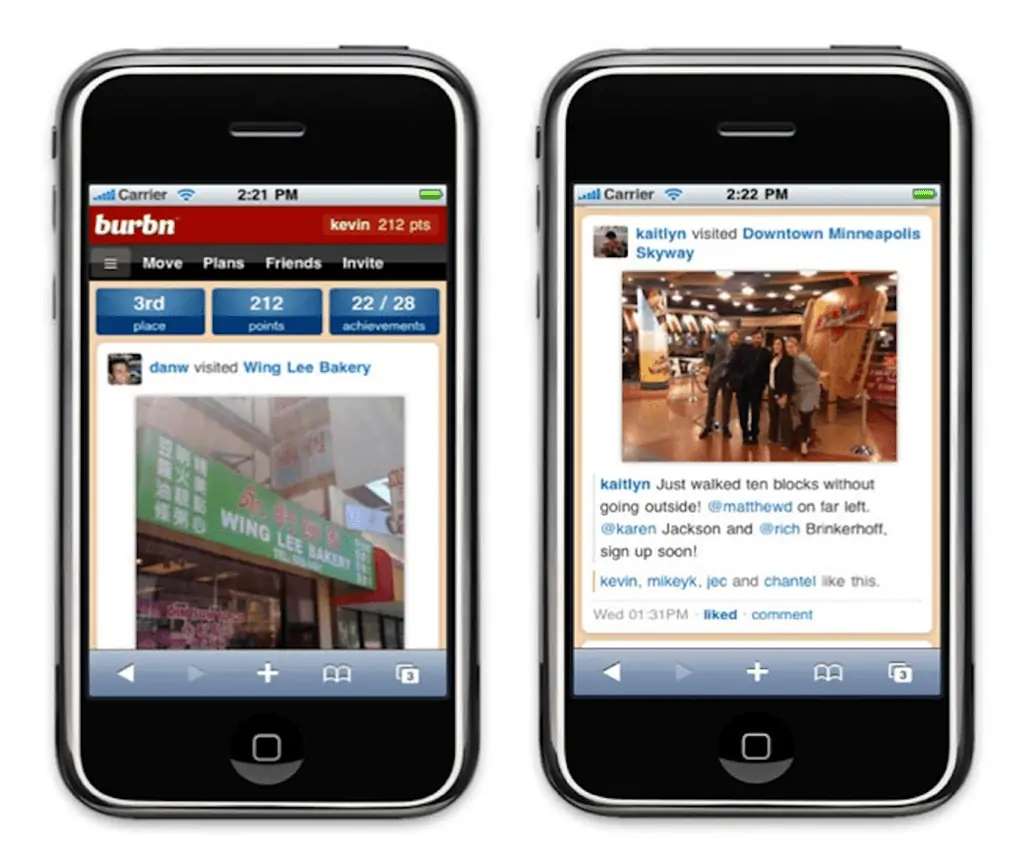
    Kevin wanted to know all the places that served fine Bourbon whiskey. To obtain that information, he created an app called ‘Burbn’ that allowed people to share their check-ins and pictures with the world.

    Burbn app

    However, things that leave a mark on the world are all about being at the right place and at the right time, and Kevin got lucky in it – because he got to reach the party that changed his entire life.

    The Game-Changing Party

    Kevin attended a party, Hunch, that was for Silicon Valley startups. Here, Kavin met two venture capitalists from Baseline Ventures and Andreessen Horowitz and discussed the prototype of the Burbn.

    The idea of an easy photo-sharing application that has a check-in feature too impressed them.

    After the first meeting, Kevin took a leap of faith and quit his job to focus on Burbn. Within two weeks, on March 5, 2010, he closed a $500,000 seed funding round deal with the capitalists he met at the party.

    After he raised the funding, before hiring employees, Kevin was looking for a partner to work with, and he could rely on. This is where Mike Krieger came into the picture.

    Mike’s Entry (the Co-Founder Of Instagram)

    Mike Krieger was a Brazilian-American, 25-year-old man who joined Kevin as a software engineer. He became the co-founder of Instagram and served as its CTO.

    The two met during their time at Stanford, and their interests in app development made it easy for them to work together and become partners.

    From Burnbn to Instagram

    People did not use Burbn for check-ins, but they were crazily using it as a photo-sharing app.

    This behaviour made founders decide to double down on their data, focus on the photo-sharing infrastructure, and scrap away all the other things.

    They started with analysing the competitors (famous photo-sharing applications) and quickly homed the two names – Hipstamatic & Foursquare. These applications had great features, but their photo sharing was hard and complicated.

    Moreover, even though Facebook was the king of social media then, its iOS application did not have a good sharing feature.

    That is where Mike and Kevin saw an opportunity to sneak between photo sharing applications and Facebook to develop an easy-to-share application that made photo sharing easy.

    At that point, they chopped all the features off and just pivoted towards photo sharing with likes, comments, and a few filters that allowed people to make plans with future check-ins and earn points for posting pictures while hanging out with friends.

    So, as the motive was focused on developing the application, they changed the application’s name to Instagram – a portmanteau of instant camera and telegram.

    In a conference in 2012, Kevin said Burbn was a false start and quoted,

    “You have to go through false starts. The best companies in the world have all had predecessors. YouTube was a dating site.”

    Launch & Initial Growth Of Instagram

    The duo and their small team worked tirelessly and, in 8 weeks, coded the application Instagram and provided the Beta version to their friends.

    And then Mike posted the first picture on Instagram, which was of Soth Beach Harbour on July 16, and just a few hours later, Kevin posted a picture of a dog and his girlfriend’s feet (that is mistakenly considered as the first photo).

    https://www.instagram.com/p/G/?utm_source=ig_web_button_share_sheet

    After they received a positive response from their friends, fixed all bugs, and were satisfied, they decided – it was showtime.

    The cofounders of Instagram, Mike and Kevin, launched the Instagram app on October 6 2010. 

    Within a day, the application got 25,000 users (in fact, in hours) and earned 1 million users in a week. It also became the number one free photography application on the same day.

    Upon being asked about the rapid growth, Kevin said –

    “I think we’re reigniting our passion for casual photography… [Instagram] has taken on a life of its own — it’s definitely no longer our product anymore. It belongs to the community.”

    Moreover, when asked about the pivot of check-ins, Kevin said that sometimes it’s useful for pictures, but sometimes people just don’t care — they just want to get the picture out there as quickly as possible. He added,

    “We’re not a check-in app; we’re a life-sharing app,”

    This is how instagram looked when it was launched.

    This is how instagram looked when it was launched.

    Series A Funding

    In 2011, when Instagram had 1.75 million users who posted around 290,000 photos daily, it raised the interest of investors in the company. 

    Thus, in February 2011, Instagram raised funding of $7 million from Benchmark Capital and some individual investors, like ex-Googler Chris Sacca, Twitter founder Jack Dorsey, and Quora CEO Adam D’Angelo.

    Though the company acquired incredible funding, had a great name in the industry, and was able to hire a huge team, Kevin and Mike kept the company really small, with just a dozen employees.

    Rise & Popularity Of Instagram

    The minor and major changes in the app (like adding ‘Hashtag’ that made finding like-minded people and photo tagging easier) made Instagram gain a huge audience of 5M users in June 2011.

    Instagram hit 10M users in September 2011 – a remarkable achievement in the journey of rise.

    instagram stats

    But the more important stat Instagram analysed was it had 3M daily active users. The figures demonstrated that people were using the photo app every day, and it was becoming an addiction and not something which people viewed occasionally – and that was the truer achievement for Instagram!

    Version 2.0 of Instagram Goes Live

    With the growing popularity, the team realised an increasing demand for advanced features, including new and live filters, high-resolution photographs, instant tilt–shift, one-click rotation, optional borders, and an updated icon.

    After Instagram Version 2.0 got live on the App Store (iOS) in September 2011, and people used it, they loved the idea of being able to add new filters to their pictures that effectively hid the qualitative inferiorities of their pictures.

    Instagram’s Android Version

    Instagram, the popular social media networking and photo-sharing platform with 25 million users on iOS devices was released in the Android operating system on April 3, 2012.

    And soon after its release, it surpassed a million downloads in less than a day of availability.

    Upon asking Kevin about why it wasn’t released on Android or other platforms earlier, he said:

     “There’s no reason to be on two platforms from day one. You need to figure out whether it works first”.

    Twitter & Facebook’s Offer For Instagram

    After the Series A funding round was closed, Kevin said, the company’s technology that allows users to take pictures and post from smartphones caught on the market quickly, allowing Instagram to build a base of over 15 million users in two years.

    Hence, Benchmark Capital valued Instagram at $25 million during the venture capital round at that time.

    Instagram’s fast-paced growth, in addition to institutional investors, attracted the attention of other prominent players in the market, including:

    • Twitter, and
    • Facebook

    Kevin knew the co-founder of Twitter, Jack Dorsey, from his time as an intern at Odeo. As Kevin introduced Instagram to Dorsey, he immediately expressed a quick obsession with the app and his strong interest in its acquisition. Twitter formally offered $500 million in stock, but Kevin declined it.

    Besides, the “News” tab and “Popular” features of Instagram already set it apart from other social media networks. This made Instagram get more attention from Facebook who took it seriously as its competitor.

    Facebook’s Acquisition

    Facebook acquired Instagram at $1 billion in cash and stock on April 9, 2012. This was double the valuation Instagram had at that point.

    The key provision of the deal was that Instagram would stay independently managed after its acquisition.

    In a few observers’ view, Facebook acquired Instagram because it was a challenger.

    According to one observer

    “I think Facebook panicked, so it decided to take out the competition before it had a chance to grow even bigger.”

    Milestones Set By Feature Updates

    Once Instagram hit 100 million monthly active users in Feb 2013, it launched advanced features and set milestones in history. The features were:

    Video sharing

    Instagram launched a 15-second video-sharing feature with 13 added filters on June 13, 2013.

    Kevin said the launch of videos on Instagram now puts an end to the year-long search of ‘Instagram for video’ and now makes Instagram – Instagram for video, quite literally.

    While converting Instagram to a video-sharing application, Kevin said, “What we did to photos, we just did to video”.

    Instagram video

    Embed Content

    In July 2013, Instagram introduced Embed Content and made it easier to share posts using links.

    It introduced a share button at the bottom right of the post. Clicking on that button enables one to copy the embedded code and paste it anywhere a person wants that content to appear.

    https://www.instagram.com/p/BmbOWRNFS0_/?utm_source=ig_web_button_share_sheet

    Sponsored Post

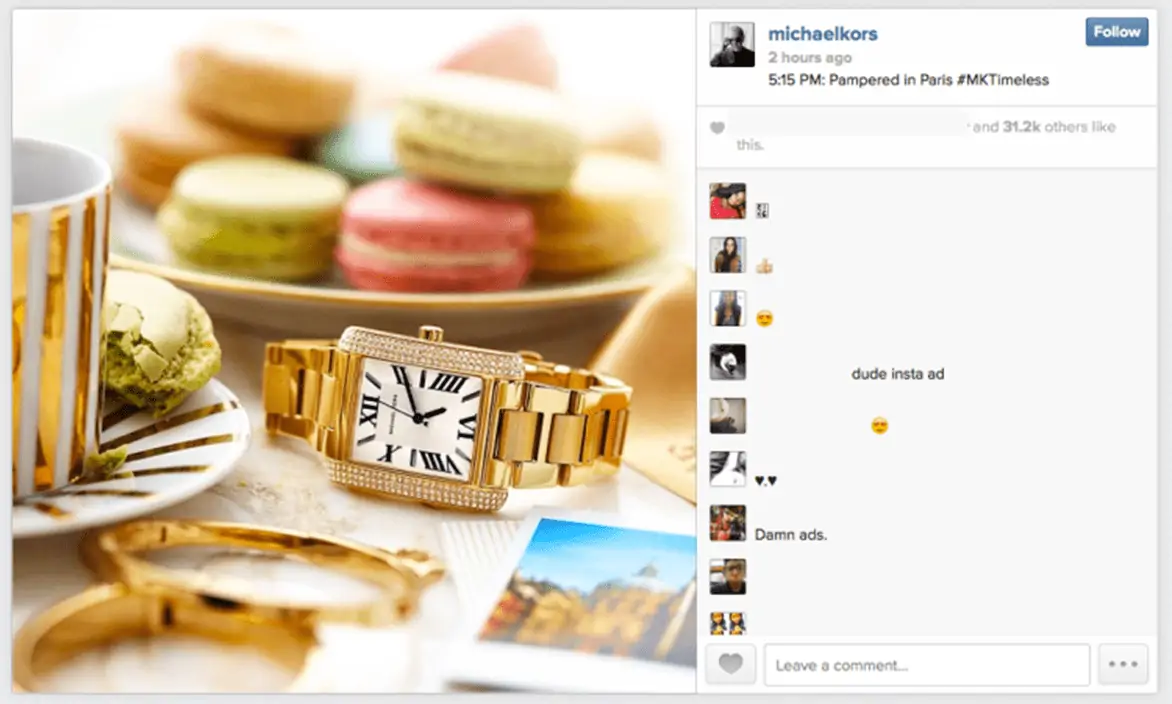
    Ms Emily White, who joined Instagram from the parent company Facebook, led the foundation for advertising, and it pictured Instagram as a money-making platform in Nov 2013.

    It was a long-awaited step to launch itself in the advertising arena for Instagram, which had millions of users but did not make a cent.

    First instagram Sponsored Post

    Direct Message

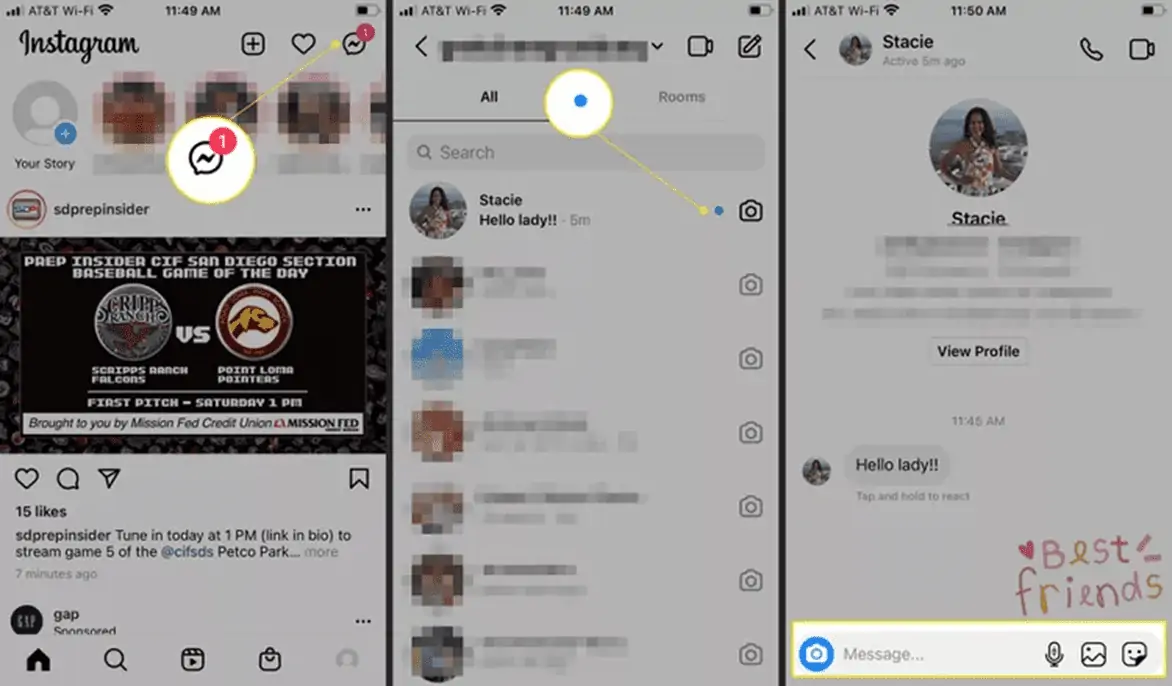
    In December 2013, Instagram set another significant milestone. It introduced Direct messaging in the application, which allowed people to communicate in a private space apart from commenting and liking pictures.

    Instagram introduced the Direct Message feature to compete against messaging services, including Snapchat.

    Instagram Direct Message

    Ads And Other Features

    Several features eventually came into play to support Instagram’s business and revenue model. These were:

    • Business Tools – Essential Instagram ad tools released on August 21, 2014, aim to offer insight and analytics to the brands. These tools make Instagram more advertisement friendly as they show a business’s reach, impressions on sponsored posts, engagement and performance of their ad campaigns.
    • Advanced Ad Tools – To move beyond branding, Instagram bolster-ups its advertising capabilities by adding new ad formats that will lead the user to the retailer’s site to purchase a product, install the app, or sign-up for newsletters. Besides, it redesigned the desktop website to maintain consistency between the mobile and web apps.
    • 30-Second Video Ads – Instagram introduced 30-second video ads where advertisers can push their traditional 30-second ads and budgets over with no extra work.
    • Boomerang – As Instagram did not want its feed to get stale and bloated with features, it introduced Boomerang in October 2015. Boomerang captures five pictures in 1-second and converts them into a silent video that goes forward and reserved in a second.
    • Switch Between Multiple Accounts – Instagram introduced a switch between multiple accounts in February 2016. This feature made it easy for heavy users and marketers to log in and switch between multiple (up to five) accounts.
    • Video View Counter – It was on February 11, 2016, when Instagram added the video view count on the videos to appear to the audience, not the likes. It is a metric that shows companies how their video engages the audience.
    • Chronological To Algorithmically To Best Posts – From strictly arranging content in the chronological format, after the introduction of this feature, an individual’s timeline will have posts that enclose their most likelihood, based on their relationship with the person posting content and considering other factors.

    3rd Pivot – Instagram Stories & Acceptance of Snapchat Rivalry

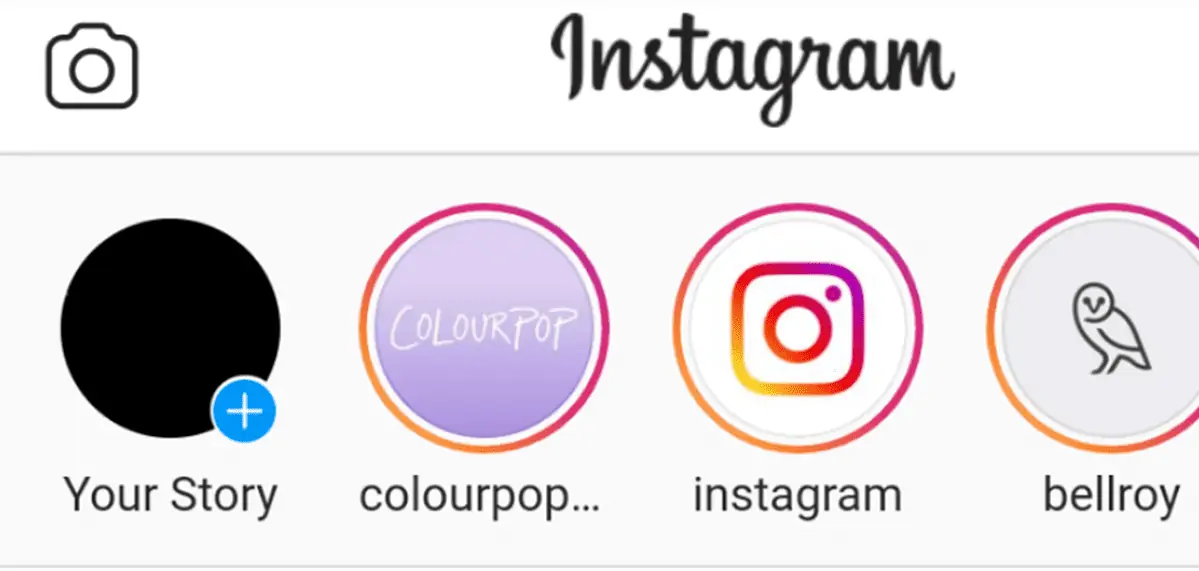
    On August 2, 2016, Instagram introduced stories, a Snapchat-like feature that allowed people to share daily highlights of their lives.

    It was a big pivot in the history of Instagram because Kevin, the CEO of Instagram, openly agreed that they copied it from Snapchat – and that is a kind of acceptance of the rivalry of Snapchat. 

    Kevin added, despite their glamorous life as a CEO, his life is not interesting enough to add something new to the feed every day. Thus he created this feature where people could share their not-so-appropriate content every day.

    Instagram stories

    4th Pivot – Instagram’s Desktop Client & Live Videos

    For the first time, Instagram launched its desktop client for the Windows 10 platform on October 13, 2016, available for download at Windows Store.

    Within a few days of Desktop Client, Instagram also launched Live Videos on November 21 2016, which allowed users to broadcast live for up to one hour on Instagram. The video broadcasted live is not saved but removed soon after the live session ends. 

    With this, on the same day, Instagram added a Snapchat-style new feature of disappearing photos and videos. Videos or pictures sent in DM using this method disappear after a specific time, creating a new, more secure way of sharing pictures or videos.

    TikTok & Instagram

    TikTok, launched in 2016, was an application focused solely on short-form videos that became a global phenomenon and saw astonishing growth in just a few years of its launch.

    Unlike TikTok, Instagram was a fully established visual platform that allows picture-sharing, and various types of video sharing, including short-form and long-form videos through the IGTV feature.

    Both these apps had in-app filters, sounds, effects, and multiple other editing features for photos and videos. They also had similar kinds of stories, live streaming videos, and influencer marketing, but there was still a difference between TikTok and Instagram, which were short-form videos.

    To compete with TikTok’s short-video sharing content format and maintain its position, Instagram introduced Reels.

    Reels operated differently from the rest of the Instagram algorithm. They focused more on users’ interests than their following.

    This feature pivoted the business model into a more exploration model than the socialising model.

    Instagram In The 2020s

    For a good reason, Instagram is still a prominent player in social media platforms. As per stats, Instagram has 2 Billion monthly active users. Instagram ranks at the 4th position out of all social media, which means it never stopped growing and developing and continuously introduces new features. The new features launched in the 2020s look like this:

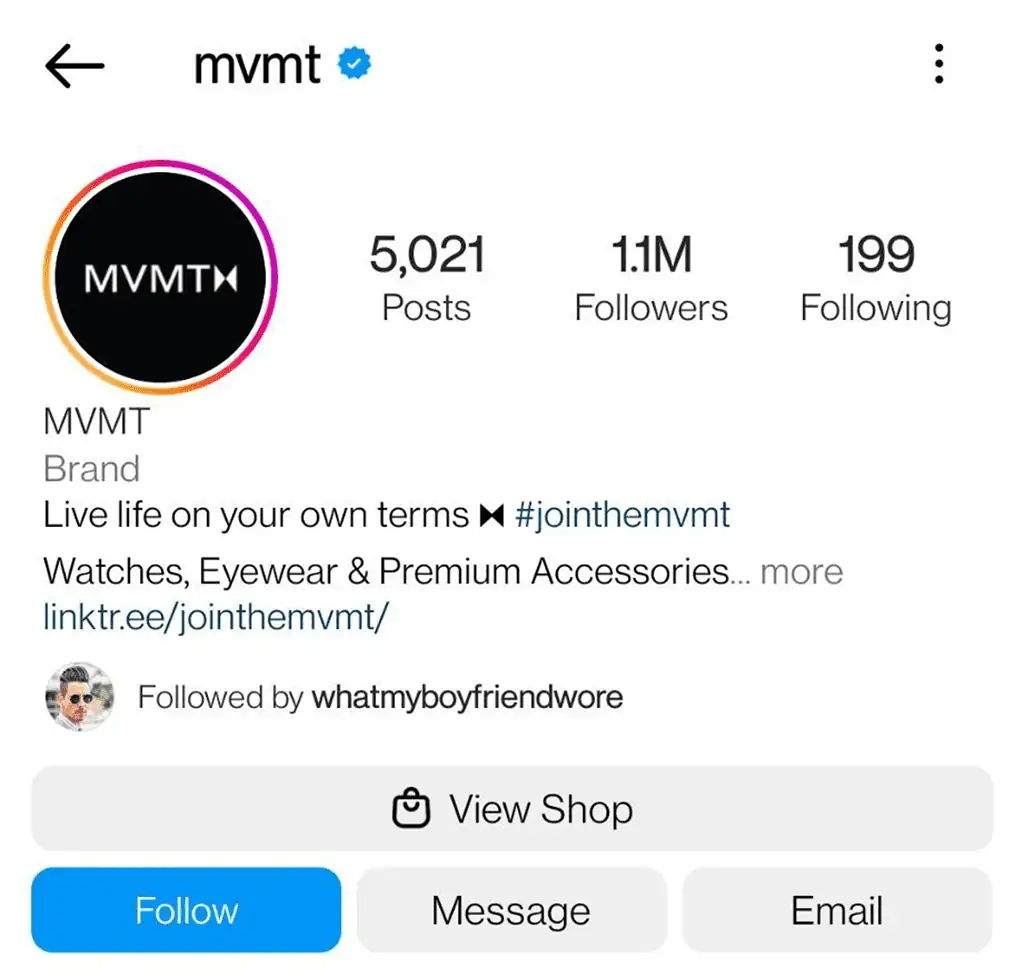
    Instagram Shopping: As the pandemic created a challenge in online selling, Instagram, on May 19 2020, announced a new shopping experience to keep businesses going – Shops on Instagram. Instagram shops are storefronts that allow brands to build a brand story where people can explore and discover products – all on the Instagram Shop. 

    Instagram shop

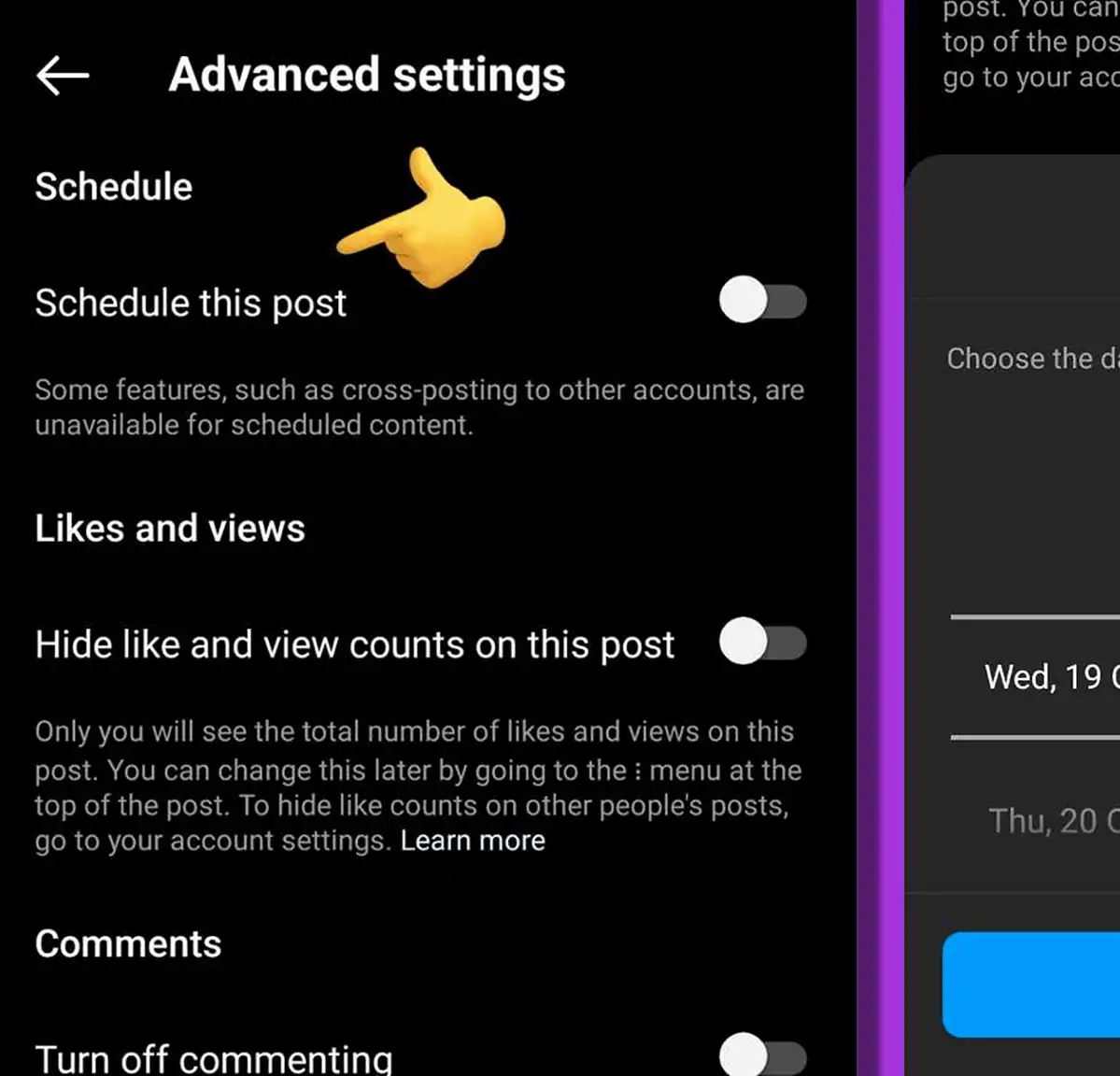
    Schedule Posts – The feature allows users to create a post and schedule the post date using the advanced settings within the IG app.

    Schedule Posts

    Browse Through Uninterrupted Posts – This feature allows users to browse posts from only those they follow or have marked as favourites – without suggested posts or sponsored posts. By clicking on the top left corner of Instagram, within the dropdown options, choose following or favourite and see posts – that’s it.

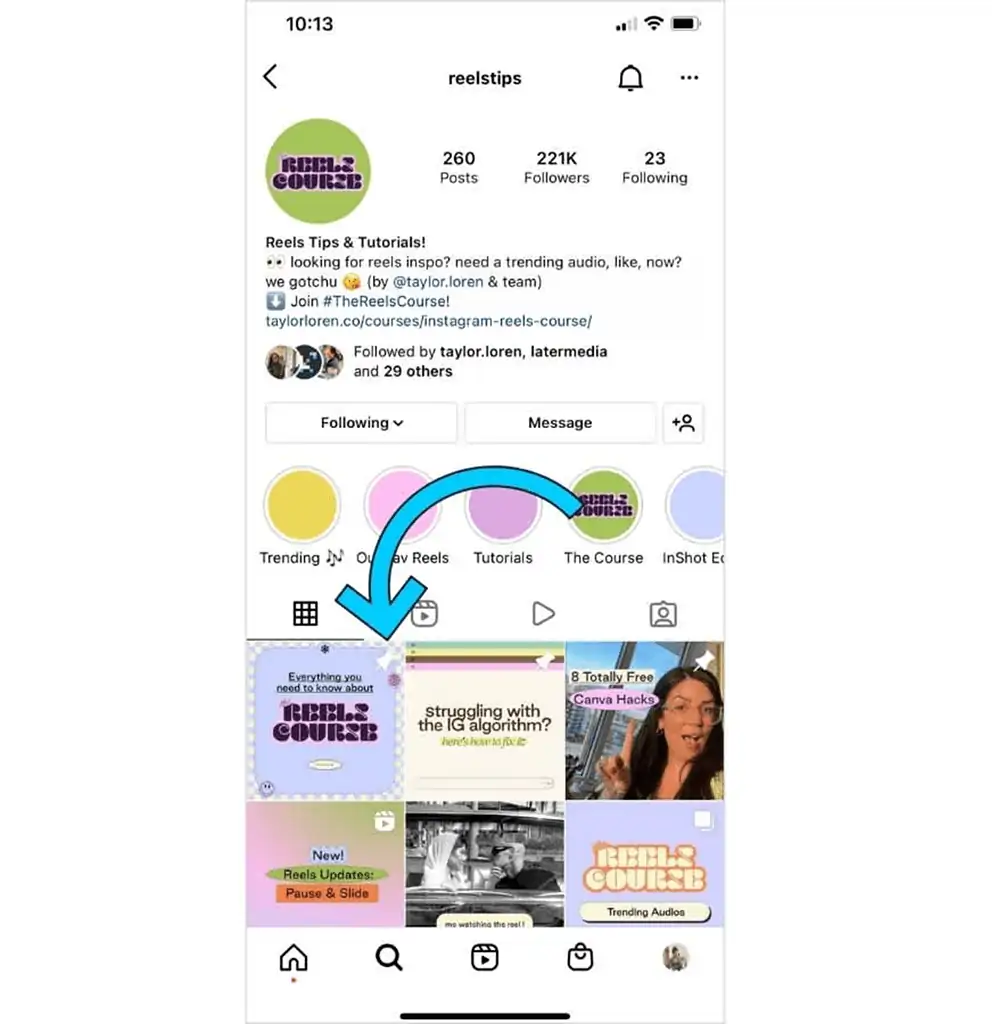
    Instagram Grid Pinning – The grid pinning feature allows users to pin three posts at the top of their profile.

    Instagram Grid Pinning

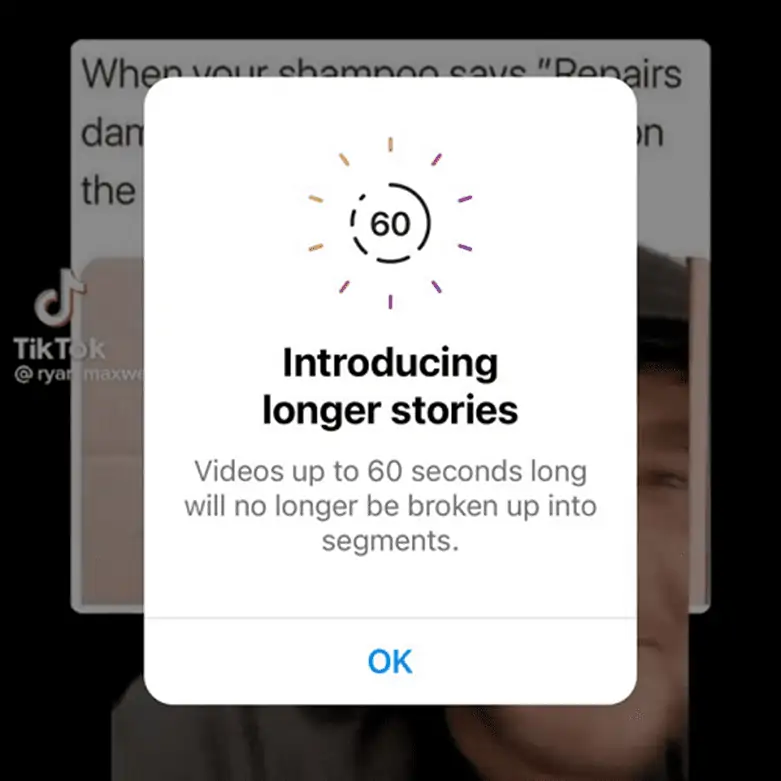
    60-Second Instagram Stories (without cuts) – Instagram in September 2022 introduced 60-second video Instagram stories, which permit users to post a complete video that will not be in the segment anymore.

    60-Second Instagram Stories

    Instagram Posts Collabs – The Instagram post collabs enable two users to co-create a joint post or reel that shows up on two profiles:

    • In the profile that created the post.
    • In the profile that accepted the invitation to collaborate on the post.

    Bottom-Line?

    While user growth has been an ongoing affair for Instagram, even after Facebook’s acquisitions, Instagram did not stop to improve itself. The app continued to stay ahead of the:

    • The trends
    • Applications that gave tough competition, and
    • User-changing demands

    The company did all it could (and still advancing) to stay trend-savvy for users and markets alike.

    Go On, Tell Us What You Think!

    Did we miss something? Come on! Tell us what you think about our article on Instagram History in the comments section.

     

  • What Is Private Label? How Does It Work?

    What Is Private Label? How Does It Work?

    In a usual consumer market, companies manufacture their own branded items. This process involves substantial capital, effort, and time, which often proves to be a barrier for not-so-big or fairly new small businesses.

    This is where private labelling comes in.

    It’s a way to launch a branded product without spending all the money, time and energy on manufacturing it. And since the process involves only the bare minimum of investment, it’s becoming increasingly popular in online and offline markets.

    But what is private labelling, how does it work, and what are its advantages and disadvantages?

    What Is Private Label?

    A private label is a product manufactured or supplied by one company but sold under another company’s brand.

    For example, a national supermarket chain may launch its own brand of ketchup and label it with its brand name. However, in reality, the ketchup is manufactured by a third-party manufacturer that remains anonymous.

    Also referred to as original equipment manufacturing (OEM), private labelling involves exclusive (non-generic) products with unique designs, features, packaging and marketing plans.

    For example, Amazon has its version of private labelling called Amazon Basics, where it sells over 22,000 Amazon-branded products ranging from batteries to bed sheets.

    Private label products are typically lower in price than other self-manufactured products as the retailer does not have to incur additional manufacturing or marketing costs. This makes it attractive for businesses to use this strategy to offer customers with a wider variety of options and prices.

    How Does Private Label Work?

    A private label is more of a product branding strategy than an actual product. It works as follows:

    1. A brand or retailer enters into an agreement with a product manufacturer to purchase the product in bulk.
    2. The retailer then works with the manufacturer to create a unique product tailor-made for its customers.
    3. The retailer puts its label and branding on the product, including a logo, packaging design, and other brand identity markers. There are also contracts where the manufacturers take care of such design needs on behalf of the retailer. The manufacturer, however, remains anonymous.
    4. The retailer then sells the product at its stores, websites, and other retail outlets as a part of its merchandise line.

    Private Label Examples

    Private labelling can be applied to virtually any product. A few examples of private-label products are:

    • Groceries such as cereal, canned goods, and snacks. Walmart owns a private-label grocery brand named Great Value.
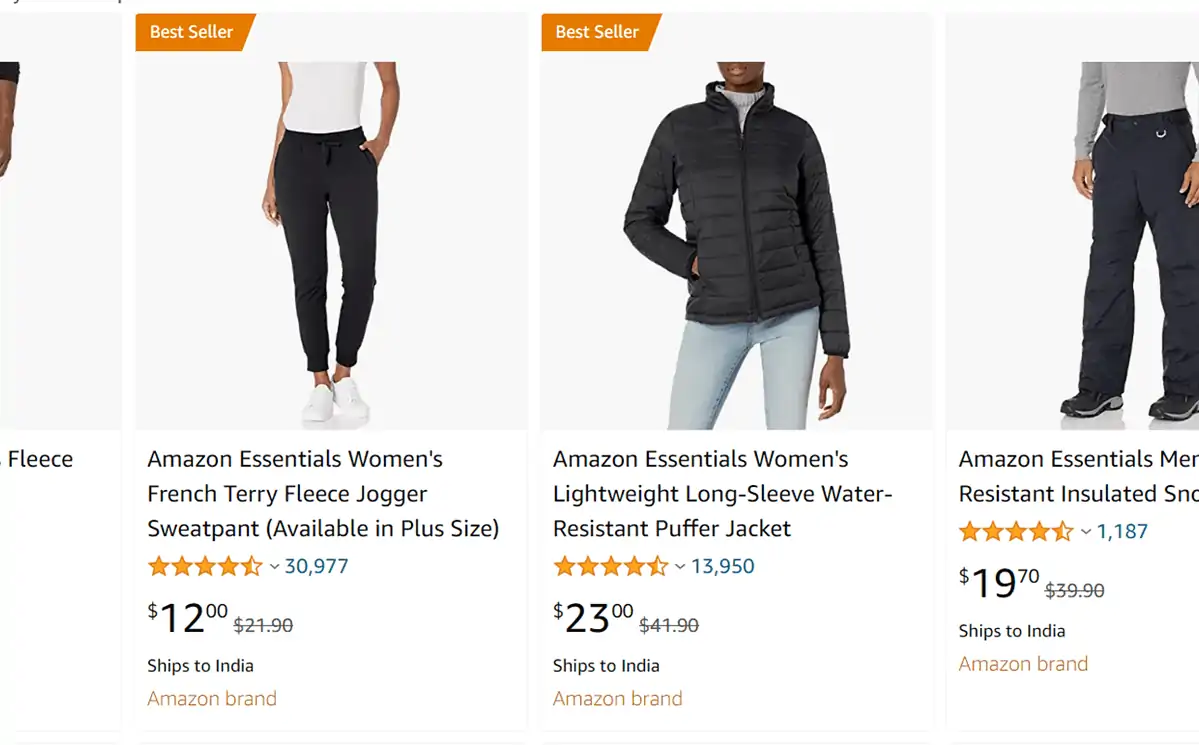
    • Clothing such as t-shirts, trousers, jackets and shoes. Amazon owns a private label clothing brand called Amazon Essentials.
    • Household items such as detergents and paper towels. Costco’s Kirkland Signature is a well-known example of household products sold under private labels.
    • Electronics such as LED TVs and speakers. Best Buy sells a line of private-label electronics under the Insignia brand name.
    amazon private label

    Advantages of Private Labelling

    Private labelling can be very beneficial for retailers in many different ways. The main advantages include:

    • Lower Production Costs: Private labelling helps brands save manufacturing costs relating to factory setup, labour, and product development. Furthermore, they can negotiate lower prices with suppliers as they buy in bulk.
    • More Control: The manufacturers work at the retailer’s direction; therefore, the brand can closely monitor the production process and product quality.
    • Increased Profits: Private labels typically offer higher margins for the retailer than in-house products. This allows retailers to increase their profits significantly.
    • Flexibility: Since the private label is contractually based, the retailers can decide to discontinue the product anytime they want. This allows them the flexibility to change their product lines without incurring huge losses.

    Disadvantages Of Private Labelling

    While private-label products offer numerous benefits to retailers, they also come with certain drawbacks.

    • Dependence On Suppliers: Private labels are heavily dependent on the suppliers. The supplier’s failure to deliver quality products can significantly affect the retailer’s business.
    • Minimum Order Quantity: Many suppliers have a minimum order quantity requirement. This means that the retailer needs to invest significantly in inventory before they can start selling the product.
    • Only partial control: Private labels don’t offer full control to retailers. The supplier still owns and controls the design, manufacturing process and some other aspects of the product. It may lead to the retailer losing control over crucial product decisions.

    Difference Between Private Labels And White Labels

    While often used interchangeably, white-label products and private-label products are slightly different.

    White-label products are generic products manufactured by one company and sold under different brand names. For example, a manufacturer may develop iPhone cover cases, and then sell them to different retailers in bulk. These retailers may label the iPhone cases with their own brand names and market them as if they developed them themselves.

    Private label products are exclusive products manufactured by an exclusive contract manufacturer and sold under the retailer’s brand name. For example, a retailer may want to create their own-branded iPhone cases, so they partner with a contract manufacturer who will produce them exclusively. These products carry the retailers’ own brand names and logos.

    Private Label
    White Label
    Meaning
    A private label product refers to an exclusive product that’s under the name of a particular brand. However, it is manufactured through an agreement or third-party entity.
    White label products are  generic products offered by a manufacturer that may be rebranded through different businesses and marketed as their very own merchandise in small quantities or for resale.
    Ability to customise
    Retailer has the overall control when it comes to dictating what its merchandise appearance is like, what they are made with, and more.
    White label products which are to be rebranded are already manufactured, restricting the extent of customisation for the business.
    Exclusivity
    Private label merchandise is more exclusive. Given their exceptionally custom-designed nature, it is almost not possible for different businesses to market-specific merchandise.
    White label merchandise that is manufactured is accessible to a lot of businesses to be sold under their brand name.

    Go On, Tell Us What You Think!

    Did we miss something? Come on! Tell us what you think about our article on private label in the comments section.
  • What Is Buying Center? – Components & Examples

    What Is Buying Center? – Components & Examples

    Listening to buying center might create a picture of a huge shopping center or a mall with multiple individual shops. But in reality, a buying center is about people.

    For example, if a kid in the house wants to buy new toys, many people get involved in the purchasing decision:

    • The kid wants a few toys and influences parents to make a purchase (initiator and influencer)
    • The mother approves the need for purchase (approver and decider)
    • Dad goes to Walmart to purchase toys (buyer)
    • Walmart decides which brand’s product to keep and offer to the purchaser (the gatekeeper)

    Typically, people do not pay attention to what influenced them to make a purchasing decision or what process they go through before making a purchase.

    The buying process is more complex than one might imagine since many players are involved in the process of purchasing a particular product or service – as a buying center.

    What Is Buying Center?

    A buying center, also called a decision-making unit (DMU), is a group of people involved in the decision-making process when purchasing a product or service.

    For instance:

    In a company, the CEO would not buy the graphic software by himself for the graphic team to use. He would involve:

    • The graphic team.
    • The graphic team director.
    • Someone who has good knowledge of the software.
    • The person who actually makes the purchase (HR for budget).
    buying center people

    The Role Of Buying Center

    Several parties are usually involved in each buying center, each handling one or more roles.

    For instance:

    A child who sees a newly launched phone on his friend’s social media profile and wants to buy it will not go and purchase it alone. He will probably influence his parents, take advice from a friend, research about it, and take approval from the decision-maker before purchasing.

    Let’s take a closer look at the process by examining each step of this newly launched phone purchase in detail.

    buying center process

    Initiator

    The initiators are the one who first identifies the need for the product and gives a kick-start to the buying process.

    For instance,

    The initiator is the kid who saw the ad and wants his parents to buy that newly launched phone for him.

    User

    A user is a person or a group of people who will be the end user.

    In some cases, they are also the initiators of the buying process, who want the product to improve the way they work or take their (working, playing, gaming, etc.) experience up a notch.

    For example,

    The kid who initiated the buying process for a smartphone will also be the end-user of the phone.

    Influencer

    An influencer is a person who describes the solution characteristics of the product and convinces others of its importance and need.

    For instance,

    The friend who posted the photo with the new phone is the influencer who triggered the purchase intent in the initiator.

    Gatekeeper

    The gatekeeper is the one who controls the flow of information and decides whether or not the product or service provider will have access to the buying center.

    For example,

    The kid got to know about the phone on social media. So here, social media is the gatekeeper that controlled the flow of information.

    Decider

    The decider is the one who leads to the acquisition of the proposal – that the product is really required and is purchase worthy.

    For instance,

    When the kid explains the features to her mother, and her mother gets convinced and decides that this phone is a good fit for her kid and decides to buy it, she becomes a decider.

    Approver

    The approver is the one who evaluates the decider’s decision and authorises the decision to buy the product.

    For example,

    When the mother decides that they need the phone, and if, after evaluating all the aspects of the product, the dad says yes and authorises to buy the product, the dad is here the final approver of the buying process.

    Buyer

    The buyer is the one who buys the product from the company.

    For instance,

    After getting approvals, when the dad finally buys the phone, the dad is the buyer, even though the user is his son.

    The buying process can differ from person to person, depending upon what product type they are willing to purchase, which buying situation they are in, and other factors.

    Key Factors That Influence A Buying Center

    The buying center concept enables the entire decision-making unit to formulate the understanding of the purchase decision in a complex environment. It focuses to:

    • Create value in the purchase situation
    • Influence the DMU about its effectiveness and efficiency, and
    • Justify why it is essential through the following three factors

    Buyer Class

    The buying class has three purchasing situations, including straight rebuy, new buy, and modified rebuy.

    1. A straight rebuy is when the user purchases the product from the previous seller and does not require any additional information to make a purchase decision—for instance, buying regular medicines from the patent medical shop.
    2. A new buy is a situation where the product is entirely new to the user, and they need all the information from scratch to reach a final decision. —for instance, if a person finds a cosmetics brand in the market, they need to know about the brand from scratch to reach the final purchase decision.
    3. Modified rebuy involves making significant changes in the previous purchase.

    It can be about making changes in the specifications, changing the seller, soliciting bids, or more.

    For instance, if a person did not like the pizza from the seller he ordered last time, he’ll choose another vendor to buy it this time.

    Meeting the buyer class where they are in the purchasing stage (a new buyer, a new buyer, or an old buyer) is the key tactic companies use to influence their buyers.

    Product Type

    The product type includes the product’s material, PP&E (property, plant, and equipment), components, MRO (maintenance, repair and operation) cost, product suitability, quality, and more. Since requirements vary from person to person, the product type varies too, which affects the purchasing decision:

    • Habitual Product –  These are the products that users buy to fulfil their daily needs. For instance, a person going to buy a detergent will simply purchase the regular product they use from their patent shop and will not create a huge buying process.
    • Luxury Products – Luxury goods, opposite to the necessary goods, are products people buy even if they do not really need them. For instance, a brother buys a luxury handbag to give to his sister even though she doesn’t need it. But before buying this luxury bag, he might ask his friends, parents, and search for it online to gather more information about the bag and its brand – which creates a buying center.

    Importance Of The Purchase

    This factor is about the need, backed by the logic of what makes sense to purchase this product or service.

    For instance, if a company has merely started to plan its social media posts automation, what is the need to purchase a tool with more advanced features which they will not use for at least the coming two years? They’ll buy the tool with basic automation features only. 

    The Importance Of Buying Center

    Different people are involved in making purchase decisions. From a business point of view, this buying center forms the structure for making informed and effective marketing strategy decisions.

    When the business closely understands the buying center, it can better target its marketing efforts to the right people. With its help, It shares relevant information at the right time with all interested parties to help them make an informed decision. Moreover, it ensures that the buying process is initiated at the right time, and that there is a clear consensus on all decisions made.

    Bottom-Line?

    A buying center is a powerful tool for gaining customer insight. A clear understanding of it helps companies in marketing, product development, boosting sales, and selecting strategies to improve the brand’s working channels.

    Go On, Tell Us What You Think!

    Did we miss something? Come on! Tell us what you think about our article on Buying Center in the comments section.
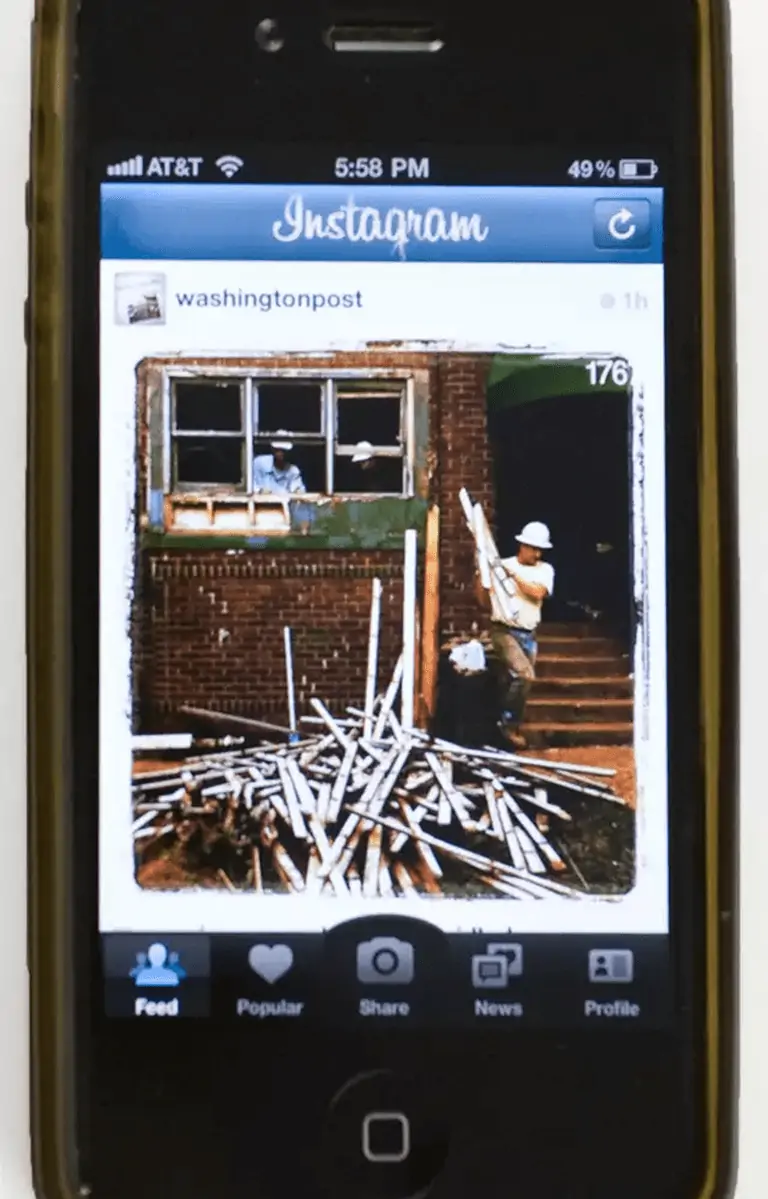
  • The History Of YouTube

    The History Of YouTube

    It has been 17 years since the launch of the world’s largest video-sharing platform – YouTube.

    From an idea to create an online dating website where users can post videos of themselves to the undisputed king of online videos, YouTube has risen like a hurling storm with more than 2 billion monthly users active on the platform today.

    The company has maintained its momentum since 2005 and now serves as a base for many brands and personalities.

    However, the question is, where did the idea for YouTube stem from? How did it become the monopoly as it is today?

    Here’s a brief history of YouTube right from when it was just an idea to where it stands now with over 1.7 billion unique monthly visitors.

    Who Founded YouTube?

    YouTube was the idea of three bright youngsters – Chad Hurley, Steve Chen and Jawed Karim, who met each other and became friends while working for an American Banking service PayPal. The three friends came from very distinct backgrounds making them a perfect team for brewing something big. Hurley studied design at the Indiana University of Pennsylvania, and Chen and Karim studied computer science together at the University of Illinois at Urbana-Champaign.

    Chad Hurley, Steve Chen and Jawed Karim

    The same year they quit their jobs to pursue a belief that they could make a change in the world. This group of brilliant young minds started kicking around ideas for a business while sitting in their garage.

    They decided to go with the obvious choice, which was to find new ways to introduce dating in the market and launched this video-oriented dating website on 14th February 2005.

    Inception – The Original Idea

    “We didn’t even know how to describe our new product. To generate interest, we just said it was a new kind of dating site. We even had a slogan: ” Tune in, Hook up.”

    These were Jawed Karim’s words during his interview about the origins of YouTube.

    tune in hook up

    YouTube.com initially positioned itself as an online dating site Tune in, Hook Up. This online dating service allows users to upload their video clips and share them with others for free. The website helped the user decide whether or not they wanted to go on a date with this person. Others could talk about their partners.

    The website was a fascinating way of introducing videos on the world wide web. However, it could have done better due to a lack of participation and perhaps because it was launched a decade too soon.

    To save its grace and popularise the site, the founders even paid $20 to women on Craigslist, asking them to upload their video bios on the site. But nothing seemed to need to be fixed.

    Pivot

    The failed positioning created pressure on the founders as they had an excellent infrastructure to host videos, costing $100 a month, but nobody uploaded any video.

    They were so desperate that they decided any videos were better than no videos. So, Karim started posting videos of aeroplane take-offs and landings.

    Soon enough, all the pieces of the puzzle started falling into place. A massive buzz was circulating about the infamous wardrobe malfunction incident of Janet Jackson during the 2004 Superbowl Halftime show. The founders then realised that they could not find any videos of it online because no such platform existed for sharing videos.=

    Youtube player history

    Jumping into the hour of curiosity, they pivoted the business model, and the first primary video-sharing website was born.

    It now had a more straightforward interface making it easy for non-computer experts to publish, upload and stream videos through standard web browsers and modern internet speeds. The intention was to make the website accessible and user-friendly to all audiences, especially the ones who were just exposed to the internet in the early 2000s. It was now a free video-hosting platform where each video clip had its unique link.

    YouTube was set out to be this massive internet phenomenon that would revolutionise the digital space.

    The First YouTuber

    The first YouTuber was one of its founders Jawed Karim. On 23rd April 2005, Karim posted the first ever video on YouTube titled – Me at the zoo, which has over 120 million views and 5 million likes. In the video, Karim was in front of two elephants at the San Diego Zoo, describing their long trunks. It was a normal 18-second video clip that paved the way for how people around the globe to consume media for generations.

    According to Greg Jarboe (the president and cofounder of SEO-PR), ‘Me at the Zoo’ showed that YouTube was not just about capturing special moments on a video but was a message for YouTube users “to become broadcasters of tomorrow.”

    YouTube’s Official Beta Launch

    Soon after the re-launch, YouTube became publicly available in a ‘beta’ phase from May 2005. As of June, YouTube was posing as “Your Digital Video Repository” to its users.

    In September of 2005, a user (Nikesoccer) posted a Nike promo video of the Brazilian footballer Ronaldinho showing off his ball juggling skills on YouTube (named “Ronaldinho touch of gold”). It was the first video on the platform to go viral and receive 1 million views.

    During its initial stages, the site managed to garner 30,000 visitors daily.

    The Minds That Wore The Creator’s Hat

    Being a video hosting industry pioneer, YouTube required a highly skilled founding team. While Hurley was great at UI/UX and web development, Chen handled the backend. Karim was new to the arena and assisted Chen in website designing while honing his programming skills.

    As the website expanded, so did the workload. The team was in dire need of hiring new and skilled people to continue with the expansion of YouTube. The founders then decided to onboard as many skilled people as they knew from the PayPal team.

    Youtube's first office
    Youtube’s first office

    The initial days of YouTube started with a team of budding creators who wanted to make something big happen. On this journey, there was Yu Pan, a PayPal cofounder who later joined YouTube as the first employee. He described the initial days as a free exchange of ideas. The development of the website was looked after by Chen, hurley and Karim.

    One of the most valuable members was Mike Solomon. He was a genius who took the responsibility of making the software framework. This helped YouTube to increase its scalability. Other notable minds were Brent Hurley, Cuong Do, Gideon Yu, Maryrose Dunton, Bradley Hepburn, Dwipal Desai, and many more. Each of them came together and helped make YouTube what it is today.

    The First Funding Round

    After its first 1 million hits, funds started rolling in for the website. Sequoia Captial, a venture firm, invested $11.5 million on YouTube and onboarded Roelof Botha ( a partner of the firm and ex-CFO of PayPal) to the board of directors. YouTube began operating as an angel-funded enterprise working from a makeshift office in a garage.

    End Of Beta Phase

    On 15th December 2005, YouTube finally pulled out from its beta phase and was officially launched to the public serving more than two million per day on the website. By March 2006, YouTube had more than 25 million videos uploaded and generated 20,000 uploads per day. This massive growth came with facing difficulties.

    YouTube had to constantly keep up with technology and broaden its web connection to keep serving the expanding audience. The site was also facing copyright infringement issues and a lack of commercialisation in the space, ultimately opening up the possibility of outsourcing.

    In June 2006, YouTube got into a marketing and advertising partnership with NBC by striking a deal to help promote the TV network’s upcoming fall TV lineup on YouTube. This enabled traditional media to take a step forward into the new-age digital media and opened up multiple critical partnerships with content providers for YouTube.

    By the end of July, it delivered an average of 100 million video views daily.

    The Entry of Google

    YouTube’s presence in the online market was significant. The website averaged around 20 million visitors per month and had a great scope for commercialisation. The site was already under the radar of giants like Google and Yahoo. After 18 months of launch, YouTube was acquired by Google for $1.65 billion in stock on 9th October 2006, making it their second-largest acquisition during that time. The same day the deal went through, YouTube moved its headquarters to San Burno, California.

    YouTube continued operating independently with its cofounders and 68 other employees working within Google.

    A part of the agreement also meant that Google had to deal with many infringement lawsuits. Google got to terms with several entertainment companies to let copyrighted material circulate on the website. In November 2008, an agreement was signed with Metro-Goldwyn-Mayer inc that would allow full-length movies and shows to be broadcasted alongside ads.

    The Growth Of YouTube

    The main factor that gave YouTube an edge in its initial day was viral videos, some of which were – Charlie Bit My Finger, Evolution of Dance, Justin Bieber’s ‘Baby‘ etc.

    Evolution of Youtube logo

    YouTube dominated the global media with a multi-billion dollar business and a platform that would benefit several media markets and YouTube personalities. The success of YouTube was overreaching; by 2018, YouTube was generating more than twice the revenue of any major TV network. A revenue analysis revealed that in 2010, Chad Hurley’s profit was more than $395 million, while Steve Chen alone made a profit of $326 million,

    The Start Of Monetisation

    The targeted advertisement had just arrived in early 2006 in the form of participatory video ads designed to link specific promotions to specific channels. However, the idea to expand YouTube for advertising seemed less user-friendly to Chard Hurley who rejected the concept at the time. Despite the differences, YouTube started running in-video ads in August 2007, and preroll advertisement was also introduced a year later.

    The Start Of Monetisation

    The website introduced various layout features such as ratings, comment counts, tags, bulletin boards, badges, etc. Each channel had its view metrics.

    In March 2007, the platform announced the YouTube Awards allowing its audience to compete with the best user-generated videos of the year. Soon after, the website also introduced the YouTube partner program, which enabled channels that met specific metrics to monetise their channels. Within a year, talented creators already earned six-figure incomes through the platform.

    YouTube has expanded over the years and tried to adapt to various audiences. For instance, YouTube Feather was introduced, which was a light weighted version of the website for limited internet speeds. Similarly, in 2009, YouTube XL was launched for front-end viewing and browsing on TV sets. In the same year, the platform revealed that it had surpassed 1 billion views a day, and by this point, more than 20 hours of videos were constantly being uploaded to the site.

    2010-2018 Era Of New Feature

    2010 saw some noticeable shifts in the trajectory of the website. By March, YouTube had begun streaming free content, including the Indian Premier League, the world’s first free online sports broadcast. The same month YouTube also launched a simplified interface so that users can spend more time on the site. Felix Kjellberg aka PewDiePie, the largest subscribed YouTuber on the platform, also began his career this year.

    YouTube reportedly served nearly double the prime-time audience of all three giant US TV networks during this time.

    In September 2010, Hurley stepped down as the CEO of YouTube and Salar Kamanger took over his reign.

    By the end of November 2011, YouTube ultimately merged with the Google interface, and users could now view videos from within the google environment.

    The site also officially launched YouTube Live to allow the streaming of content. In October 2012, YouTube live-streamed the US presidential debate, partnering with ABC, becoming the go-to-pace for the elections. The YouTube Elections Hub was also launched to provide timely updates about the elections. The first-ever video to reach 1 billion views was released in December 2012.

    Youtube election

    Further to help creators, the company opened YouTube Spaces studios in 2012 across Los Angeles, Tokyo, London, New York and Sao Paulo.

    Youtube spaces

    To cater to a different niche, YouTube launched a “family-friendly” version of the platform in 2015 called YouTube Kids, ensuring safety through parental controls and disabled search for children since they accounted for more than 8 million users per week.

    In the same year, a major shift in the revenue model was introduced with the name YouTube Red. It was a subscription based model that allowed users to stream music and videos without ads while giving them access to some exclusive content. Three years later, this application was renamed YouTube Premium, and the music streaming services were separated under a different app called YouTube Music.

    The Adpocalypse

    In 2018, creators saw a massive slowdown in revenue due to the two significant algorithm changes that YouTube introduced on the site. These put strict restrictions on ad policies, so much so that creators termed it as an “Adpocalypse.”

    The Adpocalypse

    Shift To Quick Content

    In November of 2018, YouTube launched its stories feature, much like Snapchat and YouTube Reels, also launched earlier that year but were only accessible through the mobile app.

    After 14 years after the acquisition, Google broke out YouTube’s ad revenue which accounted for up to $14 billion in 2019. This was 9% of the parent company Alphabet’s total ad revenue.

    On July 2021, they launched YouTube shorts, also known as vertical videos. These were 15-60 seconds videos featured on YouTube. As of 2022, YouTube Shorts receives 30 billion views daily.

    What’s Next For YouTube?

    YouTube has evolved and grown over the years based on the constantly changing trends to become the most extensive catalogue for content. In the future, there is a much larger scope for YouTube and several areas it can tap into. Find out some of the most famous predictions for YouTube by 2025 –

    • Casual gaming platform – YouTube is already very popular among gamers who have surpassed watch hours over live streams. Soon enough, there is a high chance that they will be playing these games on the platform itself.
    • Customised search – The brilliant AI and the extensive database on the platform will make it very easy to launch customised content suggestions for users to increase their time spent on the site.
    • Sentiment Analysis – It is reported that with access to real-time data through recorded conversations, the users’ youTube recommendations list will have the potential to influence people. Whether or not it is a matter of concern or relief will only depend upon public acceptance.

    Today’s fresh-faced creators will be tomorrow’s giants in the media and entertainment industry with the help of YouTube.

    Bottom Line?

    The possibilities are endless for this video platform. Despite new rivals coming up every day, it is still challenging to take away YouTube’s crown. YouTube continues to grow and create opportunities for people and companies ready to form successful networks on the platform. In addition to being the second largest search engine, YouTube’s main strength lies in its format, i.e. videos, the core principle of the website that never weaved off its course. Considering that videos are being adopted as an integral part of marketing and content strategies, YouTube will keep providing its users with features and adaptions in the future.

    Go On, Tell Us What You Think!

    Did we miss something? Come on! Tell us what you think about our article on the history of YouTube in the comments section.
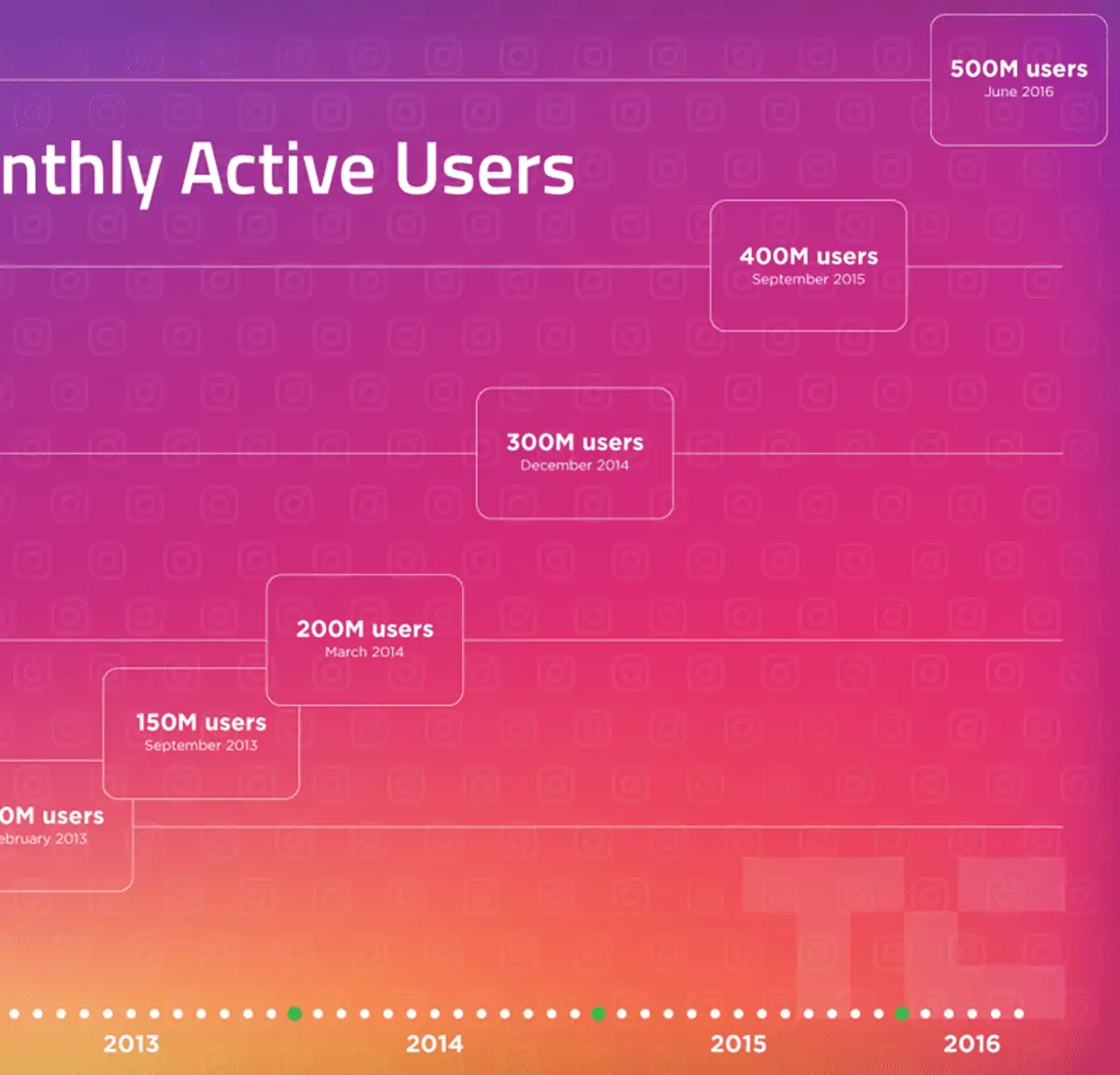
  • 21 Best Businesses To Start With Little Money

    21 Best Businesses To Start With Little Money

    Imagine having the freedom to set your own hours and work on something that genuinely interests you. Starting your business brings you closer to such a dream. But it requires effort and (a lot of) money.

    In fact, 38% of startups fail only because of insufficient capital.

    But that doesn’t mean you can’t start a business with little money. All you need are skills, common sense, and the right business idea.

    Here’s a list of the top businesses you can start with little money. But before that, understand what to look for in a business idea to ensure it requires less investment.

    A business usually requires less investment if it:

    1. Doesn’t involve manufacturing products.
    2. Requires minimal staff, tools and equipment.
    3. Has low startup costs compared to the revenue it can generate in the long run.
    4. Is service-oriented and doesn’t require a lot of capital to get started.
    5. Can be done on-demand.
    6. Can be outsourced and scaled easily.
    7. Requires minimal inventory and storage costs.
    8. Is based online.

    Start A Dropshipping Business

    Dropshipping is when you start an ecommerce business but you don’t own any physical products. Instead, when a customer orders from your store, you place a similar order from a wholesale supplier and have it shipped directly to the customer.

    dropshipping process

    Here’s how it works –

    You find a popular product on wholesale websites like Alibaba or AliExpress. You then add that product to your online store with a markup price. When customers purchase from your store, you place an order with the supplier on Aliexpress, who ships it directly to the customer – without ever having to handle the inventory yourself.

    Dropshipping is great for entrepreneurs on a budget because there’s no need to invest in a large quantity of products upfront. You only handle the marketing and customer service, while the supplier takes care of fulfilment.

    Provide Freelance Services

    Providing freelance services doesn’t require much upfront investment. You only need a laptop, an internet connection, and some sellable skills. If you’re a capable writer, programmer, graphic designer or video editor, there are plenty of ways to get started offering your services locally and online.

    The easiest way is to create a freelancer profile on popular freelance marketplaces such as Fiverr, Freelancer and Upwork. These platforms work as intermediaries between freelancers and clients that are looking for specific services.

    Start Drop Servicing

    Like dropshipping, when you start an ecommerce model providing services you don’t provide yourself, it is drop servicing. You partner with companies or freelancers that offer logo design, social media management and web design services.

    Start Drop Servicing

    Your customers pay you for the service and once you receive payment, you “drop service” by passing it on to a partner who will deliver the service.

    All you need to focus on is marketing your services and getting them done by freelancers from Fiverr or Upwork.

    Develop Online Courses

    If you have a knowledge and passion for teaching, online course creation can be your perfect business. People are always looking to learn something new, whether it’s about photography, coding, or yoga.

    All you need to do is:

    1. Pen down your skills and knowledge in a structured and organised manner.
    2. Create video tutorials, E-books or audio files for your course material.
    3. Decide which online platform you would like to host your course (e.g., Udemy, Skillshare, etc.).
    4. Set a price for your course and promote it within your network, social media, or other online platforms.

    The best part about course creation is that you don’t need a website or marketing skills to start. After you upload your course content, the online platform will take care of all the promotions.

    Start A Print On Demand Business

    Like dropshipping, print-on-demand is a business model where you design products, upload them to an online store and get them printed by a third-party manufacturer like Printful, Printify, etc. only when a customer orders. The manufacturer then ships the product directly to the customer for you.

    print on demand

    Since print-on-demand doesn’t require an upfront cost to stock inventory, it’s a great way to start a business with little money.

    To create your own products and designs, you need basic graphic design skills (or you can outsource them on an outsourcing website like 99designs).

    Once you have designs ready, you can start your shop on marketplaces like Etsy, Redbubble, and more. This even saves the capital and time that goes into developing your ecommerce store.

    Make Money Through Affiliate Marketing

    Affiliate marketing is a model where you, as an affiliate marketer, recommend a product to someone else and earn a small commission when they buy it.

    How affiliate marketing works

    It works straightforwardly. All you have to do is find a product you believe in, and promote it on varied channels like your WhatsApp group, Pinterest post, website, blog, or social media posts in a way that convinces someone else to buy it.

    Often, companies have affiliate programs that provide unique links and banners to you for sharing products and services with your network. Everyone gets a different link that contains a tracking code that helps you and the brand measure the success of your promotion and payout accordingly.

    The best part about affiliate marketing is that it doesn’t require any investment and you can do it virtually from anywhere.

    Start Podcasting

    Podcasting refers to creating and broadcasting your own digital audio show. Consider it similar to a radio show, except:

    • It is launched digitally
    • People can listen to it on-demand (at any time) on any device (phone, laptop, tablet etc.)

    Today, 62% of Americans have listened to a podcast, which makes it an excellent business opportunity for entrepreneurs.

    podcasting

    Creating a podcast requires very little money and resources. You can record from the comfort of your home using nothing but your phone, publish it on the internet for free using platforms like Anchor.fm, and start monetising your podcast with advertising, affiliate marketing, sponsorships or even by selling your own products or services related to the topic you are talking about.

    Become A Demand Influencer

    Influencers are people who have the power to shape opinions and drive the actions of their followers. They can be celebrities, prominent bloggers, or people with a large following on social media.

    Since 84% of people purchase something via an influencer recommendation, influencer marketing is now integral to many business marketing strategies.

    For you to become an influencer, you need to have a good understanding of your target market and how best to reach them. Start by creating interesting content that people can relate to and engage with on the platform they use (for example, Instagram or Telegram). Focus on creating a personal connection with your followers to ensure they keep returning to your content. This will help you build trust and credibility and, in turn, increase your influence.

    how do influencers work

    The process requires no upfront investment other than your time and energy. As your following grows, so too will the opportunities to monetise your influence. This could involve sponsored posts, brand collaborations, or selling your own products.

    Earn With Stock Photography

    Stock images are generic photographs marketers purchase from online sites to use in their campaigns.

    For example, a website might need images of happy families using a product they can buy directly from sites like Shutterstock or Getty images.

    As a stock photographer, you can earn money by selling images to these sites. All you need is a good camera (or phone), some photography knowledge and the time to take the photos that are in demand.

    Provide Airbnb Experiences

    Airbnb isn’t just a place to stay anymore. The company has expanded its offerings to include experiences which allow you to lead activities in your area for visitors and locals alike.

    airbnb experience

    From leading a food tour of your town to teaching people how to do yoga, you can take advantage of plenty of opportunities on Airbnb.

    All you need to do is register as a guide and create an experience that people will love.

    Become A Copywriter

    Copywriting refers to writing content for businesses to use in their marketing efforts. It can range from blog posts and website copy to emails and social media messages.

    Unlike product-based businesses, you don’t need any upfront costs to get started.

    All you need is a laptop, some creativity, and the ability to write engaging copy that will resonate with your target audience.

    You can either start work by launching your agency or become a freelancer to find clients on platforms like Upwork and Fiverr.

    Earn Through Digital Assets Flipping

    You can even make a fortune by buying websites, domain names, and apps for less money and then selling them for a profit.

    Here’s an example – you can look for expired domains on Godaddy auctions selling for $200 or less, and then flip it for a profit to a person you believe could use it for their business.

    Earn Through Digital Assets Flipping

    Similarly, marketplaces like Flippa host numerous starter websites that you can buy for a few hundred dollars and then flip for good money with a few improvements.

    Provide Virtual Assistant Service

    Similar to freelancers, virtual assistants are skilled individuals who can provide administrative, creative, technical and other services to clients remotely.

    But unlike freelancers, virtual assistants usually:

    • Offer a wide range of services
    • Work remotely
    • Offer services for a long-term
    • Are paid a salary or an hourly rate
    • Are duty bound

    For you to start such a business, you need a reliable computer, an internet connection and the right skills. Additionally, you need to have an efficient setup for communication with clients.

    Once your business is up and running, you could offer services such as diary management, social media management, blog writing or customer support.

    Like freelancing, you can post your gigs on freelance marketplaces like Upwork or Fiverr or apply to be a part of virtual assistant companies like Zirtual.

    Sell Creative Assets On Etsy

    People love to buy unique items and creative gifts. Be it handmade items, vintage products, or digital art like SVGs, Etsy lets you list and sell your creative assets to a worldwide audience.

    All you need to start a business on Etsy is an account and a little money for the transaction fees ($0.2 per listing and sale).

    However, you can even start this business even if you’re not creative per se. You can:

    • Flip products on Etsy
    • Get a freelancer to design some creative assets for you
    • Buy SVG bundles in bulk and resell them on Etsy

    Start Your YouTube Channel

    People love watching videos. In fact, 66% Of people consider video to be their top information source. And YouTube, being the number two search engine in the world, is a great platform to start your video creation career.

    You start with selecting a niche and understanding what viewers want. Then, just like blogging, you do keyword research and create videos around those keywords. Finally, you monetise your channel with ads, affiliate links, and sponsored posts.

    Here’s an example. Suppose you’re a guitarist who can teach chords and songs. Start a YouTube channel on guitar lessons, look for songs or chords that people want to learn, create videos around it and share it with the world. Once you get good engagement and followers, you can monetise your channel.

    make money youtube

    The best part is that you don’t need to spend thousands of dollars on equipment for YouTube. You can easily create videos with your smartphone and some editing software.

    Start A Website Designing Business

    If you’re good with design and coding, you can create websites for small businesses. All you need is a laptop and some coding knowledge.

    You can start a development business either by starting an agency (and outsourcing most work) or by becoming a freelancer. Both have their pros and cons.

    Being a freelancer helps you:

    • Avoid the overhead costs of running an agency
    • Work on projects you’re passionate about
    • Capitalise on freelance marketplaces’ web dev demand

    On the other hand, starting an agency offers more security and potential for growth. You can also hire others to help with the workload in the future.

    Become An Event Planner

    An event planner is an individual responsible for organising events such as parties, weddings, conferences and corporate meetings.

    Even though this business requires you to have tons of contacts, creativity and organisational skills, the starting capital is quite low.

    You can use free or cheap online marketing tools such as social media platforms to promote your services. Additionally, you may need to invest in event planning software to help you manage your bookings and payments efficiently.

    Pett-sitting, pet walking, grooming, and pet training are some of the most trending business ideas with increasing demand. Platforms such as Rover and Wag! have made it easier for people to find pet owners who need help with their pets.

    Start A Pet-Related Business

    All you need to start is the initial investment for pet-related products and supplies, such as dog beds, leashes, collars, toys, treats, grooming tools, and food. Additionally, you may need a vehicle if your service involves pet transportation.

    Start A Digital Marketing Agency

    From SEO, SEM, SMM, and website design to content marketing, digital marketing agencies are in high demand. The business is more skill-intensive than capital-intensive, so you won’t need to invest much money.

    Ensure to invest your initial capital in learning one or few digital marketing skills that you can offer, creating a website and building an online presence to attract clients.

    Once done, you can use free or low-cost tools like Hootsuite, Canva, Google Ads, etc., to help these clients grow their online presence and reach their target markets.

    Become A Voiceover Artist

    With a rise in video marketing, voiceover artists are also in high demand. Similar to other gig-oriented businesses, voiceover artists need:

    • Good voice and skills
    • A decent setup
    Become A Voiceover Artist

    You’ll find several platforms and marketplaces like Voices.com and Fiverr where you can connect with clients and get paid for your voiceover services. However, know that this industry is highly competitive and requires a lot of effort to get noticed.

    Become A Resume Writer

    The job market is competitive, and employers are looking for the best candidates, which means a professional resume is essential. Starting a resume-writing business can be a great option if you have excellent writing skills and experience in crafting resumes.

    You can start the same as an agency and outsource the work, or you can work individually as a freelancer. To get started, you’ll need to create a portfolio to show prospective clients your work, and invest in quality resume-writing software. With effort and marketing savvy, you can earn money quickly as a resume writer.

    Go On, Tell Us What You Think!

    Did we miss something? Come on! Tell us what you think about our article on best business to start with little money in the comments section.
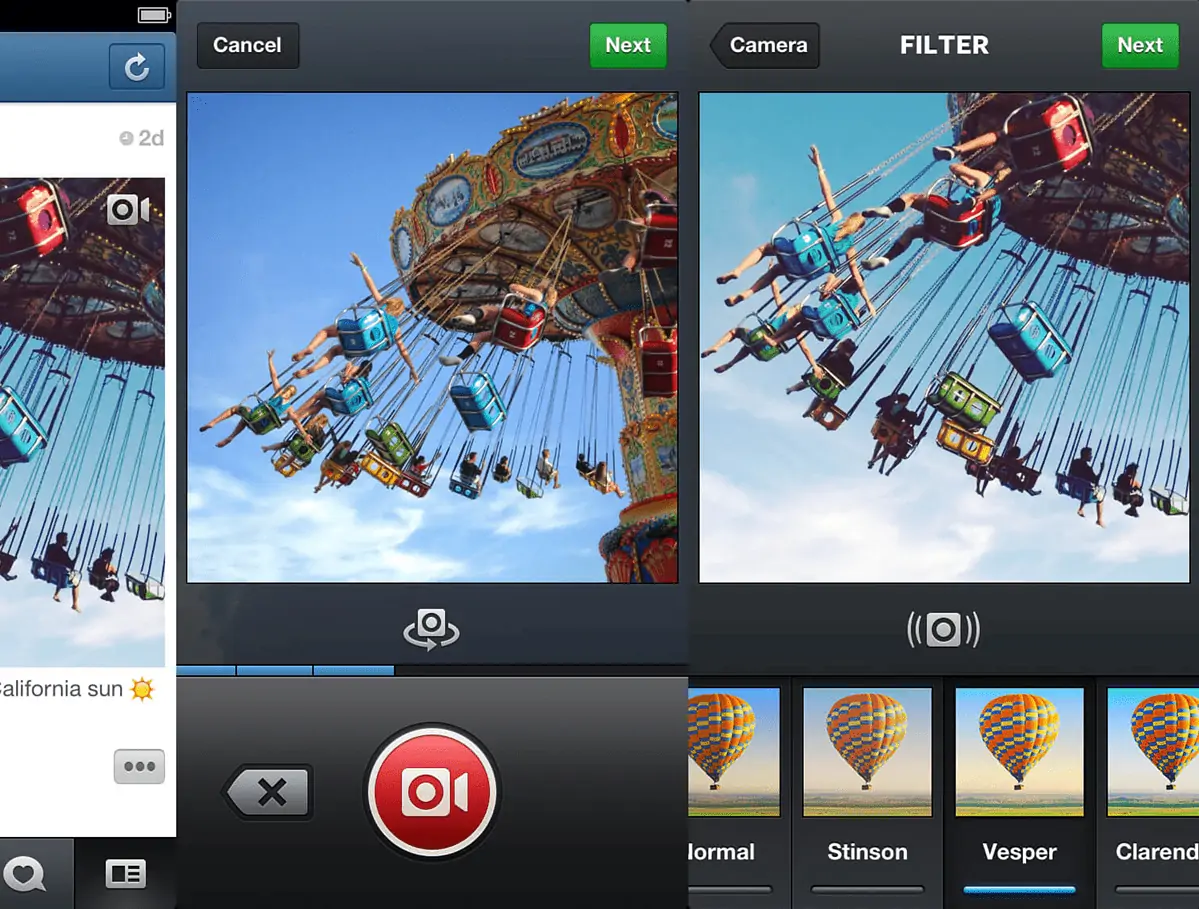
  • What Is Endowment Effect? – Psychology & Applications

    What Is Endowment Effect? – Psychology & Applications

    A wine lover businessman purchased lovely Bordeaux wines years ago for $20. The wine’s value was greatly appreciated with time, so much that it would fetch $300 if sold in an auction. But this man refused to sell the bottle and instead, kept it in his wine rack. All because he was attached to the item and found it too valuable to let go.
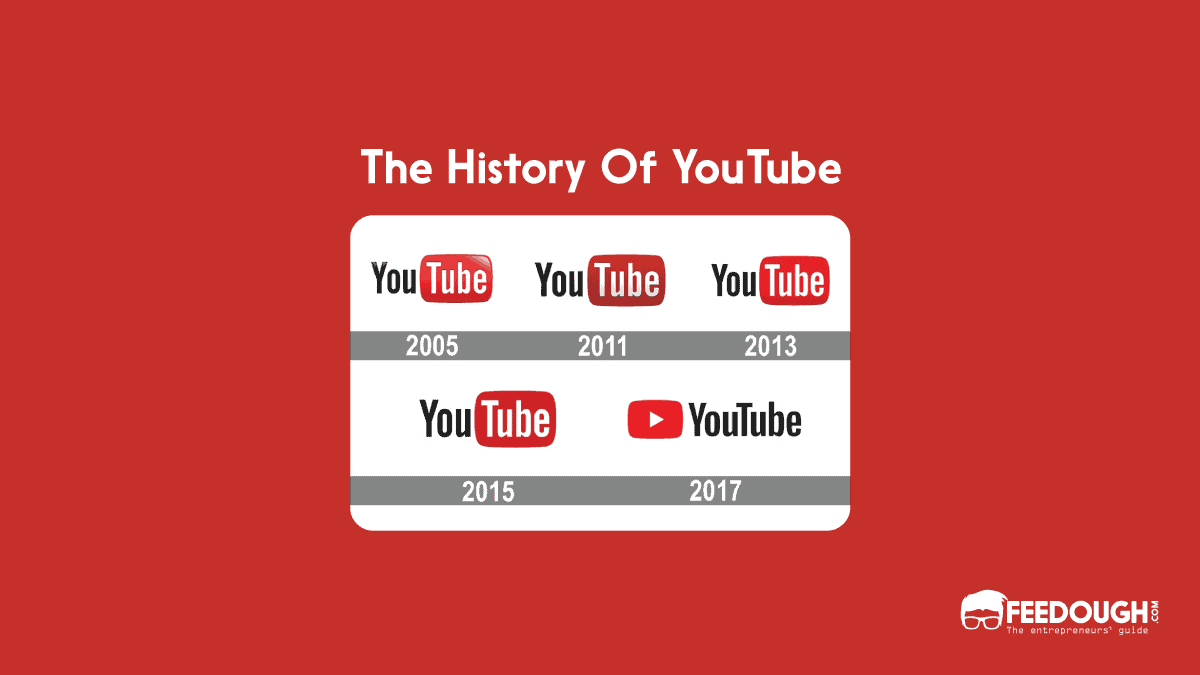
    It’s a similar case with house owners. They tend to overvalue their homes while selling them but are not ready to purchase a new of the same kind at that price.

    Richard Thaler called this pattern – people demanding much more to sell their object than they are willing to acquire the new one – The endowment effect.

    What Is The Endowment Effect?

    The endowment effect in psychology and behavioural economics refers to an emotional bias theory in which people overvalue their belongings, often irrationally or higher than the actual market value.

    In simple terms, people tend to place a higher value on something that is already in their possession and overvalue it, over an identical item for sale. This phenomenon involves a role of the psychological inertia theory of “no-change” where people tend to stick with the status quo instead of making a change unless they are provided with a substantial incentive.

    For example, if a person offers a child to exchange their favourite toy with a new toy, chances are they will not exchange it and will instead choose to keep their favourite toy.

    This phenomenon of the endowment effect is also known as “Mind over Market Value” or the “psychology of ownership“.

    Endowment Effect Psychology 

    A person’s perceived product value = Market Value + Emotional Value

    The endowment effect comes into existence when an object has an emotional backstory or a symbolic significance to an individual. This attachment results in an emotional value of the product which adds to its market value.

    Thus, the new value gets equivalent to the combination of the product and emotional values – which results in an overestimation of an object’s value. 

    For instance, a person may even want to pay $500 to get his wallet back which originally had $100. Just because the wallet was a gift from his late mother.

    Psychologically speaking, two concepts closely relate to and influence the endowment effect –

    • Status quo bias, and
    • Loss aversion. 
    Status Quo Bias

    Status Quo Bias is an emotional bias that prevents a person from undertaking any action to change the current or previous state of affairs.

    For example, a person watching Netflix may keep watching that show just because he doesn’t want to stand up and pick up the remote.

    When the status quo bias gets amalgamated with ownership, it becomes a primary stimulus resulting in the endowment effect. For example, a person owning an iPhone wants to be in the league of iPhones, as switching to android would require the person to give up the exclusive feeling of being an Apple user.

    Loss Aversion

    Loss aversion refers to a cognitive bias phenomenon in which people focus on avoiding losses more than on acquiring equivalent gains. 

    For instance, an individual receives a job offer that pays him $100 if he does it, but he pays $35 if he fails to do it. Chances are he will decline the offer because, more than being happy about earning $100, he is afraid of losing $35.

    Similarly, if a person invested in a stock, losing 2% of the invested amount will cause more anguish than gaining the same percentage.

    Applications Of Endowment Effect In Marketing

    With changing marketing trends, marketers increasingly use psychological and economic factors to drive conversions. The endowment effect is one such factor which marketers use to increase sales.

    Haptic Imagery 

    Haptic imagery is a cognitive process where people mentally experience an object’s physical properties without actually touching or feeling them.

    For instance, if an author asks the readers to imagine touching a feather, the haptic imagery will activate a sense of softness in their minds.

    Product descriptions, images, videos, and other visual elements used in marketing are often designed to evoke a haptic response from the audience.

    For example, Mac shows 63 shaded foundations and illustrates each shade using a model of different skin tones. This makes it easier for a customer to choose the correct shade for her skin tone as she can imagine what the product will feel like on her skin. Just this thought triggers an emotional connection with the product, making her more likely to buy it.

    Free Trials

    Free trial is an acquisition model that offers a product or service to customers free of charge for a limited time before the customer purchases it.

    It revolves around a strategy that giving the chance to customers to use the products before paying for them will kick-start the endowment effect.

    The endowment effect is the reason why car companies offer test drives, and YouTube offers 30-day free trial. The longer time people spend customising and using the product, the greater the sense of ownership gets, and the harder it is to give up.

    Free Return Policy 

    The free return policy allows customers to return the purchased product to the retailer free of cost under certain policies drafted by the company.

     A study on Return Policy and the Endowment Effect shows that customers face a harder time returning the purchased product as they start to value the object more once they own it.

    And that is a proven fact because statistics show that though 79% of customers want a return policy, only 30% of them choose to return products ordered online. 

    Freemium Versions

    Freemium is a portmanteau of the words “free” and “premium”. It is a strategy in which a company offers basic or limited features in the free version of the product or service and charges money for advanced features or an upgrade.

    In Spotify’s free version, users can skip ads and use the shuffle feature while listening to songs – basic features with ads. But with Spotify premium, users can download songs, listen to uninterrupted music, share playlists with friends, and get more features.

    The endowment effect plays an important role in the success of freemium models. People are more likely to upgrade to a better version if they have already used the free version and grown accustomed to it. It is easier for them to part with their money if they have experienced the product or service first – even if it was simply a limited experience.

    Virtual Visualisation/Virtual AR

    Virtual Visualisation or Virtual AR bridges the gap between the digital world and the physical world by providing users with an enhanced experience. It allows customers to view products in 3D, interact with them as if they were in a physical store and gain a more realistic understanding of what the product looks like and functions.

    For example, Lenskart’s virtual AR allows users to scan and analyse their faces, detect the face shape and temple size, and then recommend frame shapes that will suit them best. It also allows users to try 1000s of looks in just a few clicks. 

    This strategy serves as an emotional trigger that leads to a feeling of ownership and endowment effect, thus influencing purchasing behaviour.

    Amazon lets customers virtually fit furniture in their house before they buy it. This provides the customers with a tangible simulation of how furniture would look in their home, allowing them to make an informed decision. This strategy again can be seen as an application of the endowment effect.
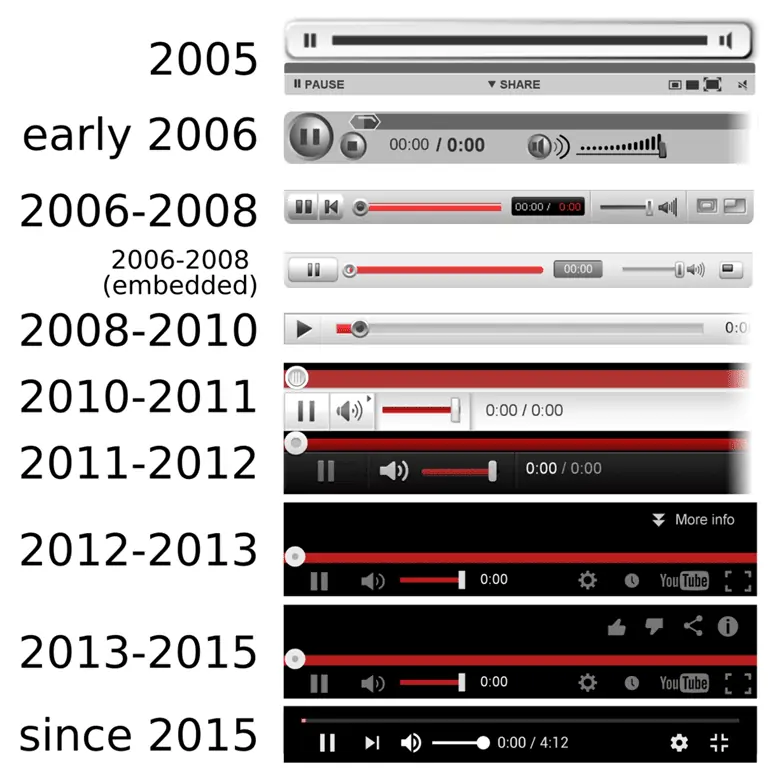
    Go On, Tell Us What You Think!

    Did we miss something? Come on! Tell us what you think of our article on endowment effect in the comments section.