Feedough Logo

Blog

  • What Is Media Planning? – Components, Objectives, & Process

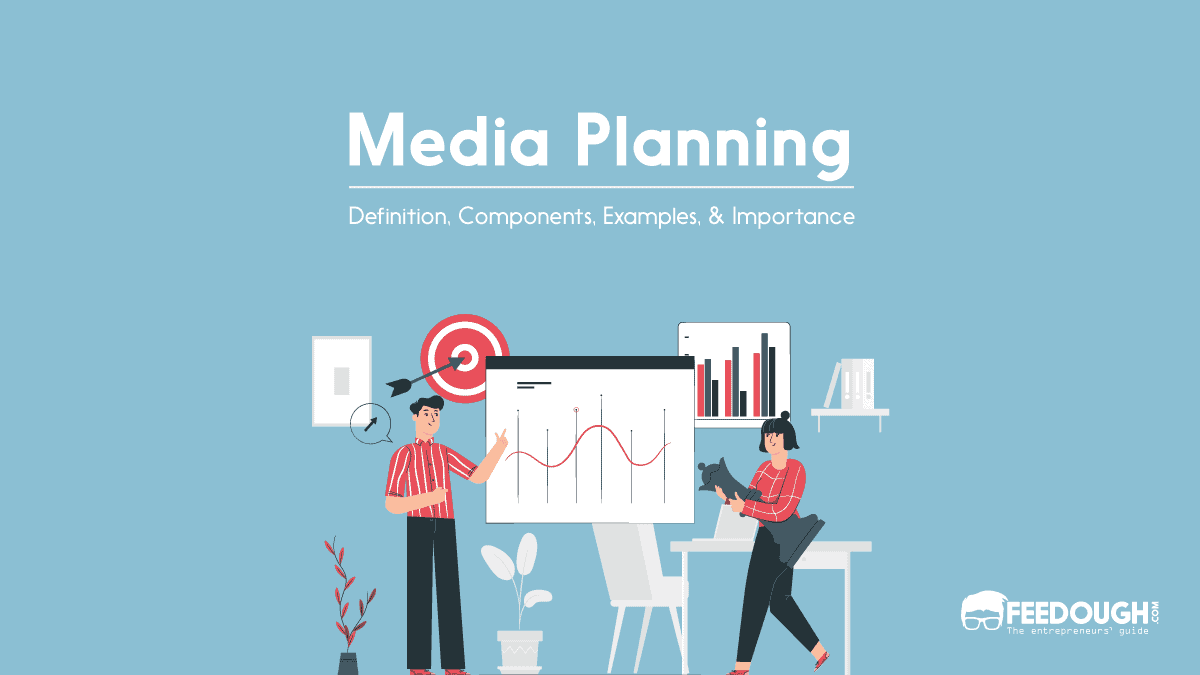
    What Is Media Planning? – Components, Objectives, & Process

    Today, marketers are spoilt with choices when it comes to media. There are the traditional touchpoints such as TV, radio, and print. Then there are the digital options such as search, social, and display.

    So, how do they decide where to allocate their precious marketing budget? This is where media planning comes in.

    But media planning isn’t just about selecting the right touchpoints. There are also many other considerations, such as the target audience, their media habits, and the business’s objectives.

    So what exactly is media planning, and how does a marketer write a media plan?

    What Is Media Planning?

    Media planning is the process of identifying the appropriate marketing mediums and channels to reach the target audience, targeting the right messages, at the right time, in the right place.

    It involves understanding the target audience, defining the message, and selecting the right channel to reach them.

    In simple terms, it includes planning what media to use, which channels to use and how much to spend to boost a company’s ROI.

    Who Is A Media Planner?

    A media planner, also referred to as a brand planner or brand strategist, is a professional working at an advertising agency, responsible for planning, buying, and placement of advertising.

    They work with advertisers, advertising agencies, and media outlets to orchestrate their clients’ most effective marketing campaigns.

    Importance Of Media Planning

    Not every marketing medium will work for every offering, brand, and industry. For example, TV might be a great way to reach an older demographic and sell FMCG products, but it will not work for a tech startup targeting Gen Z.

    This is where media planning comes in.

    It helps to match the right advertising medium with the right product. This, in turn, helps to achieve the client’s objectives while also staying within their budget.

    Objectives Of Media Planning

    The main objective of media planning is to reach the target audience with the right message at the right time and in the right place.

    Besides this, it also aims for:

    • Efficiency: Media planning aims to reduce costs by reaching the target audience with the right message through the most efficient channels.
    • Effectiveness: It also aims to increase efficacy by ensuring that the target audience is reached with the right frequency and at the right time.
    • Fulfilling Long-Term Goals: Media planning also looks at the bigger picture and strives to achieve long-term goals such as brand awareness and building relationships with customers.

    The Components Of Media Planning

    A media plan has the following main components:

    1. Target Audience: The target audience refers to a defined group of consumers or businesses that are potential customers for the business’s offering.
    2. Message: The message is the key point the business wants to communicate to the target audience.
    3. Channels: The channels refer to the specific touchpoints that will be used to reach the target audience. These can include TV, radio, print, digital, etc.
    4. Timing: The timing refers to when the message will be delivered. This includes frequency, reach, and exposure.
    5. Budget: The budget refers to the amount of money that will be allocated to the media plan.
    6. KPI: The KPI or key performance indicators are the metrics that will be used to measure the success of the media plan.

    The Media Planning Process

    The media planning process can be broken down into the following steps:

    1. Market Analysis
    2. Establishing Media Objective
    3. Media Selection
    4. Budget Allocation
    5. Message Development
    6. Media Scheduling
    7. Measurement and Evaluation

    Here’s a closer look at each of these steps:

    Market Analysis

    The first step involves researching the market to gain insights into the target audience, their media habits, and the business’s objectives. This involves studying existing data and conducting focus groups, surveys, social listening etc.

    The audience can be classified according to demographics, geography, psychographics, and behaviour.

    At the end of this step, the media planner understands the target audience’s needs, desires, challenges, etc.

    Establishing Media Objective

    The market analysis results in an understanding of the potential reach, frequency and exposure.

    Now, the media planner determines what they want to achieve with this campaign. For this, they set objectives, that could be anything from increasing brand awareness to generating leads or sales.

    But to establish this objective, the media planner needs to determine the goal for:

    • Reach: This is the number of people the marketing message will be in front of over a period of time. The industry norm is to have a minimum of 80% reach in any given month.
    • Frequency: This is how many times each person will be exposed to the campaign on average.
    • Continuity: It involves the strategy of how advertising is allocated during the campaign’s course. It can be either continuous scheduling, pulsing scheduling, or flighting scheduling.
    • Cost: This is the total cost of the campaign. It is broken down into two costs: CPM (cost per 1000 impressions) and CPP (the cost per person).
    • Penetration: This is the percentage of a target audience that will be reached or who will see the message at least once.

    Media Selection

    Once the objectives have been established, the next step is selecting the channels that will be used to reach the target audience.

    The media planner considers various factors such as:

    • Campaign objective: The type of campaign will dictate the most appropriate channels. For example, a brand awareness campaign might use TV, radio, and print, while a direct response campaign would use TV, digital, and direct mail.
    • Audience characteristics: Some channels may appeal to some demographics more than others. For example, people are more likely to use smartphones for online shopping rather than PCs or laptops. Also, certain shows on cable networks may attract a younger audience compared to prime-time shows on a network.

    Budget Allocation

    Once the channels are selected, the next step is to allocate a budget for each channel. The budget is allocated to allow the marketing message to be seen by the target audience multiple times.

    Message Development

    The message is developed keeping in mind the target audience and the objectives of the campaign.

    The developed message is clear, concise, and persuasive.

    Media Buying And Scheduling

    Media buying is the process of negotiating rates and placing ads with media outlets.

    Once bought, media is scheduled in a way that will allow the target audience to see the marketing message multiple times.

    The frequency is kept high enough so that the target audience can remember the message but not so high that they get tired of seeing it.

    Measurement And Evaluation

    Finally, the campaign is evaluated to see how effective it was in achieving its objectives. Various metrics can be used for this purpose:

    • CPM (Cost per thousand): This refers to the cost of each 1000 impressions.
    • CPP (Cost per person): This is the cost of each person who sees the ad.
    • CPA (Cost per action): This is the cost of each action taken, such as a sale or a lead.
    • ROI (Return on investment): This is the most important metric as it measures the profitability of the advertising campaign. It is the total revenue generated minus the cost of the campaign and divided by the cost of the campaign.

    Media planners keep a close eye on all these metrics to see how effective their campaign is and make necessary adjustments.

    Benefits Of Media Planning

    Media planning isn’t just about laying out which channels to use and how much budget to allocate. Many benefits come along with it, such as:

    • Allocating budget efficiently: A good media plan will allocate the budget in a way that is most efficient. This means that more people will be reached with the same amount of money.
    • Generating leads: An effective media campaign can generate leads which can be converted into customers.
    • Increasing brand awareness: Media planning can help increase brand awareness by reaching a larger number of people.
    • Improving brand image: A good media campaign can improve the brand image by showing the target audience a positive image of the product or service.
    • Building relationships with customers: An effective media campaign can help build relationships with customers by creating a connection with them.
    • Analysing customer behaviour: Media planning can help to analyse customer behaviour and understand what they want. This information can be used to improve the product or service.
    • Creating loyalty: A good media campaign can create loyalty among customers by making them feel like they are part of a community.

    Challenges Of Media Planning

    It isn’t all smooth sailing, however. Various challenges come along with media planning, such as:

    • Budget constraints: Companies may not have the funds to allocate for an effective campaign.
    • Competing brands: Brands competing in the same market will be trying to get their message across, which can make it difficult for a brand to stand out.
    • Changing trends: Trends in the media landscape are always changing, which can make it difficult to keep up.
    • Low attention span: People’s attention span is getting shorter, which means that a brand has less time to make an impression.

    Factors Affecting Media Planning

    Several factors can affect media planning, including:

    • Audience demographics: The target audience’s age, gender, income, location, etc., affect the choice of media as different channels are better suited for different demographics. For example, a younger audience is more likely to be reached through social media.
    • Audience behaviour: The target audience’s browsing and buying habits affect the choice of media. For example, someone who is always on the go is more likely to see an ad on a mobile device than someone who is always at home.
    • Product type: The type of product being advertised also affects the media choice as some products are better suited for certain channels than others. For example, a luxury product would be better advertised on more personalised channels like Google Ads, while a mass-market product would be better advertised on more public channels like newspapers.
    • Media availability: The availability of channels play a role in media planning. For example, a renowned TV channel might not have ad spaces during its prime time shows.
    • Media costs: The cost of reaching a target audience affects media planning. For example, an advertisement on television will be more expensive than advertising on the radio because television reaches a larger audience.
    • Campaign objectives: Different objectives will affect the choice of media as different channels help achieve different goals. For example, an objective might be to reach a large audience quickly, which would mean using more public channels like newspapers or radio.
    • Competition: Other players in the market also influence the choice of media and may force the business to use a similar strategy as theirs.

    Media Planning Vs Media Buying

    Media planning and media buying are two different but equally important aspects of a marketing campaign. Media planning is the process of determining which channels to use to reach the target audience, while media buying is the process of negotiating with and purchasing ad space from those channels.

    That is, media buying comes into the game after media planning has been done and involves actually purchasing the ad space.

    Compared to media buying, which can be a long and tedious process involving multiple negotiations with different stakeholders, media planning is much simpler. This is because experts in their respective fields have already decided upon the channels that are chosen during the media planning stage.

    Media Planning Examples

    Every brand that wants to advertise needs to do some media planning. The media planning process can be different for every campaign, but there are some common elements that all plans include.

    Here are some examples of media planning:

    Local Fast-Food Restaurant

    A fast-food restaurant operating in a busy city centre would probably focus on media like print and outdoor advertising since their audience is most likely to be out and about in the city. They might also choose online advertising or social media marketing to reach customers during peak meal times when they’re looking for quick but healthy options.

    SAAS Brand

    A software as a service (SAAS) brand might focus on digital media like Facebook and Google Ads since their audience is more likely to be online.

    This includes both pull and push strategies as they attract the customer through SEO and SEM keywords and then push content through digital channels.

    It might also use LinkedIn Advertising to target business professionals who require its software.

    Go On, Tell Us What You Think!

    Did we miss something? Come on! Tell us what you think about our article on media planning in the comments section.
  • How To Make Money Blogging: 10 Proven Techniques

    How To Make Money Blogging: 10 Proven Techniques

    Everybody is getting into blogging these days, and for a good reason. Blogging can be a great way to share your passions, build an audience, and even earn some money.

    While blogging started as a hobby, it has quickly turned into a viable career option for many people. In fact, there are now professional bloggers (like me) who make a living solely from their blogs.

    If you’re thinking about starting a blog or are already blogging but want to make money from it, this guide is for you. I’ll try to be your mentor blogger and answer all your queries related to making money from blogging.

    Blogging As A Career – Is It Viable?

    The answer is YES! Blogging can most definitely be a full-time career.

    In fact, there are bloggers making millions by typing out their thoughts, experiences, and knowledge on their blogs.

    However, it’s essential to understand that making money blogging is not a get-rich-quick scheme. It takes dedication, consistency, and hard work (like any other job) to make it as a blogger.

    Blogging is just like working for a digital publication or newspaper, but you do everything yourself – from content creation to site maintenance to social media outreach.

    The best part about blogging is that you can do it from anywhere in the world, as long as you have a laptop or computer and an internet connection.

    How Much Money Can You Make From Blogging?

    This is a tricky question to answer because there is no one-size-fits-all answer.

    How much money you make from your blog depends on several factors, including:

    • The niche or topic you write about,
    • The strategies you use to monetise your blog,
    • The amount of traffic your blog receives,
    • Your writing style and ability to engage your audience,
    • How consistent you are with creating new content,

    Generally speaking, it takes a lot of traffic to make a decent income from blogging. Professional bloggers typically earn $1,000 – $10,000 per month from their blogs, but this can vary greatly depending on the individual blogger.

    Money Making Strategies For Bloggers

    Like any other business, blogging doesn’t and shouldn’t rely on just one revenue stream. The best bloggers diversify their earnings by using several different money making strategies.

    Here are some of the most popular (and effective) ways to make money blogging:

    Advertisements

    One of the most common ways that bloggers make money is through advertisements. You’ve probably seen ads on many popular blogs before – they come in all shapes and sizes, from simple banner ads to sponsored widgets.

    Here’s how you can use ads to make money blogging:

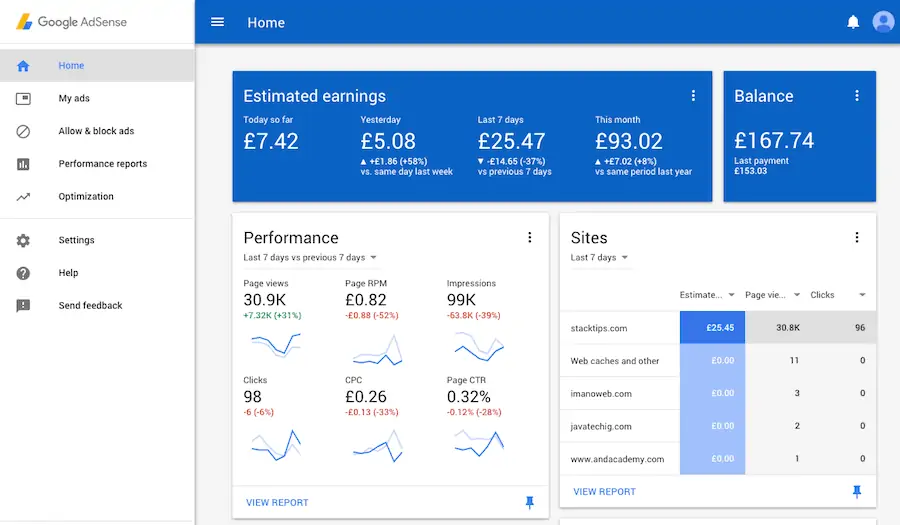
    Google Adsense & Other Ad Networks

    make money blogging with google adsense

    An advertisement network is an intermediary that connects bloggers with advertisers. The most popular ad network is Google Adsense, but there are others like Media.net and AdThrive.

    To use an ad network, you simply sign up for an account and then add a snippet of code to your blog. Once the code is added, the ad network will serve relevant ads on your blog, and you’ll earn money every time someone clicks or views an ad.

    These ad networks use three models to pay bloggers: cost-per-click (CPC), cost-per-mille (CPM), and cost-per-action (CPA).

    • CPC means that you earn a commission every time someone clicks on an ad. This is the most common way that ad networks pay bloggers. Adsense follows this.
    • CPM is short for cost per thousand. It means that you earn your revenue based on the price of 1,000 advertisement impressions. So, if an advertiser is willing to pay $10 CPM, you’ll earn $10 for every 1,000 ad impressions.
    • CPA is short for cost per action. It means that you only get paid if someone clicks on an ad and then takes a specific action, such as signing up for a newsletter or making a purchase.
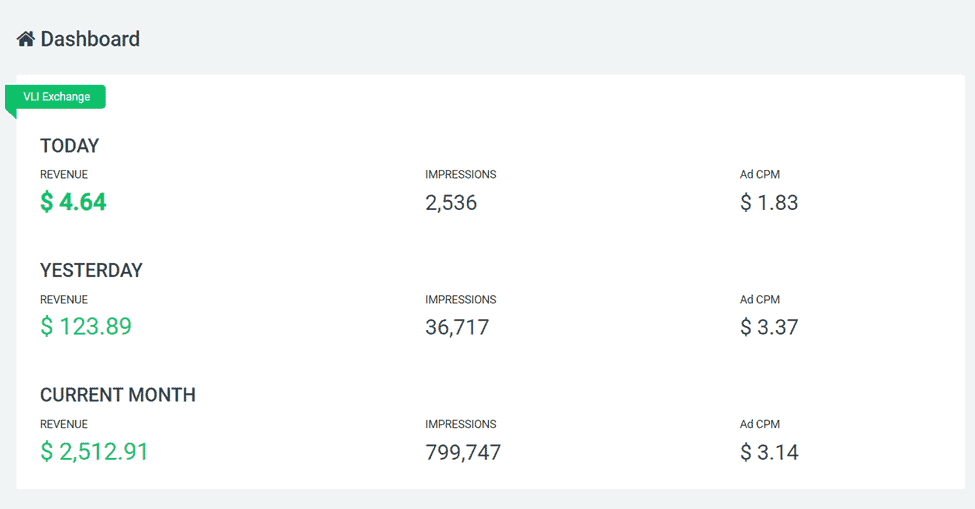
    make money blogging with ad networks

    Google Adsense isn’t the only network out there. In fact, there are many other ad networks that can be more effective (and pay more) than Adsense. But try to make sure that any partner you choose should be Google Certified Publishing Partner. Find the list here.

    Direct Advertising

    For blogs with high traffic and a loyal following, direct advertising can be an effective way to make money.

    With direct advertising, you work with companies or brands to create sponsored content or ads that are specifically designed for your blog. This means that the companies or brands will pay you a flat fee for every person that sees or clicks on the ad.

    There is no middleman involved, which means you’ll usually make more money per view or click than you would with an ad network.

    The downside of direct advertising is that it can be difficult to find advertisers that are a good fit for your blog. You also need to have a pretty large audience before companies will start approaching you with offers.

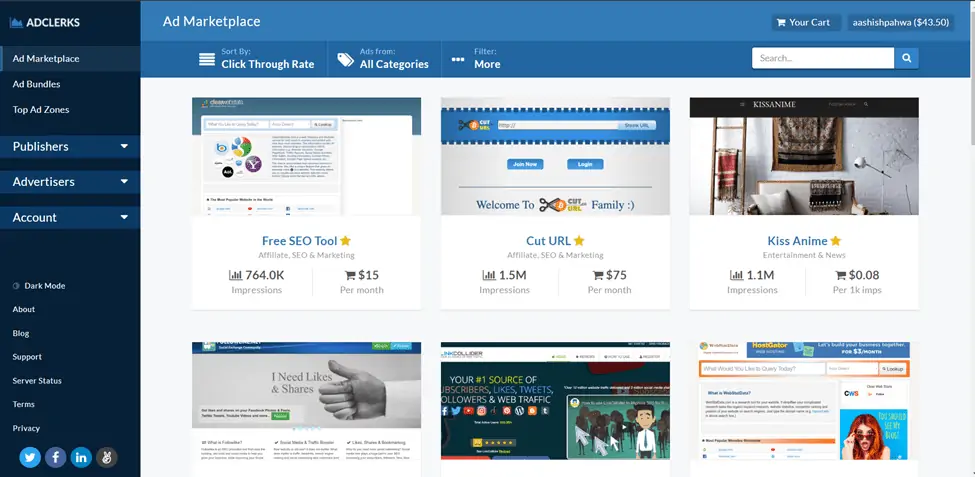
    direct advertising

    A workaround could be to find direct advertisers on advertisement marketplace like Adclerks.

    Native Advertising

    Native advertising is very similar to direct advertising but with one key difference: native ads are designed to blend in with your blog content.

    Instead of being a clearly labelled ad, native ads are designed to look like normal blog posts. This can make them more effective (and less intrusive) than traditional banner ads.

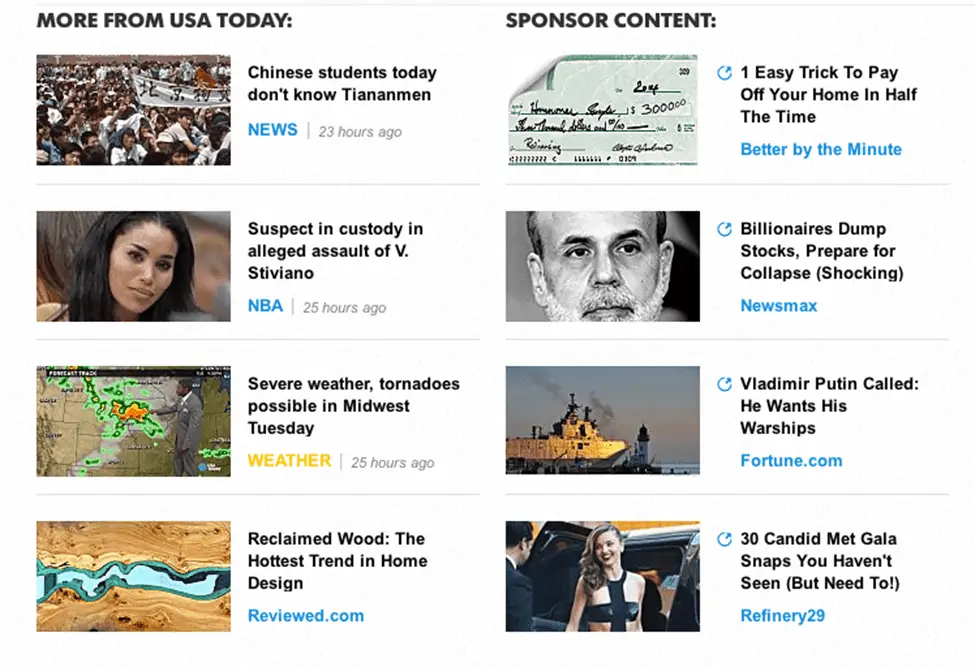
    native advertising

    The downside of native advertising is that it can hamper your reader experience by showing some unwanted ads that don’t go along with your blog. But this can be ruled out if you choose a reliable native ad network.

    Some ad networks like Taboola, Mgid, and Outbrain specialise in native advertising and can be a good place to start if you’re interested in this type of advertising.

    However, know that native advertising is not a high-paying form of advertising. The CPCs are usually quite low, so you’ll need a lot of traffic to make any decent money.

    Affiliate Marketing

    Affiliate marketing is a type of performance-based marketing in which a business rewards you, the affiliate, for each visitor or customer that you bring to their site.

    To put it simply, affiliate marketing is when you recommend a product or service to your readers and if they end up buying it, you earn a commission.

    For example, let’s say you have a blog about hiking. You could write a post about the best hiking boots and then include a link to where your readers can buy them. If someone clicks on your link and ends up buying the boots, you’ll earn a commission.

    Affiliate marketing can be often more rewarding than ads because there are brands that even offer recurring commissions, so you can earn money from the same reader multiple times.

    affiliate marketing

    To find affiliate programs, you can search in affiliate networks like:

    • CJ Affiliate
    • Impact
    • ShareASale
    • Rakuten
    • Partnerstack
    • MaxBounty

    Digital Products

    Besides ads and affiliate marketing, another way to make money from your blog is by selling digital products.

    Digital products are any type of product that can be downloaded or accessed online. This includes things like eBooks, courses, etc., that you sell from your own website.

    The great thing about digital products is that you can sell them repeatedly without having to create new inventory. This means that once you’ve put in the work to create a digital product, it can continue to generate revenue for months or even years.

    These products include:

    • Courses: Courses can be in any format, including video, audio, text, or a combination of all three. They can be offered as part of a membership site or sold individually.
    • EBooks: Ebooks are usually PDFs and can be about anything from cooking to business to dating, depending on your niche.
    • PDF Guides & SOPs: PDF guides and SOPs (standard operating procedures) are usually shorter than ebooks and can be about anything from starting a blog to fixing a leaky faucet.
    • Tools & Templates: Tools and templates can be things like Excel spreadsheets, PPT templates, etc.
    make money blogging with digital products

    The problem with digital products is that they can be time-consuming to create, and you need a large audience before you can start selling them.

    Search engine optimisation revolves around link building. This is the process of getting other websites to link back to your site.

    The reason why backlinks are important is that they’re one of the ranking factors that search engines like Google use to rank websites.

    If you have an authoritative website with high-quality content, you can start selling links on your website. A single link in an article can range from $10 to $500, depending on your website’s authority.

    But know that this strategy should only be used as a secondary income source as it can lead to your website being penalised by Google if done incorrectly.

    Services

    Your blog already has a built-in audience of people interested in what you have to say. You can leverage this by offering consulting, teaching, or coaching services.

    For example, if you’re a financial planner, you could offer your services to help people with their finances. Or, if you’re a fitness coach, you could offer online personal training.

    The great thing about combining blogs with services is that it allows you to build a personal brand and really connect with your audience. This can lead to higher-paying consulting or coaching gigs down the road.

    Sponsored Posts

    You could start charging for sponsored posts if you got a blog with decent traffic. Sponsored posts are basically when a brand pays you to write about their product or service on your blog.

    This is a great way to monetise your blog along with ads and affiliate marketing.

    Get Into Videos

    Blogging is not just about writing articles. You can also make money by creating videos and posting them on YouTube or other video sharing sites. Such platforms offer great opportunities for bloggers to build an audience and make money from their content.

    This is a great way to connect with your audience and offer them something different than just text-based content.

    Moreover, according to research, it is predicted that by 2022, videos have already taken up 82% of all Internet traffic.

    So if you’re not creating videos already, now is the time to start.

    Blog Flipping & Sales

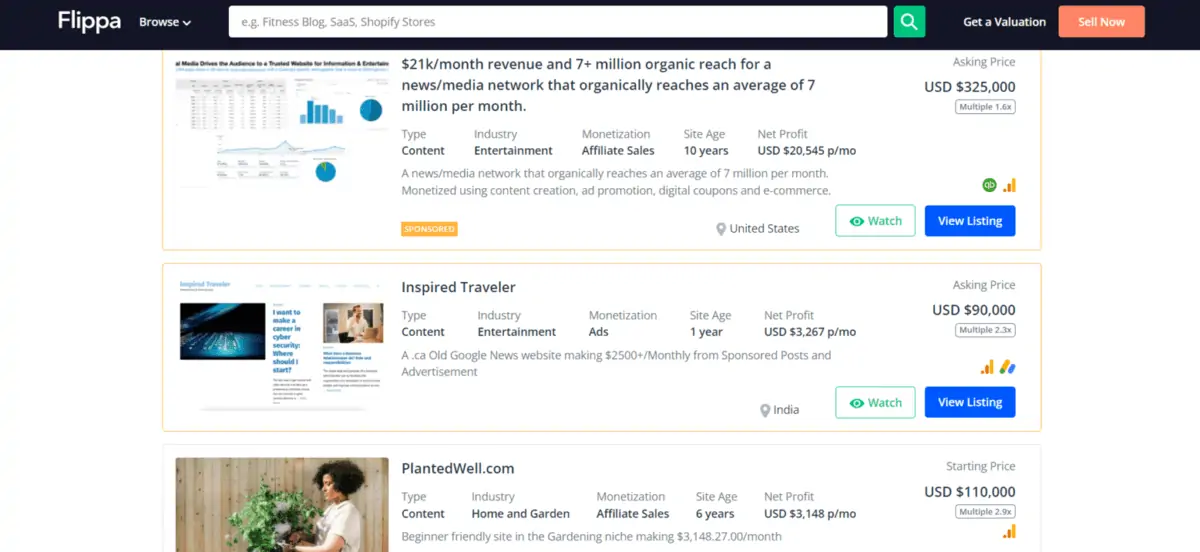
    Blogs are assets that can be bought and sold just like any other business. If you’ve built up a successful blog with a strong following, you can sell it for a profit.

    The best part?

    Blogs sell for 10x to 100x of their monthly revenue depending upon the niche and monetisation strategy (affiliate blogs sell for more). So if your blog is making $1,000/month, you could sell it for $10,000 to $100,000.

    This is a great exit strategy for those looking to cash out.

    blog flipping flippa

    You can even choose to flip some blogs where you buy an existing blog, improve it, and then sell it for a profit.

    There are several marketplaces for blogs including Flippa and Empire Flippers.

    Other Blogging FAQs

    Now that we’ve gone over the different ways you can make money from your blog, let’s answer some other common questions about blogging.

    What type of blogs make the most money?

    There are definitely some types of blogs that make more money than others. Here are a few of the most profitable niches of blogs:
    Insurance: Insurance blogs tend to be very profitable, thanks to high-paying advertisers in the space.
    Finance: Personal finance, investing, and business finance are all popular topics that people are always searching for information on. This high demand proves to be very profitable for bloggers.
    Online education: People are always looking for ways to learn new skills or improve existing ones. Moreover, with the rise of online education, this niche is only going to become more profitable.
    Travel: Everyone loves to travel, which is why blogs in this niche are so popular. If you can provide helpful information and advice about travel, you can make a lot of money from your blog.
    Health & fitness: Everyone wants to live a healthier lifestyle and people are always searching for information on how to do that. That’s why blogs in the health and fitness niche can be very profitable.
    Parenting: Parenting is another huge niche that is always in demand. It’s a great niche for an affiliate marketing blog.
    Crypto: The cryptocurrency market is booming and people are always looking for information on which coins to invest in. Besides this, it also includes some of the highest paying advertisers.
    Technology: Though highly competitive, technology is also a very profitable niche for bloggers.

    Can a beginner make money in blogging?

    Blogging is just like any other profession, in that it takes time and effort to be successful. However, if you’re willing to put in the work, it is possible for a beginner to make money in blogging.
    The best way for a beginner to make money in blogging is to start with affiliate marketing or selling digital products. Once you’ve built up your audience, you can start charging for sponsored posts or other services.

    How many views do you need to make money on a blog?

    There is no one answer to this question, as it depends on a number of factors such as your niche, the type of content you’re creating, and the monetisation strategies you’re using.
    If you rely just on advertisements to make money from your blog, you will need a lot of traffic to make a decent amount of money (more than 100,000 per month). However, you can also make money with fewer views if you use other monetisation strategies like affiliate marketing or selling digital products.

    Bottom-Line?

    Choosing blogging as a career is a great decision as it offers numerous benefits. It is a very flexible career option and can be started with little to no investment. Not to mention, the earning potential is also very high.

    But make sure to use a good mix of monetisation strategies to ensure that you make the most out of your blog.

    And more than anything, focus on your providing the best experience to your readers. After all, they are the ones that will help you make money blogging!

    Go On, Tell Us What You Think!

    Did we miss something?  Come on! Tell us what you think about our article on make money blogging in the comments section.

  • How To Make Money Freelancing: A Beginner’s Guide

    How To Make Money Freelancing: A Beginner’s Guide

    Freelancing is the new buzzword in the job market. It’s the job alternative providing all the benefits of a full-time job and entrepreneurship combined without the hassle of having to commute or work set hours. But as great as freelancing sounds, it can be hard to know where to start and how to make money freelancing.

    While there are many ways to make money freelancing, from becoming a virtual assistant to offering your services on Fiverr, some methods work better than others.

    But before we discuss any methods, let’s first understand how freelancers work and how they commit to it full-time.

    How Do Freelancers Work?

    Freelancers are sole proprietors with a distinct skill set that they offer to clients in exchange for monetary compensation.

    Unlike a traditional 9-5 job, freelancers are not employed by a single company. They are self-employed entrepreneurs who work with multiple clients on various projects on a contractual basis.

    The type of work can range from content writing and web design to social media marketing and consulting.

    The great thing about freelancing is that most of such jobs can be done entirely online. This gives freelancers the freedom to work from anywhere in the world, as long as they have a computer and an internet connection.

    Freelancers typically use marketplaces like Upwork, Fiverr, and Freelancer.com to find work. They can also look for job postings on social media platforms like Facebook and LinkedIn.

    Some freelancers also work with companies directly without going through a marketplace.

    So, if you’re someone thinking of choosing freelancing as your career, you might have some questions –

    Can you make good money being a freelancer?

    You surely can. In fact, according to a report by Ziprecruiter, the average freelancer earned $63,488 in 2019 – which is better than even the median salary of a full-time worker in the US.
    Of course, your earnings will depend on your skillset, experience, and the type of work you’re doing. But it is worth noting that even entry-level freelancers can make a good income if they play their cards right.

    What is the most profitable freelance job?

    The most profitable freelance job is the job you’re skilled at and enjoy doing. But if we had to choose one, the most profitable freelancing job would be programming and software development.
    Other high-paying freelance jobs include motion graphics, graphic design, social media specialist, and copywriting.

    Which skill is best for freelancing?

    Any skill that complements the niche you want to freelance in is a great skill to have. For example, if you’re going to be a freelance writer, some skills that would complement your writing and help you succeed as a freelancer are SEO knowledge, copywriting, and social media marketing.

    How can a beginner start freelancing?

    There are many ways to get started with freelancing, but the most common way is to start by finding work on a marketplace like Upwork, Fiverr, or Freelancer.com.
    Another great way to get started is by reaching out to companies directly and pitching your services.

    How To Start Making Money From Freelancing?

    Freelancing is just like running any other business. The only difference is that instead of selling products, you sell services.

    The art of making money freelancing is in finding the right mix of clients, services, and prices.

    Here is the roadmap you can use to make money freelancing:

    Choose Your Niche

    While the idea of freelancing can make you think you can do any paid work on freelance marketplaces like Upwork, that’s not necessarily the case.

    You can’t just be a jack of all trades and expect to make good money freelancing. You need to identify your niche and focus on becoming an expert in that area.

    Find a niche that you’re passionate about and have some experience in. It could be anything from social media marketing to copywriting to web development.

    The key is to identify a niche that has a good potential for growth and where you can add value with your specific skill set.

    For example, if you’re a web developer, you can focus on becoming a WordPress expert or specialising in ecommerce business development.

    Or if you’re a graphic designer, you can focus on creating logos or developing brand identity kits.

    The point is to choose a niche that you can realistically commit to and build a strong reputation in.

    Zero In On The Services You’ll Offer

    The next step is to zero in on the services you’ll offer. You can start by making a list of all the services you’re comfortable offering.

    Once you have a list, you need to assess which of these services are in high demand and where you can add the most value.

    For example, if you’re a web developer, you can offer services like website development, WordPress development, ecommerce development, etc.

    But not all of these services are created equal. Some are in higher demand than others and will fetch you a higher rate.

    To find out which services are in high demand, you can use job sites like Upwork and Freelancer.com.

    Check out the job postings and see which services are being commonly requested by clients. You can also ask around in relevant Facebook groups and LinkedIn groups to get an idea of what services are currently in demand.

    Once you have a good idea of the services in high demand, you need to assess your skillset and see which of these services you’re actually good at.

    There’s no point in offering a service that you’re not confident you can deliver.

    Develop Your Ideal Customer Persona

    Before you head over to pitching your services to clients, you need to develop your ideal customer persona.

    A customer persona is basically a fictional representation of your target client. It includes details like the age, gender, location, profession, interests, etc., of who will be your ideal client.

    Creating a customer persona will help you zero in on the types of clients you want to work with. Once you know your target customer, it becomes much easier to find and pitch to them.

    To develop your customer persona, start by making a list of your ideal client’s characteristics. This could include things like their age, gender, location, interests, etc.

    Once you have a list of all the characteristics, you need to create a fictional representation of this person.

    For example, your ideal client could be a young (25-30-year-old) female entrepreneur in the United States who is passionate about technology but has a limited budget.

    Once you have your ideal customer persona fleshed out, it becomes really easy and efficient to target clients that fit this persona.

    Develop Your Portfolio

    Your portfolio is one of the most important things you need to have before starting freelancing.

    It is basically a collection of your previous work that you can show to prospective clients. It’s a great way to showcase your skills and give clients an idea of what you’re capable of.

    If you don’t have a portfolio, it’s going to be really difficult to get clients to take you seriously.

    The good news is that developing a portfolio is not as difficult as it sounds. If you don’t have any previous work to show, you can always create some sample projects.

    The best part?

    You already have a customer persona in place. So you can create sample projects that are in line with the type of work your ideal client would be interested in.

    For example, if your ideal client is a small business owner, you can create a sample website or design a logo for a small business depending on the services you plan to offer.

    These days new freelancers build their portfolio by providing free or highly subsidised gigs and marketing the same on community platforms like Reddit and Facebook.

    This is a great way to get your first few clients (you can always upsell or cross-sell your services) and build a strong portfolio at the same time.

    Develop Your Offerings

    Developing your offerings isn’t about randomly picking a bunch of services and putting them together.

    You need to be strategic about it.

    Plan how much you should charge for each service, what type of services you’re going to offer, and how you’re going to package them together.

    To do this, do market research.

    Check out what other freelancers in your space are charging for similar services. If you find that you’re significantly cheaper or more expensive than the competition, adjust your prices or offerings accordingly.

    You can also look at what type of services are in demand and see if there’s a way you can package them together to create a unique offering.

    Once done, you’re ready to pitch to your potential clients.

    Pitch Clients

    Whether you’re finding clients on outsourcing websites like Fiverr or social media platforms like Linkedin, you need to have a great pitch if you want to stand out from the crowd and get the gig.

    Your pitch should be short, sweet, and to the point. It should give clients a good idea of your skillset and what you can do for them.

    But most importantly, it should be tailored to the specific client you’re pitching.

    1. Start with finding prospective clients that match your ideal customer persona. For this, you can:
    2. Browse through the posted gigs on Fiverr, Freelancer.com, Outsourcely, etc.
    3. Connect with people on Linkedin that match your ideal customer persona. You can use Sales Navigator to find these people.
    4. Scrape Twitter/Facebook groups and community/niche-related websites and get their contact details using services like Hunter.io.
    5. Once you have a list of prospective clients, it’s time to start pitching them.

    When crafting your pitch, make sure you:

    • Be a bit personal: Do your research and find something you have in common with the client. It could be a shared interest, alma mater, or anything else. This will help you connect with the client on a personal level and make your pitch more effective. You can even talk about their venture and how you like what they do. But note that even personalisation can sound robotic if repeated by every other person pitching. Hence, try not to use a template for a pitch.
    • Keep it short and sweet: No one likes to read a long-winded email. So keep your pitch short and to the point. The client should be able to understand what you do and how you can help them in just a few seconds.
    • Focus on the client: It’s important to make the client feel like your pitch is all about them. So focus on their needs and requirements. Talk about how you can help them achieve their goals.
    • Show your research: The client should be able to see that you have done your research. Mention the pain points of their venture and how you can help resolve them.
    • Provide free suggestions and tips: You can win the client over by offering free suggestions and tips. This will show that you’re an expert in your field and that you’re genuinely interested in helping the client.
    • Use a CTA: Always end your pitch with a CTA (call-to-action). This could be asking the client to schedule a call with you or sending over a proposal. Just know that your pitch’s aim is not to lead to sales instantly but to make them start a conversation with you.

    Money Making Strategies For Freelancers

    There’s no one size fits all when discussing the freelancer business model. Some freelancers make money by offering recurring services, some make money through gigs, and some make money by drop servicing.

    Let’s take a look at some of the most popular money making strategies for freelancers:

    Retainer Model

    A retainer is a recurring fee that a client pays you for your services. This is one of the most popular business models for freelancers as it provides them with a steady income.

    It differs from project-based work as you’re not paid for the number of hours you work but for the results you deliver.

    The best part?

    Most retainers are recurring. So once you win a client, you can expect to receive regular payments from them.

    However, finding such clients require credibility and a strong portfolio. But once you have a few good clients, you can easily scale your freelancing business.

    Gigs

    Gigs are one-time projects that you complete for a client. These are usually small tasks that can be completed within a short time frame.

    Gig platforms like Fiverr, Upwork, and PeoplePerHour are a great way to find such projects.

    Gigs are great for new freelancers as they provide an opportunity to build a strong portfolio. Once you have completed a few gigs successfully, you can start charging more for your services.

    Drop Servicing

    Drop servicing is a business model in which you outsource the work to someone else and charge a mark-up fee.

    For example, let’s say you’re a web designer. A client approaches you and asks you to design a website for them.

    Now, instead of designing the website yourself, you can outsource it to someone else at a lower rate. Once the work is completed, you deliver it to the client under your own name and charge them your own fee.

    This business model is great for new freelancers as it doesn’t require any skills or experience. All you need is a list of service providers and the ability to find clients.

    Affiliate Marketing

    Affiliate marketing is a performance-based marketing model in which you promote someone else’s product or service and earn a commission on every sale you make.

    As a freelancer, affiliate marketing could be a great side hustle to make some extra income.

    For example, let’s say you’re a web designer and you come across a hosting company that you think would be a great fit for your clients.

    You can then sign up for their affiliate program and start promoting their services. Every time a client buys hosting through your affiliate link, you earn a commission.

    This is a great way to make money without having to put in much effort. All you need is a strong network of clients and the ability to promote products or services effectively.

    Bottom-Line?

    Making money freelancing is not as difficult as it seems. There are a number of ways you can do it, depending on your skills and experience.

    But make sure you always deliver quality work to your clients, regardless of the business model you choose. Because at the end of the day, it’s the quality of your work that will determine whether you’re successful as a freelancer or not.

    Go On, Tell Us What You Think!

    Did we miss something?  Come on! Tell us what you think about our article on make money freelancing in the comments section.
  • What Is A Press Release? – Importance, Types, & Examples

    What Is A Press Release? – Importance, Types, & Examples

    Media coverage is one of the most effective tools in an organisation’s marketing arsenal. Whether promoting a new product or service, raising awareness for a cause, or sharing important company news, media coverage can help spread the word and reach key audiences.

    But how do brands get media coverage? One common and effective method is through a press release.

    What Is A Press Release?

    A press release is a formal announcement made by a business sharing newsworthy information relating to its latest business development with the media and other interested parties with the aim to generate press coverage.

    Simplifying this definition of press release gives four key phrases

    • A formal announcement made by a business: A press release involves a formal and professional communication of business news. This is done by using a specified format that includes key details such as the dateline, header, and boilerplate.
    • Sharing newsworthy information relating to business development: The news shared in a press release is newsworthy and interesting enough to catch media attention.
    • Sending it to media and other interested parties: The press release is distributed to media and other interested parties who the business deems to be relevant to their announcement.
    • Aiming to generate press coverage: The whole point of a press release is to generate media coverage that will help promote the business and its latest developments.

    Also referred to as a media release, news release, and press statement, a press release is typically written by a company’s marketing or public relations team and sent to media outlets, such as newspapers, magazines, radio stations, television stations, and websites.

    These press releases can be used to promote a wide range of news, including new product or service launches, company milestones, events, awards, official statements, and more.

    When well-written and distributed to the right media outlets, a press release can help build buzz, generate leads, and even drive website traffic.

    Reasons For A Press Release

    Companies release press releases for a variety of reasons. The most common reasons are

    • Product announcement: Whenever a company launches a new product, it will often release a press release to generate media coverage and help build buzz around the product.
    • Company announcement: Details relating to restructuring, relocation, partnerships, financial news, and other company updates are shared through a press release.
    • Event announcement: If a company is hosting, sponsoring, or attending an event, it may release a press release to generate interest and drive attendance.
    • Initiative announcement: A company may release a press release to promote a new initiative or campaign. For example, a clothing brand may release a press release to promote its latest sustainable fashion collection. CSR initiatives are also often promoted through press releases.
    • Award announcement: Winning an award is a great way to build credibility and generate positive media coverage. As such, companies will often release press releases when they win awards.
    • Employee announcement: Hiring a new executive or announcing employee promotions are examples of news that may be shared through a press release.
    • Research announcement: Often, companies will release press releases to share their latest research or study findings.

    How Does A Press Release Work?

    Journalists and media outlets are always on the lookout for new and interesting stories to share with their audiences.

    Press releases help them find these stories by providing them with all the information they need in one place.

    Here’s an example scenario of how press releases work:

    • A company starts a CSR initiative and wants to generate media coverage to promote it.
    • The company’s marketing team creates a press release about the initiative and distributes it to relevant media outlets.
    • A journalist at one of these outlets reads the press release and decides it would make for an interesting story.
    • The journalist contacts the company for more information and an interview.
    • This journalist then writes an article about the company’s CSR initiative and publishes it on their website.
    • The article helps raise awareness for the initiative and helps the company build its brand equity, all for free.

    Importance Of A Press Release

    In this age of digital marketing, press releases are still an important part of any public relations or marketing strategy. This is because it is one of the easiest and most cost-effective ways to generate media coverage.

    • Engages Media: A press release is a great way to reach out to journalists and other media professionals. It helps a business get its story in front of the people who are most likely to write about it. Without a press release, a company would have to rely on its own network of contacts to get its story into the media.
    • Builds relationships: A press release can also help businesses build and nurture relationships with journalists, bloggers, and other influencers. These relationships are important because they can help a business generate future media coverage.
    • Gets the word out: A press release is an effective way to get the word out about a company’s products, services, or events. It can help a business generate interest and awareness among its target customers.
    • Helps manage crisis effectively: In the event of a crisis, a press release can help a company control the story. A company can prevent negative media coverage from spinning out of control by getting its side of the story out there first.

    Types Of Press Releases

    Press releases can be innumerable. Any business development, event, product launch, new service, etc., that a company wants to communicate to its target audience can be done through a press release. However, some common types of press releases are used more often than others. These are:

    • Event press release: An event press release is used to promote a newsworthy event a company is hosting, attending, or sponsoring. Such a press release aims to increase the awareness and footfall of the event and generate media coverage.
    • Product launch press release: A product press release is used to promote a new product or service a company is launching. These are a good way to generate media coverage and build buzz around a new product.
    • Business launch press release: A business launch press release promotes a new company or business venture. The aim of such a press release is to generate media coverage and interest among potential customers and investors by showcasing the team behind the project and what they offer to the public.
    • Merger & acquisition press release: A company releases a merger & acquisition press release to announce a merger or acquisition. It’s an important release as it can significantly impact the company’s share price and image.
    • Rebranding: A company releases a rebranding press release to announce a change in its name, logo, or brand identity. Such a press release aims to inform the public about the change and generate media coverage around the step it took.
    • Financial results press release: A company releases a financial results press release to announce its quarterly or yearly financial results. It’s often required by the law, depending on the country the company is based in. The financial results press release aims to generate media coverage and interest among potential investors.
    • New hire or expert hire press release: A company releases a new hire or expert hire press release to announce hiring a new employee or an expert in a particular field. This often results in the company being the talk of the town in the industry, and it might help them generate some good media coverage.
    • Partnership release: A company releases a partnership press release to announce a new partnership or joint venture. Such a press release aims to inform the public about new interests and generate media coverage and interest among potential customers and employees.
    • Awards press release: Awards releases are the company’s way of bragging about the awards and recognition they have received. The awards press release aims to establish the business as an authority in its industry and build brand equity.

    Characteristics Of A Press Release

    A press release is characterised by certain elements that make it newsworthy and attract media attention. Here are some of the key characteristics of a press release:

    • Newsworthy: A press release is newsworthy, i.e., it is of interest to the media and its audience.
    • Timeliness: A press release is timely, i.e., it is released at a time when it is relevant and is of interest to the media and its audience.
    • Relevance: Relevancy means the press release is about something relevant to the media outlet’s audience. For example, sports content for a sports publication.
    • Well-written: The press release is well-written and free of errors. It is clear, concise, and to the point, including relevant information.
    • Right format: The press release follows the standard press release format and includes all the essential elements of a press release.
    • Factually true: The press release is factually true and accurate. It is not misleading or contains false information.

    What Is The Purpose Of A Press Release?

    The objective of a press release is to generate media coverage and build buzz around a company, product, or event.

    It’s an earned media tool that businesses use to create awareness, generate leads, or even drive sales without paying for it.

    A press release is one of the most efficient and cost-effective ways to get a story published in numerable media outlets that sounds natural and more appealing to the target audience.

    A press release can help the business achieve its marketing goals and earned media objectives when done right.

    Elements & Format Of A Press Release

    A press release traditionally contains the following seven elements:

    press release format
    1. Logo: The logo of the company issuing the press release. It signifies that the company is the source of information in the release. Usually, a business includes a 200×200 pixel version of its logo so that the journalists can easily insert it in their reports.
    2. Contact information: The name, email address, and phone number of the person who wrote the press release. This is so that media representatives can get in touch with them for more information.
    3. Release date and Dateline: The dateline contains the date when the press release should be published. It is typically placed at the top of the document, before the headline with an aim to indicate whether the business wants its press release to be published immediately or at a later date.
    4. Headline: A catchy headline that accurately reflects the content of the press release. It aims to grab the attention of media outlets and journalists in less than six words (65-to-80 characters). It’s a practice to use a 14 point size, bold font for the headline and keep it centred.
    5. Subheadline: A secondary headline that provides more information about the press release. It aims to elaborate on the headline without giving too much away. It is usually limited to 120 characters and is placed immediately below the headline.
    6. Place stamp and date: A press release’s body traditionally starts with a place stamp and date. The place stamp indicates the city where the press release originated from and the date indicates when the press release was issued. These are often highlighted by being bold or in all caps before the main body.
    7. Introduction: The introduction contains the most important information in the press release. It answers the who, what, where, when, and why of the story. This paragraph often sticks to the facts, is single-spaced, and uses a regular 12-point Arial or Times New Roman Font.
    8. Body: Body paragraphs provide additional details about the story. They typically contain quotes from company representatives, data, and statistics within 300 to 400 words long, and follow the AP style guidelines.
    9. Boilerplate: The boilerplate is a short paragraph that contains information about the company, such as its history, mission statement, and contact details. It is placed at the end of the press release so that media outlets can easily find it.
    10. Media Contact: The media contact, also called the end notation, is a person at the company who is responsible for fielding media inquiries. This information is typically included at the end of the press release after the boilerplate.

    A press release often also includes a call to action, such as inviting media outlets and journalists to attend an event or visit a website.

    Press Release Examples

    Press releases come in all shapes and sizes, but there are some common elements that all press releases share.

    Here are some examples of press releases:

    Blackberry Partnership With Baidu

    blackberry press release

    A perfect partnership release where Blackberry partners with Baidu, China’s largest search engine company. The release covers all the key points such as what the partnership will entail, quotes from both parties, and how it will benefit consumers.

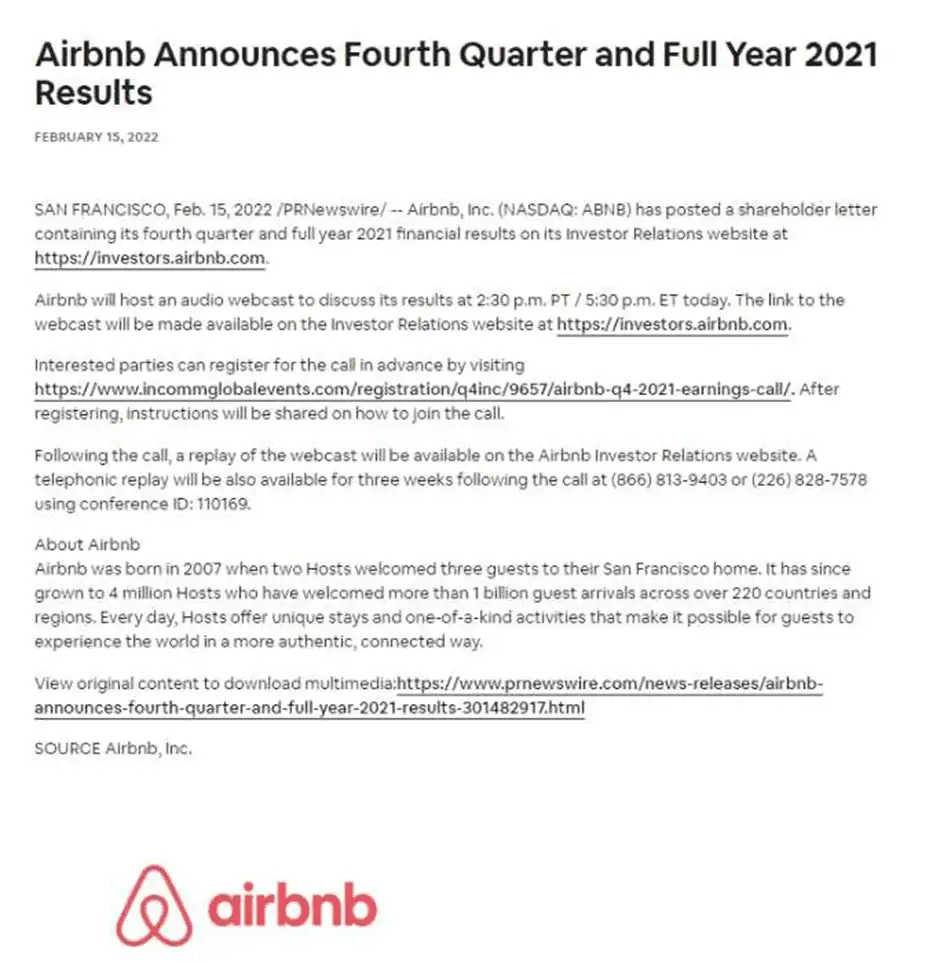
    Airbnb Financial Release

    airbnb press release

    Airbnb has a defined portal where it publishes its press releases. This release outlines its financials for the year 2021 to comply with the law pertaining to public companies.

    The release has all the key information, such as where one can find the financials, how to get access, etc.

    General Motors Partnership Press Release

    general motos press release

    General Motors is a renowned car manufacturing company. This press release talks about its partnership agreement with PSA Peugeot Citroen along with the prospective benefits of such a partnership.

    Go On, Tell Us What You Think!

    Did we miss something? Come on! Tell us what you think about our article in the comments section.

  • Startup Founder & Cofounder FAQs: Everything You Should Know

    Startup Founder & Cofounder FAQs: Everything You Should Know

    It all starts with a person with an idea. Let’s believe this person is you. You have an idea for a startup. You want to turn this idea into a reality or might have already started working on it. But you have questions – about being a startup founder and finding a perfect cofounder for your venture.

    This guide seeks to answer some of the most frequently asked questions when it comes to startup founders and cofounders.

    But before we start –

    What Is A Startup Founder?

    A startup founder is an entrepreneur who starts a company from scratch with the goal of turning it into a profitable enterprise. They take on the risks and responsibilities of building the business, including financial, legal, and personnel risks.

    What Is A Startup Cofounder?

    A startup cofounder is a business founding partner who helps launch and grow a new company. Cofounders typically share an entrepreneurial vision and work together from the early days (if not the start) to turn the company into a success. They may have different areas of expertise, but they should complement each other’s skillsets.

    Now, there’s a clear distinction between a founder and a cofounder. A founder is the original creator of the company (the person who came up with the idea), while a cofounder is someone who comes on board to help grow the business.

    Is Startup Founder The CEO?

    The startup founder is not a job position like CEO, CTO, etc. The title of a startup founder is given to the person who had the original idea for the company and is responsible for its overall vision and strategy. They may or may not be the CEO.

    In a usual scenario, the startup founder is the CEO in the company’s early days. But as the business grows, they may hire a professional CEO to take over the reins and focus on other aspects of the business.

    What’s The Difference Between A Startup Founder And An Entrepreneur?

    All startup founders are entrepreneurs, but not all entrepreneurs are startup founders.

    An entrepreneur is someone who starts and runs a business intending to make a profit. They take on financial risks in the hope of earning a return on investment.

    A startup founder is an entrepreneur who starts a startup from scratch to turn it into a profitable enterprise with a hockey stick growth chart. This startup is marked by disruptive innovation and is developed to solve a problem under extreme uncertainty.

    In simple terms, a startup founder is an entrepreneur who starts a more risky business by disrupting an entire market or creating a new market.

    What Does A Startup Founder Do?

    The primary responsibility of a startup founder is to get the ball rolling. This includes coming up with the initial idea, putting together a team, building the product, and raising capital. Once the business is up and running, the founder’s role will evolve depending on the company’s needs and their skillset.

    For example, a founder who’s great at marketing may focus on growth and scaling and handle the marketing department by taking the title of CMO. In contrast, a technical founder may focus on product development and become the CTO.

    How Do I Find A Cofounder For My Startup?

    There’s no simple answer to this question. It depends on your business, your idea, and your network.

    The best way to find a cofounder is to start with your inner circle – friends, family, colleagues, etc. These people know you and your work ethic, and you can trust them.

    If you can’t find a cofounder within your inner circle, the next best option is to look for someone with complementary skillsets. For example, if you’re a technical founder, you might want to find a cofounder with sales and marketing experience.

    Once you’ve identified a potential cofounder, the best way to assess compatibility is to work together on a small project. This will allow you to see how well you work together and whether you share the same vision for the company.

    If you’re still having trouble finding a cofounder, there are online platforms and events (like startup weekends) where you can meet other entrepreneurs and pitch your idea.

    What Are The Benefits Of Having A Cofounder?

    There are many benefits of having a cofounder, including:

    • More brainpower to solve problems and make better decisions
    • Increased chances of success (studies have shown that startups with cofounders are more likely to succeed than those without)
    • Shared workload and responsibilities
    • Different perspectives and skillsets
    • A built-in support system

    How Many Cofounders Should I Have?

    There’s no one answer to this question. It depends on your business, your idea, and your personal preferences.

    Some startups have one cofounder, while others have two or more. There are even companies with 10+ cofounders!

    The important thing is to make sure that you have the right mix of skills and personalities and that everyone is on the same page in terms of the company’s vision.

    How To Make Sure Cofounder Stays Committed?

    The best way to make sure your cofounder stays committed is to clearly understand each other’s roles and responsibilities from the beginning. This includes defining everyone’s equity stake, setting expectations for work hours and vacations, and creating a plan for what happens if one person wants to leave the company.

    It is also important to keep everyone’s shares vested so that no one can simply walk away from the company.

    Founder vesting is a common practice in the startup world, and it typically works like this:

    • The founder(s) each get a certain number of shares when the company is founded.
    • These shares vest over time (usually four years), meaning the founder(s) earn them gradually as they stick around and contribute to the company.
    • If a founder leaves the company before their shares are fully vested, they forfeit the unvested shares.
    • This system aligns everyone’s interests and ensures that everyone is invested in the long-term success of the company.

    What Happens If A Cofounder Leaves The Company?

    If a cofounder leaves the company without his shares fully vested, he forfeits the unvested shares.

    The remaining cofounders can then decide what to do with the forfeited shares. One option is to give them to another employee who has been with the company for a long time and has contributed greatly to its success.

    Another option is to keep the shares within the founding team so that the team still has a majority stake in the company.

    The important thing is to have a plan in place so that everyone knows what will happen if a cofounder leaves. This way, there are no surprises, and everyone can continue working together towards the company’s goals.

    Another scenario is what if the company didn’t vest the cofounder’s shares? In this case, the cofounder would own their shares outright and could simply walk away from the company at any time.

    This is why it’s so important to have a vesting schedule in place. It ensures that everyone is committed to the company’s long-term success and gives everyone a vested interest in its success.

    What Contracts Should Founders And Cofounders Sign Before Starting Up?

    Before starting up, founders and cofounders need to sign several contracts, including:

    • The Founders’ Agreement: This agreement sets forth the roles and responsibilities of each founder and the company’s equity split.
    • The Employment Agreement: This agreement sets forth the terms of employment for each founder, including salary, benefits, and equity.
    • The Intellectual Property Assignment Agreement: This agreement assigns all intellectual property created by the founders to the company. It helps to protect the company’s intellectual property if a founder leaves the company.
    • The Confidentiality Agreement: This agreement requires each founder to keep all confidential information about the company, such as its business plan and financials, private.
    • The Non-Compete Agreement: This agreement prevents the founders from competing with the company for some time after they leave.

    By signing these agreements, the founders are protecting the company and ensuring that everyone is on the same page in terms of the company’s goals and objectives.

    How To Split Equity Among Cofounders?

    The most important thing to remember when splitting equity among founders is that it should be done in a way that aligns everyone’s interests.

    One common way to do this is to give each founder an equal number of shares. This ensures that everyone has an equal say in the company’s decision-making process.

    Another way to split equity is to give each founder a percentage of the company based on their contribution to the business. For example, if one founder comes up with the idea for the business and another founder builds the website, they might each receive a different percentage of the company.

    However, understand that uneven equity splits can often lead to conflict among the founders and it is hard to assess each founder’s contribution to the business. Therefore, it is often best to give each cofounder an equal number of shares as:

    • A startup isn’t built in a day: It takes time, effort, and dedication from everyone involved.
    • Different skills are needed at different stages: Not everyone needs to be involved in every aspect of the business.
    • The equity split should align everyone’s interests: It should incentivise everyone to work towards the company’s success.
    • Cofounders are not employees: They are your partners and should be treated as such.

    How Much Salary Does A Startup Founder Get?

    It depends.

    In some cases, the founder(s) may not take a salary at all in the early stages of the company. This is because the company is trying to save money and grow as quickly as possible.

    In other cases, the founder(s) may take a small salary, but it depends on:

    • The state of cash flows: If the company is doing well and has a lot of cash, then the founders may take a higher salary. If the company is struggling to make ends meet, then the founders may take a lower salary.
    • The stage of the company: In the early stages of a startup, the founder(s) may take a lower salary so that they can reinvest the money back into the company. As the company grows and becomes more successful, the founder(s) may take a higher salary.
    • The equity stake: If the founders own a large percentage of the company, they may take a lower salary to compensate for their equity stake.
    • The industry standards: In some industries, it is more common for the founder(s) to take a salary than in others.

    Ultimately, it depends on the situation and what is best for the company.

    Can You Fire A Startup Cofounder?

    There are times when it may be necessary to fire a cofounder, such as if they are not contributing to the company or if they are causing problems.

    However, it is important to consider the implications of firing a cofounder before taking any action.

    For example, if the cofounder owns a large percentage of the company, then firing would be of no use as the person will just cease being an employee and still own their shares.

    It is also important to consider the impact that firing a cofounder could have on morale and motivation. If the remaining founders feel like they can’t trust each other, it could be very difficult to move forward.

    However, it’s crucial to the company’s success to fire a cofounder in some cases. To save yourself from such a scenario, make sure to have a good vesting schedule in place to get enough time to assess a person’s contribution before they fully vest.

    But if they already own a good percentage of shares, then you might have only one choice – buy them out. You need to negotiate a fair price to both parties and make sure that the terms of the buyout are clearly laid out in a contract.

    How To Avoid Conflict With Cofounders?

    Conflicts between cofounders are inevitable. However, there are some things that you can do to avoid or minimise conflict.

    • Communicate openly and frequently.
    • Be clear about roles and responsibilities from the start. Include them in the founding documents.
    • Keep an open mind and be willing to compromise.
    • Be honest with each other.
    • Make sure that you are on the same page in terms of the company’s goals and objectives.
    • Put everything in writing. This includes equity split, roles and responsibilities, decision-making process, etc.
    • Have regular check-ins and review sessions.

    While these tips may not completely prevent conflict, they can help to minimise it.

    Go On, Tell Us What You Think!

    Did we miss something?  Come on! Tell us what you think about our article on startup founders and cofounders in the comments section.

  • What Is Digital Economy? – Importance, Types, Examples

    What Is Digital Economy? – Importance, Types, Examples

    The world has become digital and so has the economy. The digital economy is the result of the transformation of traditional economic activities, products, and services into digital form. It’s based on the internet and supported by electronic means.

    The digital transformation of the economy has led to the creation of new business models, new products and services, and new ways of doing business. This digital economy is growing at a rapid pace and is expected to continue to do so in the coming years.

    But what is the digital economy? And how does it work?

    To know that, one must understand what an economy is. An economy is a system that produces and distributes goods and services in an effort to satisfy the needs of society.

    The digital economy is what we get when the traditional methods and activities of an economy are digitised or when new economic activities that are only possible because of the internet and digital technologies emerge.

    What Is Digital Economy?

    The digital economy is the economy resulting from the digital transformation of traditional economic activities powered by the internet, electronic means, and data.

    In simple terms, it’s the economy that exists when the traditional economy capitalises on technological change leading to the exchange of new offerings and the creation of new business models and markets.

    This digital transformation is driven by the following:

    • The internet – The internet has taken over the world and transformed how we live, work, and play. It’s created a global market for goods and services and made it possible for businesses to reach new markets and customers.
    • Electronic means – The digital economy is powered by electronic means such as computers, smartphones, and other digital devices like smart TVs, wearable devices, and so on.
    • Data – Data is the lifeblood of the digital economy. It’s used to create new products and services, make decisions, target customers, and much more.

    The digital economy is the result of billions of daily connections between people, businesses, devices, and data. It’s a global, interconnected economy that’s not limited by geographical boundaries.

    How Does the Digital Economy Work?

    The digital economy works similarly to the traditional economy but with a few key differences.

    Like the traditional economy, the businesses in the digital economy produce goods and services exchanged for money. The difference is that the products, channels, and currency are digitised in the digital economy.

    For instance, in the traditional economy, one might buy a physical product like a book from a brick-and-mortar store in exchange for currency notes. In the digital economy, the same person can purchase an e-book from an online store and pay for it using a digital currency or a cryptoasset like Bitcoin.

    The way businesses operate has also changed. Businesses would rely on print advertisements and word-of-mouth to reach their target audience in the past. But in the digital economy, businesses can use social media, search engine optimisation (SEO), and other digital marketing techniques to reach their target market.

    Components Of The Digital Economy

    Thomas Mesenbourghg, an American statistician and economist, has identified three key components of the digital economy. They are:

    • E-Business Infrastructure: This refers to the electronic systems that businesses use to conduct their operations. This includes the hardware, software, networks, and data storage systems.
    • E-Business: It is the conduct of business activities through the use of electronic systems. This includes the processes of buying and selling and the marketing, production, and delivery of goods and services digitally.
    • E-Commerce: This is the buying and selling of goods and services through electronic systems. This includes exchanging money, goods, and services between businesses and consumers.

    However, today’s digital economy is much more complex and goes beyond these three components and includes e-governance, e-banking, and so on.

    Characteristics Of Digital Economy

    The digital economy has the following characteristics:

    • Driven by the internet: The internet is the backbone of the digital economy. It’s what makes it possible for businesses to reach new markets and customers.
    • Global: The digital economy is not limited by geographical boundaries. It’s a global, interconnected economy that allows businesses to reach new markets and customers.
    • Always on: The digital economy is available 24/7. This means that businesses can operate round-the-clock and reach out to customers at any time.
    • Fast-paced: The digital economy moves at a fast pace. This is because of the continuous innovation and the introduction of new technologies.
    • Data-driven: Data is the lifeblood of the digital economy. Businesses use data to create new products and services, make decisions, target customers, and much more.
    • Competitive: The digital economy is highly competitive. This is because customers now have more choices, and businesses have to fight for their attention.

    The Importance Of The Digital Economy

    The digital economy overcame the limitations of the traditional economy in every aspect possible, be it in production, marketing, or commerce.

    Today, it is the single most important driver of innovation, growth, and job creation.

    The digital economy has transformed the way businesses operate and has created new opportunities for them. It has also changed the way consumers behave and has given them more power.

    The rise of the digital economy is crucial as it:

    • Helps reach more customers: The digital economy has made it possible for businesses to reach new markets and customers. This is because of the global nature of the internet.
    • Reduces costs: Technology has made it possible for businesses to reduce their costs regarding marketing, production, and distribution by replacing traditional methods with more efficient digital ones.
    • Improves efficiency: The digital economy has helped businesses become more efficient as they now have access to better tools and technologies and can even use data to get the best results.
    • Generates new jobs: The digital economy has generated new job opportunities as there is an influx of new businesses and startups. It has also created new job roles such as digital marketing, big data analyst, data mining, and so on.
    • Leads to innovation: Digitising businesses and business processes lead to innovation. This is because it allows businesses to experiment with new ideas and technologies to produce, market, and sell their products and services.

    The digital economy has brought about a fundamental change in the way businesses operate. It has also changed the way consumers behave. Hence, it has become a vital part of the global economy that can no longer be ignored.

    Not just the businesses but the government too (like that of India and the USA) has started to realise the importance of the digital economy and is now promoting its advantages.

    Advantages Of The Digital Economy

    The digitisation of the traditional economy has led to the following advantages:

    • Increased productivity: The digital economy has increased the productivity of businesses as they can now use technology to automate their operations and processes.
    • Increased competitiveness: Businesses today are able to use the internet to reach new markets and customers. Moreover, they can also use technology to improve their products and services. This has increased the competitiveness of businesses.
    • Increased employment opportunities: The digital economy has generated new job opportunities as new businesses are springing up. It has also created new job roles spread all over the world.
    • Improved living standards: Today, digitised businesses can offer their customers better products and services at lower prices. Moreover, offerings are now available on-demand, which has improved people’s living standards.
    • Better quality of life: The digital economy has made it possible for people to work from anywhere in the world. This has improved the quality of life of people as they can now balance their work and personal life. On the consumer front, the digital economy has made it possible for people to access a wide range of products and services with just a few clicks. Not just products and services, but people can also now access information and knowledge and connect with others with the help of the internet.
    • Reduced costs: Digitisation has helped businesses replace manual tasks with automated processes. This has reduced the costs of businesses and has led to lower prices of products and services for consumers.
    • Faster transactions: The digital economy has made it possible for businesses to conduct transactions faster as they can now use online payment methods. This is not just restricted to businesses but extends to individuals as well, who can now transfer money online with just a few clicks.
    • Improved efficiency: Digitisation of processes has helped businesses become more efficient by removing error-prone manual tasks. Moreover, businesses now have access to better tools and technologies that help them get the best results.
    • Innovation: The digitisation of businesses and business processes leads to innovation with respect to not just offerings but also the way businesses operate.
    • More personalisation: As more data is collected about customers, businesses are now able to offer them more personalised products and services.
    • Greater convenience: Customers today can buy products and services from the comfort of their homes. New business models like e-commerce and m-commerce have made it possible for customers to shop anytime, anywhere.
    • Increased transparency: The digital economy has increased the transparency of businesses as they can now use technology to share information with their customers.
    • Improved communication: Increased connectedness in the digital economy has made it possible for businesses to communicate with their customers more effectively. They now have a number of channels through which they can reach their customers including social media, email, and SMS.

    Disadvantages Of Digital Economy

    Even though the digital economy has a number of advantages, it also has some disadvantages which are listed below:

    • The digital divide: One of the biggest disadvantages of the digital economy is the digital divide. This is the gap between those who have access to technology and those who don’t. This divide exists not just between countries but also within countries. This has created a new form of inequality in the world.
    • Cybercrime: The increased use of technology has also led to an increase in cybercrime. This is because criminals can now use technology to commit crimes like identity theft, fraud, and money laundering.
    • Data security: With businesses collecting more and more data about their customers, there is a risk of this data being leaked or stolen. This can lead to a loss of trust between businesses and their customers.
    • Unemployment: The digitisation of the economy has led to job losses in some sectors as businesses have replaced human workers with technology. This has increased unemployment in these sectors.
    • Privacy concerns: As businesses collect more data about their customers, there are concerns about the misuse of this data.
    • Heavy investments: The digitisation of businesses requires heavy investments in technology. This is a challenge for small businesses which might not have the resources to invest in technology.
    • Monopoly: The digitisation of the economy has led to the rise of a few big companies which have become very powerful. This has created a monopoly in some sectors.
    • Addictive nature: The digital economy is very addictive in nature. This is because it is designed to keep people hooked on their devices. This can lead to a number of problems like addiction, anxiety, and depression.
    • Potential environmental impact: The increased use of technology in the digital economy has led to an increase in the number of e-waste and heavy carbon footprint. This is a concern as it can have a negative impact on the environment.

    Digital Economy Vs Traditional Economy

    The new digital economy is a lot similar to the traditional economy but there are some key differences between the two which are listed below:

    In the traditional economy, businesses used paper records and manual processes to carry out their operations. This is no longer the case in the digital economy as businesses now use technology to store data and carry out their operations.

    In the traditional economy, businesses sell physical products to their customers. In the digital economy, businesses can sell physical as well as digital products.

    Moreover, the channels through which they sell these products have also changed. In the traditional economy, businesses would sell their products through brick-and-mortar stores. In the digital economy, businesses can sell their products online through e-commerce platforms.

    Even the mode of payment has changed in the digital economy. In the traditional economy, businesses would accept cash as a mode of payment. In the digital economy, businesses can accept various modes of payment including credit cards, debit cards, ewallets, and mobile payments.

    Examples Of Digital Economy

    Several businesses have disrupted their respective industries giving rise to the digital transformation of the existing economy. Some of the most notable examples are listed below:

    Netflix

    Netflix is a streaming service that offers its users a wide range of TV shows, movies, and documentaries over the internet. The company started out as a DVD rental service but soon switched to streaming when it realised the potential of the internet.

    Today, Netflix has over 222 million subscribers and is available in 190 countries. The company has also produced its own content which has been very successful.

    Uber

    Uber is a ride-hailing service that allows its users to book a ride with the tap of a button. The company uses technology to connect riders with drivers. Uber was founded in 2009 and is available in 71 countries and more than 890 cities.

    The company disrupted the traditional taxi industry by incorporating technology into the usual taxi booking scenario. Doing so, it created an entirely new business model called the aggregator business model.

    Airbnb

    Airbnb is an online marketplace that allows people to list, find, and rent vacation homes. The company was founded in 2008 and is available in 220 countries and more than 100,000 cities.

    The platform gave rise to the sharing economy and disrupted the traditional hotel industry by just being available online.

    Amazon

    Amazon brought marketplaces and commerce to the web and pioneered the concept of e-commerce. The company started as an online bookstore but soon diversified into other areas such as selling electronics, clothing, food, and more.

    Amazon is now the world’s largest e-commerce platform with around 600 million monthly active users. The company has also developed its own line of products which are very popular among its users.

    Google

    Google is one company that gets its roots right in the digital economy. The company started as a search engine but soon expanded into other areas such as advertising, cloud computing, and more.

    Google is now the world’s largest internet company with a wide range of products and services. The company has also ventured into hardware with its line of Pixel smartphones.

    Go On, Tell Us What You Think!

    Did we miss something? Come on! Tell us what you think about our article in the comments section.

  • What Is Television Advertising? – Importance, Types, Examples

    What Is Television Advertising? – Importance, Types, Examples

    Televisions have been a staple in an average home for decades now. People use them for entertainment, news, and even as an educational tool. But another common use for television is advertising. Advertisers have long used television commercials to sell their products or services to consumers.

    These ads can take many different forms, but they all have one goal: to persuade viewers to buy what they are selling.

    This is television advertising and it’s an important part of the marketing mix for many companies.

    What Is Television Advertising?

    Television advertising refers to the process of creating and airing commercials on television with the aim to promote a product or service.

    TV advertising is one of the most common and effective ways to reach consumers. This is because it offers a wide reach, frequency, and impact.

    While OTTs and digital content are now competing for attention with the TV industry, TVs are still the dominant medium for advertising.

    In fact, an average person spends around 4 hours watching TV each day. This provides advertisers with many opportunities to get their message in front of potential customers.

    How TV Advertising Works

    Television advertising works by interrupting the programming that viewers are trying to watch.

    Most commercials are between 15 to 60 seconds, which means they can be quite intrusive as multiple ads are typically aired during a single TV show.

    While this may seem like a negative aspect for television users, it’s actually one of the things that help TV channels make money.

    There are many different ways to create a television commercial. Advertisers can produce their own ads or work with an advertising agency and production house to develop the creative.

    Once the commercial is created, it needs to be scheduled on a TV channel. This is typically done through an advertising agency or media buying firm.

    The cost of airing a commercial on TV can vary widely depending on the time of day, day of the week, ad length, show’s rating and the channel that it airs on.

    Characteristics Of Television Advertising

    TV ads typically have some or all of the following characteristics:

    • They are highly creative and attention-grabbing: Television commercials are designed to be entertaining and memorable so that they stick in the viewer’s mind.
    • They use sight, sound, and motion: TV ads rely on multiple senses to reach viewers. This is why they often include music, visuals, and special effects.
    • They are backed by marketing objective: Every TV ad is created with a specific marketing objective in mind, whether it’s to increase brand awareness or generate sales.
    • They deliver a message in a short amount of time: Television commercials get only a few seconds to deliver their message. Hence, they make sure to get their point across quickly and effectively.

    Types Of TV Advertising

    Television advertising comes in many different forms, including:

    • Television Commercials (TVC): TVCs are the most common type of television ad. They typically last between 15 and 60 seconds and air during commercial breaks.
    • Product Placement: Product placement is when a product or service is featured prominently in a TV show or movie. This can be done organically as part of the story (e.g. a character using an iPhone) or through explicit placement like when a product is shown in close up or used in a key scene.
    • Brand Integration: Brand integration is when a brand becomes part of the fabric of a TV show. That is, when the entire script revolves around a particular brand or has its offering as a special prize (e.g. Fear Factor where contestants win a Ford truck).
    • Infomercials: Infomercials are lengthy TV ads that usually air late at night or on weekends. They typically last for 30 minutes or more and include a call to action, such as a phone number or website URL.
    • Overlay: Overlays are short, 10-second ads that appear over the bottom of the screen during a TV show. They are typically used to promote upcoming programs or products during live events.

    Examples Of Television Advertising

    TV advertising takes many different forms, from traditional commercials to modern-day product placement. Here are some examples of television advertising:

    Traditional Commercial Examples

    Old Spice: The Man Your Man Could Smell Like

    Old Spice is a popular men’s grooming brand that is known for its humorous commercials. The company has produced a number of memorable TV ads, including “The Man Your Man Could Smell Like.”

    This commercial features a man who is confident, attractive, and successful. He is shown doing a variety of things that are meant to appeal to men, such as riding a horse and playing basketball. The commercial ends with the tagline, “Old Spice. The man your man could smell like.”

    Nike: Just Do It

    Nike is a famous athletic wear brand that is known for its motivational commercials. The company to promote its tagline, “Just Do It”, released a commercial featuring an 80-year-old man telling about how he runs 17 miles every morning.

    Product Placement Examples

    McDonald’s: Rick and Morty

    Rick and Morty is an adult animated show that has a number of fast-food product placements. McDonald’s was one of the brands featured in the show, and the placement did become the talk of the town.

    Brand Integration Examples

    Chevrolet: Transformers

    The Transformers movies are known for their product placement, and Chevrolet was one of the brands featured in the films. The company’s cars were prominently featured throughout the movies and even played a role in the plot.

    Advantages Of Television Advertising

    Television advertising has its advantages over other marketing channels. Here are some of them:

    • Mass Medium: TV reaches a large audience quickly and effectively. This makes it ideal for advertisers who want to reach as many people as possible.
    • Appeal To Everyone: Television is one such advertising medium that doesn’t require the audience to be literate. It can be consumed by people of all age groups and literacy levels.
    • Persuasive: TV advertising is very effective at persuasion, thanks to its use of sight, sound, and motion.
    • Creates An Emotional Connection: TV commercials often rely on emotions to drive their message home. This can be done through music, visuals, and even stories.
    • Measurable: The effects of TV advertising can be measured through surveys, brand awareness studies, and sales data. This helps advertisers determine whether or not their campaigns are successful.
    • Attention-Grabbing: TV commercials are designed to grab the viewer’s attention and hold it for the duration of the ad. This is done through creative visuals, music, and special effects.
    • Trustworthy: TV advertising is seen as more trustworthy than other marketing channels, such as online ads. This is because TV commercials inherit the trust that viewers have in the channel itself.
    • Medium To Develop Brand Personality: TV is an important medium for developing a brand personality as it allows advertisers to show rather than tell their audience what the brand is all about.

    Disadvantages Of Television Advertising

    Television advertising also has some disadvantages that marketers should be aware of:

    • Expensive: TV advertising is one of the most expensive marketing channels available. This is because it requires a lot of money to produce a high-quality commercial and air it on TV.
    • Not Targeted: TV advertising reaches a large audience, but it’s not very targeted. This means that advertisers will end up paying to reach people who are not interested in their product or service.
    • Limited Creative Freedom: The limited time available for TV commercials means that there is only so much that can be done creatively. This can be a challenge for advertisers who want to stand out from the crowd.
    • Not Interactive: TV advertising is a one-way medium, which means that it’s not very interactive. This can make it difficult to engage with the audience and get them to take action.
    • Requires Repetition To Be Effective: TV advertising is not very effective unless it’s repeated multiple times. This can be expensive and time-consuming for advertisers.
    • Less Flexible: It’s both expensive and time-intensive to make edits to a TV commercial once it has been produced. This means that advertisers have to be sure of their creative before it goes on air.
    • Declined In Recent Years: The popularity of TV has declined in recent years, as more and more people are cutting the cord. This means that there are fewer people available to view TV commercials.

    Future Of TV Advertising

    TVs are getting smarter, and so is TV advertising. Advertisers are now using data to target their ads more effectively and to personalise them for each viewer. This means that we can expect to see more relevant, targeted, and interactive TV commercials in the future.

    However, the traditional TVCs are losing their battle against mobile advertising. The growth of digital video platforms, such as YouTube and Netflix, has made it easier for people to watch what they want, when they want. This means that TV advertising is no longer the only way to reach people through video.

    But, on the brighter side, TV advertising is still an important part of the marketing mix, and it’s not going anywhere anytime soon.

    Go On, Tell Us What You Think!

    Did we miss something? Come on! Tell us what you think about our article on television advertising in the comments section.

  • What Is Print Advertising? – Importance, Elements, Types, Examples

    What Is Print Advertising? – Importance, Elements, Types, Examples

    Newspapers, magazines, flyers, and other printed materials have been in existence for centuries, and they are not going anywhere anytime soon. Even in the digital age, print media is still an important and effective way to convey information to people.

    But it’s not just information, news, and stories that are printed on paper. Advertisers have long used print media to reach their target audiences and promote their products or services. This is where the term print advertising comes from.

    What Is Print Advertising?

    Print advertising refers to the use of printed media like newspapers, magazines, journals, etc., to convey a sponsored message or pitch as an offering to the reader.

    It’s one of the oldest and most common forms of advertising that captures people’s attention while they are reading their favourite publications.

    While print advertising might seem like a thing of the past in the digital age, it’s still an effective way to reach people, especially when it comes to certain demographics like older generations.

    In fact, 70% of households with an income above $100,000 are newspaper readers. It also has a higher brand recall than the digital form of advertising.

    And surprisingly, 92% of 18-to-23-year-olds find it easier to read print over digital content.

    This makes print advertising an essential tool for every brand and business, whether they want to market to baby boomers or millennials.

    How Print Advertising Works

    Print advertising is a form of outbound marketing where businesses create adverts and place them in printed publications like newspapers, magazines, and journals.

    The advert can be in the form of a text-based article, an image, or a mix of both. The goal is to capture readers’ attention so they can learn more about the brand and what it has to offer.

    Businesses can also use print advertising to drive people to their website or online store. They can do this by including a call-to-action (CTA) in their advert, such as “Visit our website for more information.”

    But whatever the goal may be, every print advertising constitutes four important elements.

    Elements of Print Advertising

    Every print advert has four essential elements:

    • Headline: The headline is the most important part of the advert because it’s what will first capture the attention of readers. It needs to be clear, direct, and engaging enough to make people want to read more.
    • Body: The body is the copy of the advert that elaborates on the headline. It’s where businesses can include more information about their offering. It needs to be well-written, persuasive, and not too long. Otherwise, people will lose interest and move on to the next thing.
    • Images: An image is worth a thousand words, and this is especially true in advertising. The right image can help businesses convey their message more effectively. It also makes the advert more visually appealing and easier to remember.
    • Call-To-Action (CTA): The CTA is a statement that tells readers what they need to do next, such as “Visit our website for more information.” It needs to be clear and direct so people will know exactly what to do.

    Characteristics Of Print Advertising

    Print advertising has several characteristics that make it an effective marketing tool.

    • Targeted: One of the advantages of print advertising is that businesses can target a niche-based audience with good precision. They can do this by placing their advert in a publication that their target market is known to read. For example, if a business wants to target working mothers, they can place their advert in a parenting magazine.
    • Attention-grabbing: A good print ad is attention-grabbing. It has a catchy headline and an appealing image that makes people want to read more.
    • Flexible: Print advertising is also flexible because businesses can choose their advert’s size, placement, and frequency. They can also include a CTA that drives people to their website or online store.
    • Backed by objective: Good print advertising is always backed by a purpose. This could be to increase brand awareness, drive store footfall, or generate sales. Having a clear objective helps businesses create an advert that is more effective and easier to measure.
    • Tangible: Print advertising is a tangible form of marketing, which means people can hold it in their hands. This makes it more memorable and trustworthy than other forms of outbound marketing like television commercials or online banner ads. Moreover, brands do even experiment with tangibility by adding fragrance, texture or even sound to their print ads.
    • Focused On Literate Audience: The people who read newspapers and magazines are typically more literate as it requires effort to read. This also means they’re more likely to understand and remember the information in a print advert than someone who sees a fleeting image on television or online.

    Types of Print Advertising

    Print advertisements come in different types, and businesses can choose which one would work best for them and their goals.

    Here are some of the most common types of print advertising based on the print medium used:

    • Newspaper Advertising: These ads appear in the form of text or images on the pages of local, community, or national newspapers. They are usually small in size and can be placed anywhere on the page. However, some ads are larger and placed on a specific section of the paper, like the newspaper jacket ads. Businesses prefer newspaper advertising because of its wide reach and low cost.
    • Magazine Advertising: These ads appear in the form of text, images, or both on the pages of regional or national magazines. These are often niche-specific based on the target audience of the magazine. For example, a business selling baby products will likely advertise in a parenting magazine.
    • Directory Advertising: These include listings in a print directory, such as the Yellow Pages. The listing usually includes the name, address, and contact details of the business. It’s a good way to reach people who are specifically looking for a particular product or service.
    • Brochures: Brochures are a type of print marketing material that businesses can use to promote their products or services. They usually come in a bi-fold or tri-fold format and contain information about the business, such as its products, and services, offers, and address. Brochures are often distributed in public places or through the mail.
    • Mailers: Mailers are direct mail marketing pieces that businesses send to people’s homes or offices. They usually contain promotional materials, such as coupons, discounts, and offers.
    • Loose inserts: Loose inserts are small print ads that businesses include in magazines or newspapers. They are usually about the A4 size and can be placed anywhere in the publication.
    • In-store advertising: In-store advertising is any form of print marketing material that businesses use to promote their products or services inside a physical store. This can include posters, banners, standees, and shelf Talkers.

    According to the type of ad, print advertising can be categorised into:

    • Classified Advertising: These ads are usually short, text-based, and placed under a specific category in a newspaper or magazine. They are relatively cheaper than other ads but don’t have much space to include detailed information.
    • Display Advertising: These are larger ads that come in the form of text, images, or both. They can be placed anywhere in a newspaper or magazine, and businesses can choose their preferred size and placement. Display ads are more expensive than classified ads but are more effective in terms of reach and visibility.
    • Advertorial: Advertorials are paid articles that look like editorial content but are actually ads. They usually contain information about the business, such as its products and services. Advertorials are a good way to improve the visibility of a business and build trust with potential customers.

    The Importance Of Print Advertising

    Even in this digital age, print advertising is still an important marketing tool for businesses. Here are some of the reasons why:

    • Print ads reach areas that other marketing channels don’t: There are some people who don’t use the internet or social media. Print ads allow businesses to reach these people and promote their products or services.
    • Print ads are perfect for local businesses: Local businesses can use print ads to target people in their area. This is a great way to increase brand awareness and build trust with potential customers. Moreover, print ads are usually cheaper than other marketing channels, such as television or radio.
    • They reach multiple generations: Print ads can reach people of all ages, from baby boomers to millennials. This is important for businesses that want to target multiple generations with their marketing campaigns.
    • The messaging can be controlled: Businesses have complete control over the content of their print ads. They can choose what information to include and how to present it.

    Advantages Of Print Advertising

    Print advertising is one of the oldest and most traditional forms of advertising which can be effective in reaching a wide audience. Print advertising can be used to promote both consumer and industrial products.

    This form of advertising is really important as:

    1. It is highly informative: Print advertising provides a lot of information about products and services, which can be very helpful for potential customers. This is often more than any other form of advertising, such as television or radio.
    2. It is less intrusive: Print advertising is less intrusive than other forms of advertising, such as pop-ups and banner ads. People can choose whether or not they want to read an advertisement, and they can do so at their own pace.
    3. It is trustworthy: Print ads are often seen as more trustworthy than other forms of advertising, such as online ads. This is because they get their credibility from the publication they appear in.
    4. It is targetable: Print ads can be targetted to specific audiences, such as those who read certain magazines or newspapers. This means that businesses can be sure that their target audience will see their ad.
    5. It’s cost-effective: Print ads are cost-effective, especially when compared to other forms of advertising, such as television or radio. This is because businesses only have to pay for the ad space and not for the time it is on air.
    6. It has a longer shelf life: Print ads have a longer shelf life than other forms of advertising, such as online ads. This is because mediums like magazines and newspapers can be saved and referred to at a later time.
    7. It offers high engagement: Newspapers and magazines involve conscious decisions to read, which leads to higher engagement with the ads as readers are already in reading mode.
    8. It has a high recall value: Print ads have a high recall value as they are often seen and read multiple times.

    Disadvantages Of Print Advertising

    Print advertising has a number of advantages, which is why it is still used by many businesses today. However, some disadvantages should be considered. These are:

    • It is hard to measure: One of the main disadvantages of print advertising is that it is hard to measure. This means that businesses may not be able to tell how effective their ad was in terms of sales or leads generated.
    • It is expensive: Print advertising can be quite expensive, especially if businesses want to place their ad in a popular magazine or newspaper.
    • It has a limited reach: Print advertising only has a limited reach, as it can only be seen by people who read the specific publication. This is in contrast to online advertising, which can be seen by anyone with an internet connection.
    • It is not interactive: Such ads are also not interactive, which means that businesses cannot get feedback from potential customers in real-time.
    • It is not flexible: Print ads are not flexible, which means that businesses cannot make changes to their ad once it has been published.
    • It leads to paper waste: Any form of print advertising leads to paper waste, which is bad for the environment.
    • Isn’t a viable option for a global audience: Print ads are not viable for businesses that want to reach a global audience.

    Print Advertising Examples

    Print ads are still used by many businesses today, especially those in traditional industries. Here are some examples of the best print ads till date:

    Keloptic: Turning Impressionism Into Hyperrealism

    Keloptic is an optical company that produces glasses and lenses. The company’s print ad gives an amusing touch to the famous artworks that look totally different when you’re wearing glasses.

    keloptic print advertising
    keloptic print advertising

    Nivea Men: Because Life Makes Wrinkles

    Nivea is the leader in the skincare industry, especially men. The brand, to launch its new anti-wrinkle product for men, developed some really engaging creatives that played off the daily stressors of a men’s life – rambunctious children, automotive repairs, home buying, etc.

    Nivea print advertising
    Nivea print advertising

    McDonald’s: Open All Night

    McDonald’s is known for having its stores open 24*7 every day and often releases its print ads with the copy “Open All Night”.

    McDonald's print advertising
    McDonald's print advertising
    McDonald's print advertising

    The Future Of Print Advertising

    Although print advertising is still a popular form of advertising, it has been declining for the past decade. This is because of the rise of digital media, which has made it easier and more cost-effective for businesses to reach their target audiences.

    Digital advertising is expected to continue to grow in popularity at the cost of print ads.

    However, this doesn’t mean that print advertising will disappear completely. There are still many businesses that find it to be an effective way to reach their target audiences.

    This is especially true for businesses that advertise in niche markets or sell products that require high engagement, such as luxury goods.

    Even today, 61% of people trust newspapers over online ads.

    So, it is safe to say that print advertising will continue to be a part of the advertising landscape for the foreseeable future.

    Go On, Tell Us What You Think!

    Did we miss something? Come on! Tell us what you think about our article on print advertising in the comments section.
  • How to Spot Trends – 16 Trendspotting Resources

    How to Spot Trends – 16 Trendspotting Resources

    Today, staying ahead of the curve is more important than ever. Knowing what’s trending can give you a competitive edge in your industry and help you stay ahead of the competition. Luckily, there are plenty of resources available to help you keep track of trends.

    From social media to news outlets, you can find a variety of sources to stay informed on the latest trends. But instead of having you search for them yourself, we’ve compiled a list of some of the best sources for trend spotting.

    Search Engine Trendspotting

    Search engines are a great place to start when looking for trending topics. They are intent oriented and track search terms to see how they are changing over time. This information can help you understand what people are interested in and determine whether or not a trend is worth jumping on.

    Google Trends

    Google Trends is the most well-known search engine trend analysis tool. It lets you see how specific terms have been trending over time. You can also compare two terms to see which is more popular.

    You can even find industry-specific, country-specific, and time-specific trending data.

    The best part? It’s free!

    Exploding Topics

    Exploding Topics

    A standalone trend analysis tool, Exploding Topics helps you find new and upcoming trends. It does this by utilising and analysing Google Trends and Google Adwords API to identify keywords that are seeing a lot of growth on the internet.

    You can use it to identify new content ideas, understand what your competitors are writing about, and find new angles to explore trending topics.

    It operates on a freemium model, with a limited number of topics available for free and the latest and more comprehensive data available with a paid subscription.

    Treendly

    Treendly

    Treendly is a trending topic analysing tool similar to Exploding Topics that uses Google Trends API along with Adwords API to identify new and upcoming trends.

    Along with the category-wise trend analysis, it also provides you with a manual search option to find trends for specific keywords.

    There’s also a free course on how to ride the latest trends for you.

    This tool also operates on a freemium model, with a limited number of topics available for free and the latest and more comprehensive data available with a paid subscription.

    Social Media Trendspotting

    Social media is an important source of information when it comes to tracking trends. Not only do social media platforms have their own trending topics lists, but they also offer insights into what people are talking about on a broader scale.

    Twitter Trends

    Twitter’s trending topics list is one of the most well-known and widely used sources for tracking trends. It offers real-time insights into what people are talking about on the platform.

    You can use it to find out what topics are popular in your industry, see what your competitors are tweeting about, and get a sense of the broader conversation around a topic.

    It’s powered by an algorithm that takes into account a number of factors such as hashtags, the number of tweets, the velocity of tweets, and the engagement around tweets.

    Sparktoro

    Sparktoro

    Sparktoro is a tool that helps you find the most popular content on the web. Besides this, it provides a free Twitter trend finder and analyser.

    You can use it to find trending topics on Twitter, see what content is resonating with people, and get insights into the competition.

    The best part is that you can find trending topics based on previous dates and months too.

    BuzzSumo

    BuzzSumo

    BuzzSumo is a popular content analysis tool that helps you see the most popular content across all social media platforms.

    It lets you see the most popular content for a given topic, time period, or platform.

    You can also use it to see the most popular content for a competitor or compare two pieces of content to see which is more popular.

    Beyond just content, it also offers insights into who is sharing the content and how it’s being shared.

    Reddit Rising Posts

    Reddit Rising Posts

    If you’re looking for a less mainstream but nonetheless important source of information on trending topics, Reddit’s “rising posts” list is a great place to start.

    All you need to do is head over to your niche-specific subreddit and sort the posts by “rising” to see the latest and most popular topics in that community.

    You can also check the “Top” tab to see the most popular posts across that subreddit.

    This is a great resource for finding new content ideas and for seeing what the niche community is up to.

    Frontpage Metrics

    Frontpage Metrics

    Frontpage Metrics is a Reddit trend analytics tool that offers insights into the fastest-growing subreddits on the platform.

    Subreddits are communities on Reddit that are dedicated to a specific topic.

    The tool lets you see the growth of a subreddit over time, how many subscribers it has, and what is the growth over day, week, and month.

    It’s a great resource for finding the fastest-growing subreddits in your niche.

    Industry-Specific Trendspotting

    Industry-specific trend analysis is an important part of tracking trends. It can help you see what topics are popular in your industry, understand the competition, and get a sense of the broader conversation.

    Feedly

    Feedly

    Feedly is a freemium RSS reader that lets you follow industry-specific blogs and publications.

    You can use it to see the latest trends in your industry, read insights from experts, and stay up-to-date on the latest news.

    Feedly is a great resource for staying up-to-date with the latest news in your industry.

    For example, you can find out what topics are trending in your industry and get insights into the competition without having to follow every single blog and publication in your niche.

    Trends.co

    Trends.co is a premium newsletter started by people at The Hustle that covers the latest trends in business, technology, and culture.

    You can use it to see the latest trends across all industries and get insights into what’s happening in the world.

    If you’re already a subscriber to The Hustle newsletter, you’d know how informative and helpful their newsletters are.

    Wiki Trend

    Wiki Trend

    Wiki Trend is a valuable trend watching website powered by Daniel Levine and The Avant-Guide Institute.

    The website has 11 industry specific trend categories and over thousands of trend articles.

    You can use it to find trends in business, culture, design, fashion, food, health, home and garden, real estate, retail, technology, and travel.

    It’s a great resource to get broad insights into trending topics across all industries.

    Innovation Trendspotting

    Innovations are what keep businesses thriving and the world moving forward.

    That’s why it’s important to keep an eye on trends in innovation and see what new ideas are emerging in your industry.

    Product Hunt

    Product Hunt

    Product Hunt is where you can find and vote on the latest products and startups.

    You can use it to see what new ideas are emerging in your industry, get insights into what people are excited about, and see the latest trends in product innovation.

    Moreover, you can even get a sense of the competition by looking at the most upvoted products.

    Trend Hunters

    Trend Hunters

    Trend Hunters boast itself as the #1 largest and most powerful trend platform where its community of 274,648 Hunters hunt new trends.

    The platform posts daily, weekly, and monthly trend ideas, lists, videos, photos, and even insights from brands and trendsetters.

    The platform also offers premium custom research options for those who need it.

    You can use it to get insights into global trends, understand what people are excited about, and see the latest trends in product innovation.

    Trend Watching

    Trend Watching

    With its proprietary trend intelligence platform, Trend Watching posts daily innovations, insights, and trends from thousands of sources.

    The platform offers trend reports, courses, webinars, events and a subscription service where you can subscribe to free trend updates in your mailbox.

    You can even apply for their premium plan if you own a brand that wants a detailed trend analysis.

    If an individual, their academy offers a variety of ways to learn about trends and even offers certification in Trend Research.

    Springwise

    Springwise

    Springwise is a trend-spotting platform that offers daily, weekly, and monthly trend roundups.

    It has a library of over tens of thousands of trends and decades-old archives to search through.

    The trends are categorised by innovations and the countries that they have originated from.

    Try it to get insights into global trends and see the latest trends in different industries.

    The Current Daily

    The Current Daily

    The current daily is a leading news aggregator focusing on fashion, retail, and innovation trends.

    Here you’ll see daily stories on the latest fashion trends, how technology impacts the retail, and what new products are being launched.

    It’s a great resource to find new disruptions and learn who is leading the charge in your industry.

    Podcasting Trendspotting

    Podcasting is on the rise, and with it come new trends in the industry.

    Podcast Notes

    Podcast Notes

    Podcast Notes boast itself as a platform offering the best ideas from the world’s best podcasts.

    The platform offers insights and trends from podcasts in business, design, culture, food, health, lifestyle, and travel.

    The best part, you don’t have to listen to the podcasts to know about their contents. This platform has it all written for you.

    Go On, Tell Us What You Think!

    Did we miss something?  Come on! Tell us what you think about our article on trend spotting in the comments section.
  • What Is Performance Marketing? – Types, Examples, & How-To Guide

    What Is Performance Marketing? – Types, Examples, & How-To Guide

    The world of marketing is constantly evolving. While some forms of marketing remain tried and true (such as print advertising), new methods are constantly being developed to keep up with the latest changes in technology.

    Previously, marketers used to pay only for ads placed on TV, radio, or in magazines and newspapers. But now, with the rise of digital marketing, there are a lot more options available. Moreover, they now don’t pay for estimates but instead pay only when there is a desired action or performance, such as a purchase, sign-up, or download. This is what’s known as performance marketing.

    Performance marketing is one of the newer kids on the block, but it’s quickly become one of the most popular methods – especially for digital marketers.

    What Is Performance Marketing?

    Performance marketing is a subset of digital marketing where brands only pay for a campaign based on its performance.

    In simple terms, performance marketing is when a brand pays for its digital marketing efforts based on every goal completion or action that is generated. This could be anything from a click, purchase, sign-up, or download – essentially anything that can be measured and attributed to the marketing campaign.

    Unlike traditional marketing where a brand would pay for ad space regardless of the performance of that campaign, with performance marketing the advertiser only ever pays for results.

    The Importance Of Performance Marketing

    Performance marketing has developed a reputation for being one of the most effective digital marketing methods.

    There are a few reasons for this:

    First is the need for accountability. Unlike offline banner ads, where brands can continue to pour money in without any real idea of whether or not they’re getting a good return on investment, performance marketing allows for more transparency and thus a higher ROI. With performance marketing, brands are only charged when they achieve specific goals, so there’s no need for guesswork.

    Second, it’s the ability to target particular audiences. Thanks to the wealth of data that is now available online, performance marketing allows the brand to target people based on their interests, demographics, and even past behaviours. This ensures that the brand’s ads are seen by only those who are most likely to be interested in them, resulting in a higher conversion rate.

    Third, it’s the scalability of the method. Thanks to the internet, performance marketing campaigns can be scaled up (or down) very easily to match the brand’s needs. Performance marketing can easily accommodate whether a brand is aiming for a large-scale national campaign or a small, niche one.

    Performance Marketing vs Digital Marketing

    Even though performance marketing is a subset of digital marketing, the two are not exactly the same.

    Digital marketing is a much broader term encompassing all forms of online marketing, from search engine optimisation to social media marketing to email marketing. In contrast, performance marketing only refers to those campaigns where brands pay for specific actions or goals (clicks, purchases, or downloads).

    In other words, digital marketing is the umbrella term that also includes non-goal specific aspects such as website design, whereas performance marketing is the more focused subset that only includes those campaigns that are directly linked to revenue or business objectives.

    Performance Marketing vs Programmatic Marketing

    While both performance marketing and programmatic marketing fall under digital marketing, they serve different functions and are driven by different objectives.

    Performance marketing is a results-oriented approach where advertisers pay only for specific pre-defined actions, such as clicks, conversions, sales, or leads. This ensures that brands spend their marketing budget effectively, targeting only those campaigns that yield tangible outcomes in line with their business objectives.

    On the other hand, programmatic marketing (also referred to as programmatic advertising) refers to the automated buying and selling of online advertising space through technology. Instead of traditional human negotiations, these ad spaces are bought in real-time auctions using software. This automated process allows for precise targeting, as advertisers can define their ideal audience based on factors like demographics, behaviour, and more. They can even calculate the potential ad revenue using sophisticated programmatic marketing tools, which is often not as correct in performance marketing.

    The Types Of Performance Marketing

    Performance marketing can be categorised into several types based on the expected results of the brand and the channels used.

    Based On Expected Results

    It can be broadly divided into two categories: those that are goal-based and those that are action-based.

    • Goal-based campaigns are those where the advertiser sets a specific goal for the campaign – such as a certain number of leads generated or sales made.
    • Action-based campaigns are those where the advertiser pays for a specific action to be taken by the customer – such as a clickthrough, purchase, or sign-up.

    Both goal-based and action-based campaigns can be further divided into three categories based on the type of marketing activity that is being rewarded:

    • Acquisition campaigns are those where the advertiser wants to attract new customers. This might be through methods such as paid search, banner ads, or social media advertising.
    • Engagement campaigns are those where the advertiser wants to encourage existing customers to interact more with their brand. This might be through methods such as email marketing or social media marketing.
    • Conversion campaigns are those where the advertiser wants to get existing leads to purchase from them. This might be through methods such as affiliate marketing or retargeting.

    An Example Of A Goal-Based Performance Marketing Campaign

    Let’s say that a brand is looking to generate 100 new leads through paid search. In this case, the campaign would be classified as a goal-based campaign, and the advertiser would pay for specific actions such as the number of leads generated.

    An Example Of An Action-Based Performance Marketing Campaign

    Let’s say that a brand is looking to get 1,000 people to click through on their ads. In this case, the campaign would be classified as an action-based campaign and the advertiser would pay for each individual clickthrough.

    Based on Channels Used

    Performance marketing can also be categorised into five types based on the channels used by the brand. These are:

    • Search performance marketing: the process of using paid search advertising in order to drive traffic to a website. It is the process of paying for ads that appear on search engines’ results pages such as Google, Yahoo, and Bing. Search performance marketing aims to get the highest possible clickthrough rate (CTR) for the ads. This is done by creating ads relevant to the keywords being searched for and targeting the right audience.
    • Social performance marketing: the process of using paid and organic social media marketing efforts to accomplish brand-related goals. Social performance marketing aims to create engaging content that will encourage customers to interact with the brand. This can be done through paid ads, but it is more commonly done by creating high-quality organic content.
    • Email performance marketing: the process of using email marketing efforts to achieve business objectives. Email performance marketing aims to get customers to interact with the brand by opening and clicking through on emails. This can be done by creating highly relevant email content and targeting the right audience.
    • Publisher performance marketing: the process of using paid publisher advertisements to drive traffic to a website. Publisher performance marketing is the process of paying for ads that appear on websites and in apps that the advertiser does not own. Publisher performance marketing aims to get the highest possible clickthrough rate (CTR) for the ads. This is done by creating ads that are relevant to the audience of the website or app, and by targeting the right audience.
    • Affiliate performance marketing: the process of using affiliate marketing efforts to achieve business objectives. Affiliate performance marketing aims to get customers to buy products or services from the advertiser by using a commission-based selling scheme. This can be done by partnering with relevant affiliate publishers, curators, and influencers and providing them with lucrative offers.

    How Does Performance Marketing Work?

    A typical performance marketing campaign involves a minimum of two and a maximum of four players. These performance marketing players are:

    • The brand or advertiser: This is the company looking to generate leads or sales through its marketing efforts.
    • The publisher: This is the company or individual running the ads on their web properties or within their apps.
    • The network: The third-party platform that connects the advertiser with the publisher(s) and manages the payments and tracking between them.
    • Outsourced program manager: These firms provide all the necessary services to run a successful campaign on behalf of the advertiser, from media planning and buying to optimisation and analysis.

    The performance marketing process can be broken down into five simple steps:

    Plan And Strategise

    The first step is to plan and strategise the campaign. This will involve coming up with a goal for the campaign and developing a strategy to reach that goal.

    Performance marketing usually involves the use of SMART goals – goals that are specific, measurable, achievable, relevant, and time-bound.

    These can be –

    • Getting xxx clicks on the ad per month
    • XX amount of sales or xxx revenue per month
    • Achieving a conversion rate of yyy%
    • Generating zzz leads in 60 days

    These goals are usually measured using industry-specific metrics like –

    • CPM: Cost per mille, or the cost to generate 1,000 impressions
    • CPC: Cost per click, or the cost to generate a single click on an ad
    • CPA: Cost per acquisition, or the cost to generate a desired action such as a purchase, sign-up, or download
    • LTV: Lifetime value, or the average value of a customer throughout their relationship with the company

    Once the goals have been set, the next step is to determine how to reach them. This will involve developing a media plan and selecting the appropriate channels and publishers.

    Selecting The Channel

    The main channels that are used in performance marketing are display, search, social, email, affiliate, and mobile.

    • Display advertising encompasses various formats, including traditional banner ads, pop-ups and pop-unders, skyscrapers, and more. It can be bought on a CPM (cost per thousand impressions) or CPC (cost per click) basis.
    • Search advertising is the process of targeting people who are already looking for a product or service like the one the brand is selling. The ads appear as either text ads or sponsored links in the search results and can be bought on a CPC basis.
    • Social media advertising is targeting people who are active on social networks like Facebook, Twitter, and LinkedIn. The ads can be bought on a CPM or CPC basis, and can take a variety of forms such as sponsored posts, Twitter cards, and more.
    • Email advertising is the process of targeting people who have subscribed to the brand’s email list. The ads can be text-based or HTML-based and can be bought on a CPM or CPC basis.
    • Affiliate marketing is the process of partnering with other websites to promote the brand’s products and services. The ads are usually placed on the affiliate’s website and are paid for on a commission basis.
    • Mobile advertising is the process of targeting people who are using their mobile devices to access the internet. The ads can be bought on a CPC or CPM basis and can take a variety of forms such as SMS ads, in-app ads, and more.

    The next step is to determine which partners to work with. This will involve selecting the appropriate channels and identifying the right publishers for the brand’s target audience.

    Get Partners

    Once the channels have been selected, the next step is to identify and partner with the right publishers. This will involve finding publishers who have the right audience for the brand and negotiating favourable terms and conditions.

    Once the partnerships have been established, the next step is to set up the campaign and begin tracking results.

    Setup & Track

    The final step is to set up the campaign and start tracking results. This will involve creating the ad creative, setting up the targeting, and defining the conversion goals.

    The campaign should be tracked on a regular basis to ensure that it is meeting the desired objectives. The most common way to track performance is through using web analytics tools like Google Analytics or a campaign-specific tool like Google Ad Manager.

    The brand can also partner with third-party networks and agencies to help manage and optimise the campaign.

    Examples Of Performance Marketing

    One of the best ways to learn about performance marketing is to look at some examples of how companies use it. Here are a few:

    Example 1: Affiliate Marketing

    Company: SAAS brand

    Objective: Increase product sales by educating about its use case

    Channel: Affiliate marketing

    Story:

    The SAAS brand partnered with several affiliate partners who specialise in promoting software products. The affiliates created blog posts and videos about the product and provided links to the brand’s website where people could purchase it.

    These links were specific to the affiliate, so if someone clicked on them and then made a purchase, the affiliate would earn a commission. Hence, a win-win situation for both the brand and the affiliate.

    Example 2: Social Media Advertising

    Company: Online retailer

    Objective: Promote a new line of products and get more clicks on the landing page

    Channel: Social media advertising

    Story:

    The online retailer ran a campaign on Facebook and Twitter to promote its new line of products. The ads were targeted at people who were interested in similar products, and the goal was to get more clicks on the landing page.

    To get the same, it focused on the creatives and the targetting very narrowly so that it could be really relevant to those who’d see the ad. Resultantly, it got a high clickthrough rate and drove more traffic to the landing page.

    Example 3: Email Marketing

    Company: Online B2B retailer

    Objective: Generate leads

    Channel: Email marketing

    Story:

    The online B2B retailer ran a campaign to generate leads. It targeted people in the market for a new laptop and offered them a chance to win a free laptop and several discounts if they filled out a lead capture form on the brand’s website.

    The campaign successfully generated leads, and many of the people who filled out the form went on to purchase a laptop from the brand.

    Bottom-Line?

    Performance marketing is the rising star of digital marketing. It’s a great way to reach the target audience and achieve business objectives.

    Brands that are looking to increase sales, get more clicks, or generate leads should definitely consider using performance marketing.

    But one should note that it is not a one-size-fits-all solution, and the right approach will vary depending on the brand, the audience, and the objectives.

    Go On, Tell Us What You Think!

    Did we miss something?  Come on! Tell us what you think about our article on performance marketing in the comments section.